


Too often, the purchase price of a commercial kayak launch is treated as a single line item on one year’s budget.
However, a public kayak launch isn’t a one-year purchase. It’s waterfront infrastructure. If you want a true return on your investment, look beyond the initial bid price and consider the total cost of ownership over 25 years or more—including maintenance, repairs, replacement, downtime, and how the launch performs during storms, floods, hurricanes, ice, and years of daily public use.
The Lowest Bid Isn’t Always the Lowest Cost of Ownership
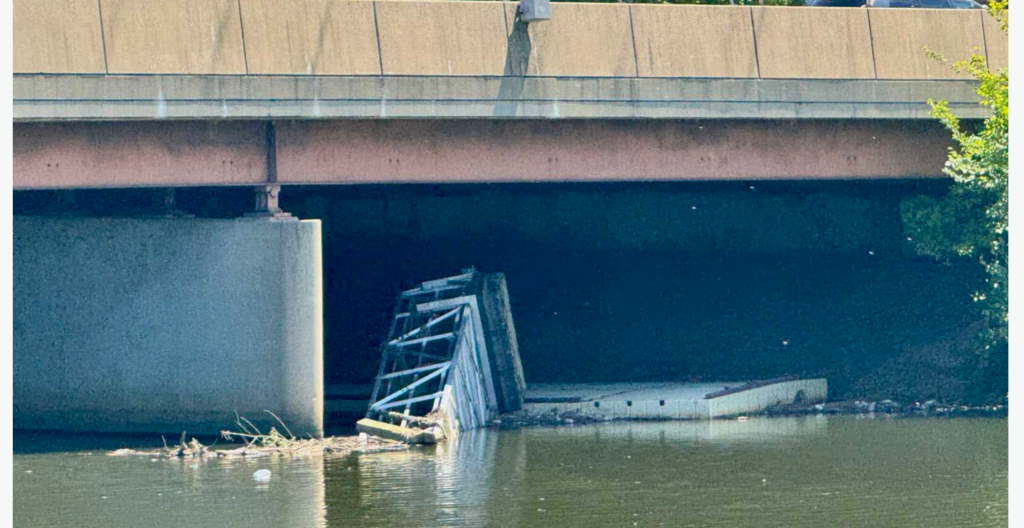
A lower-priced launch may save money upfront, but if it isn’t engineered for the conditions it will face, those initial savings can disappear quickly.
When a floating launch fails, the cost goes far beyond the structure itself. Emergency removal, repairs, replacement, reinstallation, engineering, and lost public access can quickly turn a low initial bid into a much higher long-term expense.
And there is another cost that doesn’t always appear on a budget sheet: downtime.
A launch that is closed for weeks—or an entire season—because of a failure isn’t providing access to the community it was built to serve.
25-Year Cost Driver Comparison
| Cost driver comparison | Engineered to last 25+ years | Chosen on lowest bid |
| Upfront price | Higher line item, once | Lower line item |
| Expected service life | 25+ years by design | Often under 10 years in demanding water and depending on use |
| Storm & hurricane survival | Engineered to stay put and stay whole | Not engineered for extreme events |
| Replacement cycle | None planned within the horizon | One or more replacements likely |
| Repairs & maintenance | Routine, predictable | Escalating; fasteners, floats, connections |
| Downtime & lost access | Minimal | Weeks or seasons of closure after a failure |
| 25-year total cost | Lowest — one structure that lasts | Highest — repeat purchases plus cleanup and maintenance |
The question isn’t simply, “What does the launch cost today?”
The better question is:
“What will this launch cost our community over the next 25 years?”
Hurricane Ian: BoardSafe’s Real-World Test
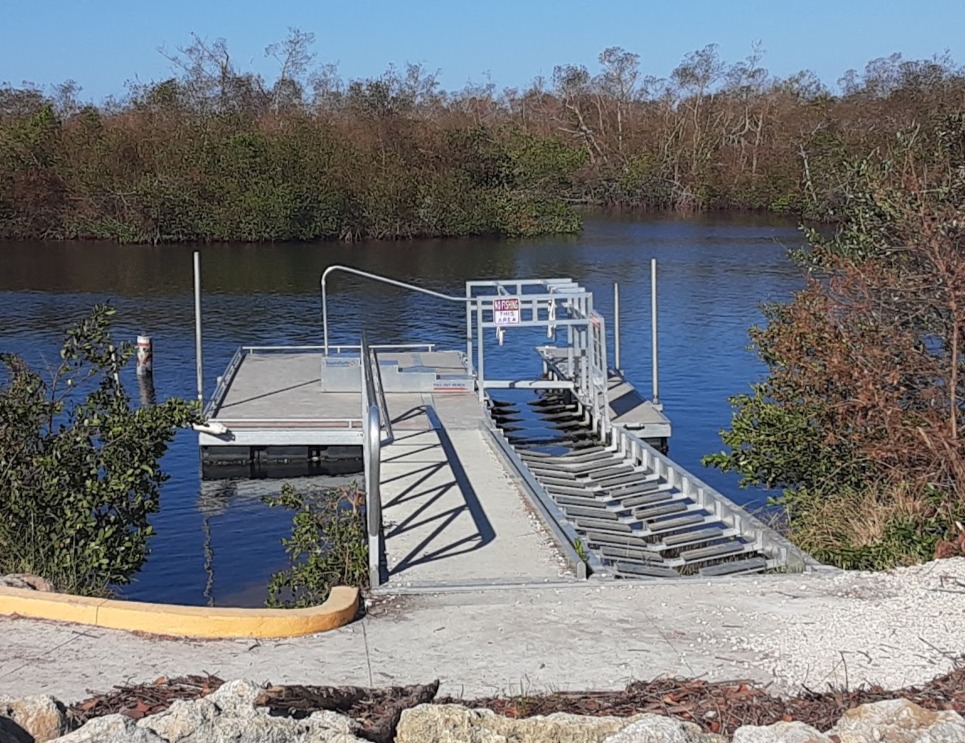 BoardSafe’s Sirenia Vista Kayak Launch Survives Hurricane Ian
BoardSafe has a real-world example of why engineering matters.
The two BoardSafe Adaptive Kayak Launches at Sirenia Vista Park and Saratoga Lake Park in Cape Coral, Florida, remained in place and intact during the extreme flooding and approximately 150-mph hurricane-force winds associated with Hurricane Ian in 2022.
The launches were engineered to rise and fall with changing water levels while staying connected to the shoreline. At the bulkhead, the mounting angle was a critical part of that design.
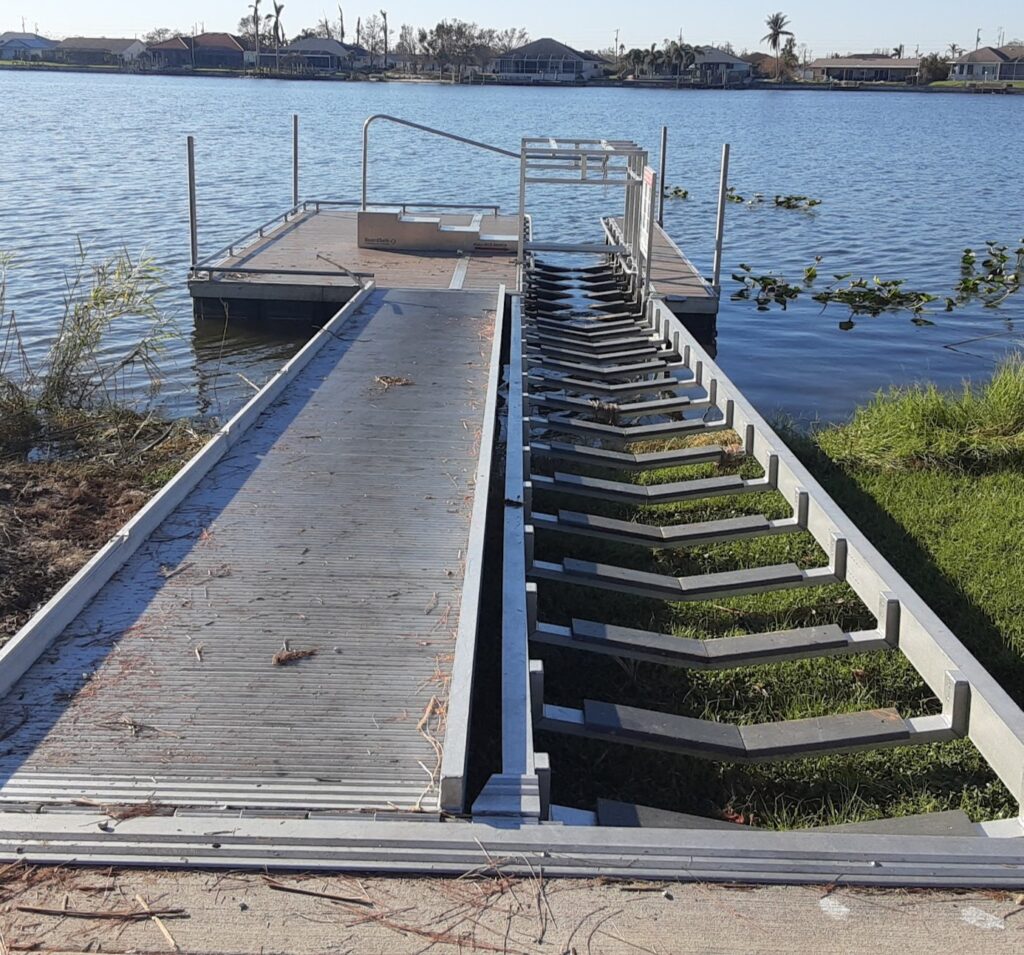 BoardSafe’s Saratoga Lake Kayak Launch survives Hurricane Ian
The surrounding destruction demonstrated just how extreme the conditions were. Hurricane-force winds near Matlacha were recorded at approximately 150 mph. Homes and businesses were destroyed, marinas were devastated, and the main bridge into Matlacha—approximately 1.2 miles from Sirenia Vista Park along the same canal—was swept away. Yet our BoardSafe kayak launch remained in place and intact.
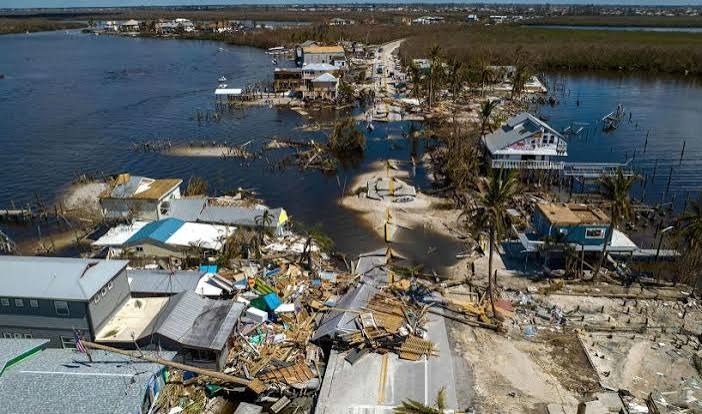 We were surprised when Christopher Camp, the Engineer from the City of Cape Coral involved in these projects, sent us photographs of our launches still intact following the Category 4 hurricane, when so much of the surrounding waterfront was destroyed by the magnitude of the storm.
It was a devastating and tragic event for many people, but the experience provided an unexpected real-world test of the structural integrity and engineering behind our BoardSafe launches.
Today, these two kayak launches continue to provide universal access to the water and remain valued community park resources and infrastructure.
That’s the kind of performance that matters when you’re thinking beyond the first year’s budget.
How Is the Launch Designed for the Site?
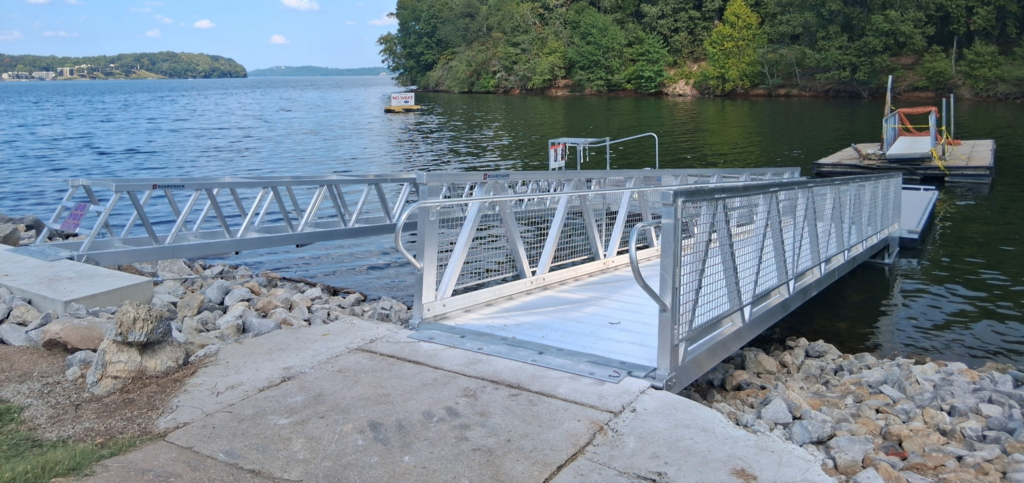
Long-term performance begins with site-specific engineering.
Every waterfront is different. Shoreline conditions, bulkheads, water-level fluctuations, waves, currents, flooding, flotation, structural loads, and shoreline connections all need to be considered when designing a floating launch.
For sites with a bulkhead, the shoreline mounting angle can be one of the most important details in the entire system.
A floating launch is only as reliable as its connection to shore.
BoardSafe’s engineered stiff arm provides a second stabilizing connection between the floating structure and the shoreline. Properly engineered, it creates a strong, rigid link to the bulkhead while still allowing the dock to rise and fall with changing water levels.
This connection helps transfer forces created by current, waves, rising water, and the weight of the structure back into the shoreline rather than allowing those forces to accumulate within the floating system.
It’s a small detail that can make a very big difference in structural integrity and durability.
How Is the Launch Designed for the People Who Will Use It?
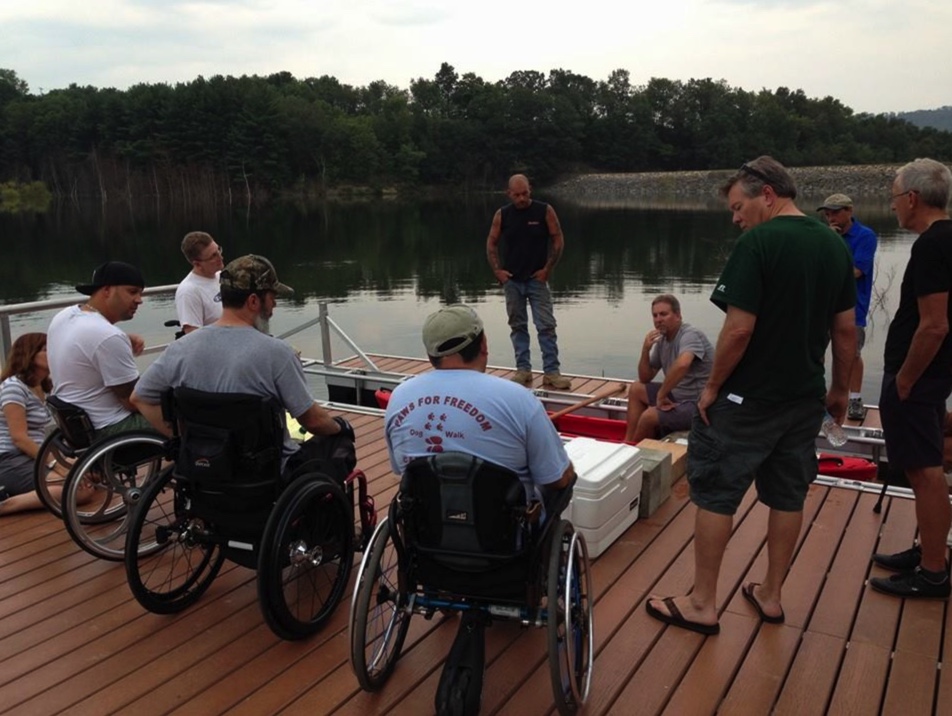 Long-term community value comes from creating infrastructure that actually works for the people it is intended to serve.
Accessibility is more than checking the ADA box.
BoardSafe’s Adaptive Kayak Launch was developed with input and collaboration from adaptive paddlers, recreation therapists, disability advocates, and physical therapists. The system has been used and evaluated during adaptive paddling events, helping identify the features that can make the difference between simply reaching the water and being able to independently and confidently access it.
True accessibility means removing barriers—not simply meeting minimum requirements.
Watch here: The Most Accessible Adaptive Kayak Launch
Access should create opportunity, dignity, independence, and a reason to return to the water.
The Right Questions to Ask Before You Buy
When evaluating an accessible floating kayak launch, don’t just ask:
What does it cost? Ask these questions:
- How is it engineered for this specific site?
- How is it connected to the shoreline?
- What is its expected service life?
- What maintenance will it require?
- How is it designed to handle storms, floods, changing water levels, and other site conditions? It’s reasonable to ask for picture and video references too.
- What happens if the launch is damaged or becomes unusable?
- Were the accessibility features designed with the people who will actually use them?
- What is the expected total cost of ownership over 25 years?
These are fair questions to ask when investing public dollars in waterfront infrastructure.
Think Beyond the Bid
Because the real value of a kayak launch isn’t determined by its line item cost on the day you buy it. It’s determined by what that infrastructure continues to provide year after year—in accessibility, safety, reliability, durability, and meaningful community value.
BoardSafe Docks designs, engineers, and manufactures accessible waterfront infrastructure for site-specific conditions—from adaptive kayak launches and accessible fishing piers to ADA gangways, courtesy docks, pedestrian bridges, rowing docks, and more.
BoardSafe connects people to the water and would love to help you get there too.
When you’re planning waterfront infrastructure with a 25-year perspective, start with the right questions—not simply the lowest bid.
Because the best investment isn’t necessarily the one that costs less today.
It’s the one that continues to work tomorrow, and next year, and decades from now.
BoardSafe Docks — Access Your Adventure.
BoardSafeDocks.com
610-899-0286
#AccessYourAdventure #AdaptiveKayakLaunch #AccessiblePaddling #UniversalAccess #WaterfrontInfrastructure #AdaptiveRecreation