


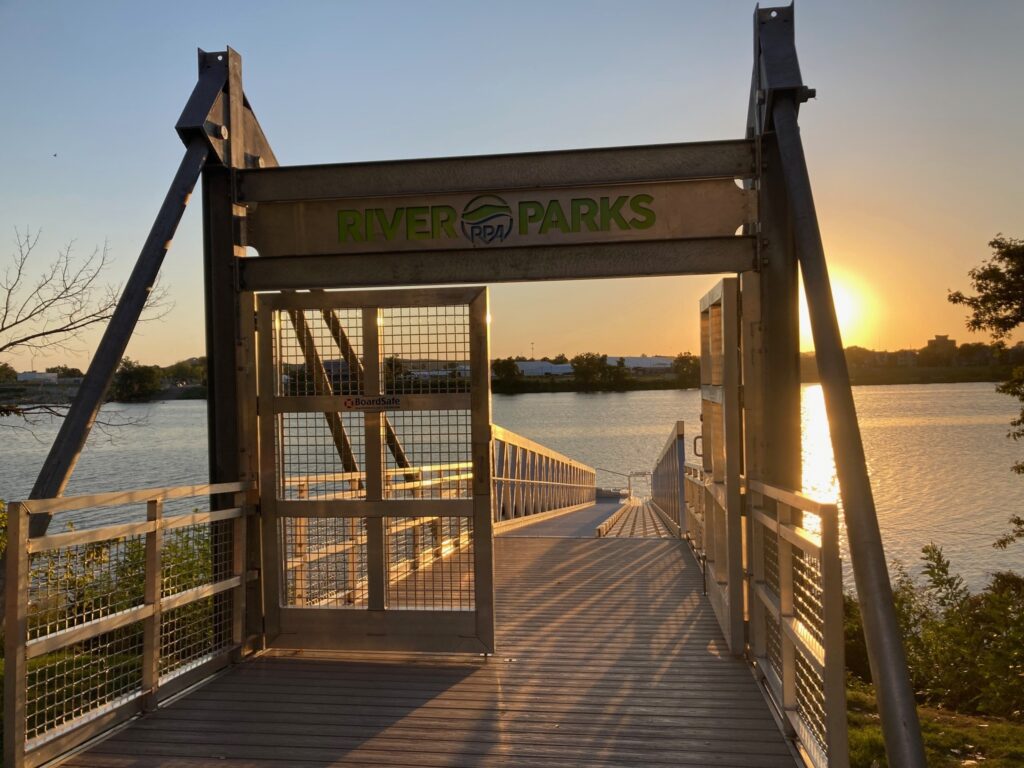
Choosing the Right Decking Material for Safety, Durability, and Long-Term Performance
When designing a waterfront gangway, pedestrian bridge, or floating dock, one of the most important questions customers ask is: What decking material will perform best for our project?
The answer depends on more than appearance or initial cost. The right decking material must withstand environmental conditions, support expected foot traffic, provide reliable traction, and deliver lasting value.
At BoardSafe Docks, we understand that no two waterfront projects are alike. With more than 30 years of marine industry experience, our team helps customers select decking materials that balance safety, structural durability, performance, aesthetics, and budget.
Our guided design process takes customers through site evaluation, design, engineering, fabrication, and installation guidance. From the first conversation to project completion, we help customers make informed decisions about their waterfront investment.
Six Decking Options for Floating Docks, Gangways, and Pedestrian Bridges
Choosing the best decking material starts with understanding the environment in which the structure will operate.
Climate, temperature fluctuations, saltwater exposure, tidal changes, flooding, ice, moisture, and expected foot traffic all influence how decking materials perform over time.
Let’s explore six common decking options and the advantages and considerations of each.
1. Aluminum Decking: Strength, Durability, and Low Maintenance
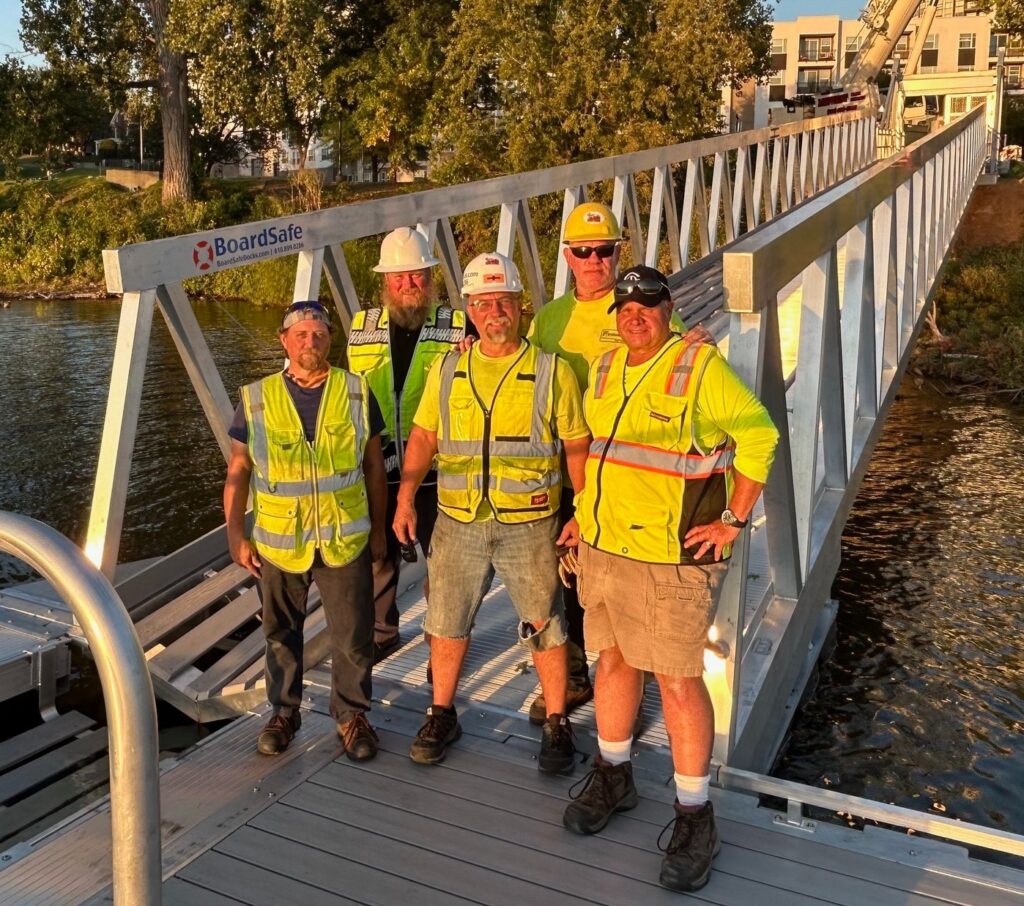
Best for: High-traffic commercial gangways, pedestrian bridges, floating docks, and demanding waterfront environments.
Aluminum is one of the strongest choices for commercial waterfront decking because it combines structural strength, corrosion resistance, and relatively low weight.
Unlike traditional wood, aluminum does not rot, splinter, or absorb water. It also resists rust and performs exceptionally well in freshwater and marine environments when properly specified.
Key advantages:
- Exceptional durability: Resists rot, insect damage, and deterioration from prolonged moisture exposure.
- Low maintenance: Eliminates the need for routine staining, sealing, or painting.
- Lightweight strength: Provides a strong decking surface without adding excessive weight to the structure.
- Corrosion resistance: Performs well in freshwater and saltwater environments with appropriate alloy selection and protective detailing.
- Slip-resistant options: Textured and grooved surfaces can improve traction in wet conditions.
- Sustainability: Aluminum is recyclable and can provide decades of useful service.
Considerations: Aluminum typically costs more upfront than pressure-treated wood. It can also become hot in direct sunlight, and some surfaces may feel slippery when wet if they lack appropriate texture.
For high-traffic commercial applications, however, aluminum’s durability and reduced maintenance requirements can make it an excellent long-term investment.
The BoardSafe Advantage: BoardSafe specializes in structurally engineered aluminum waterfront infrastructure. Our team evaluates decking requirements alongside the complete structural system to help customers achieve long-lasting performance.
2. Composite Decking: Attractive Appearance with Reduced Maintenance
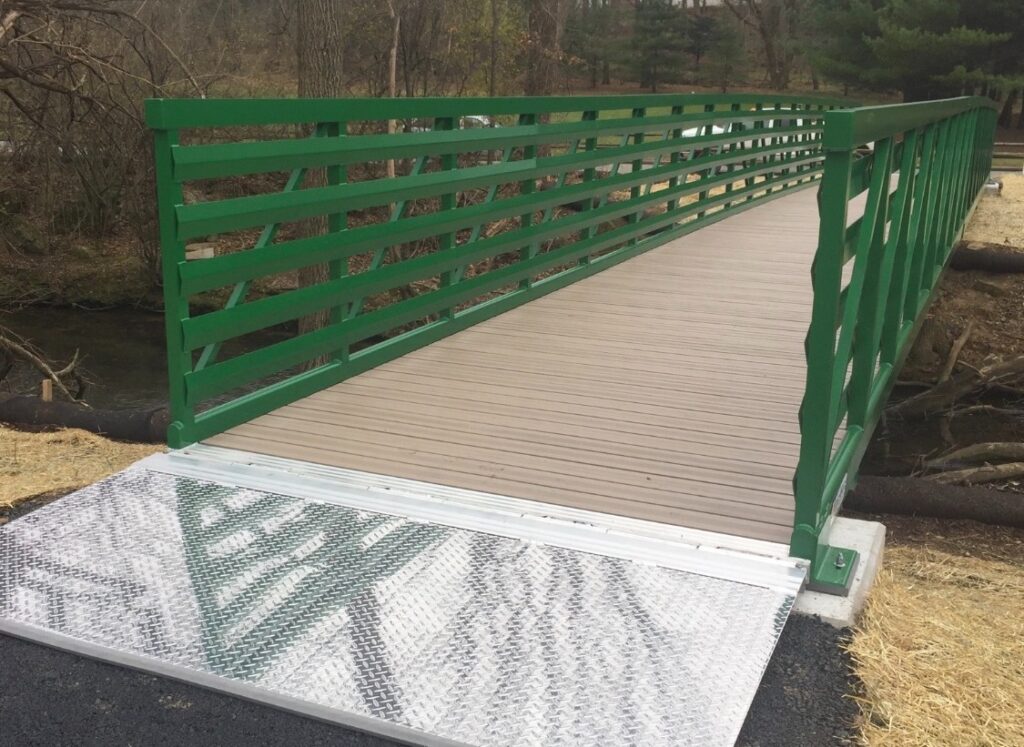
Best for: Recreational docks, pedestrian walkways, waterfront parks, and projects where appearance and maintenance are important considerations.
Composite decking combines wood fibers or other fillers with plastic polymers to create boards that resemble traditional wood without requiring the same level of maintenance.
Many waterfront communities choose composite decking because it offers a finished appearance and comes in a variety of colors and textures.
Key advantages:
- Low maintenance: Generally requires no staining or sealing.
- Moisture resistance: Resists many forms of rot and insect damage.
- Attractive appearance: Offers the look of natural wood in multiple colors and finishes.
- Consistent surface: Many products resist splintering and provide a comfortable walking surface.
- Slip-resistant options: Select products offer textured surfaces designed to improve wet traction.
Considerations: Composite decking can expand and contract with temperature changes, become hot in direct sunlight, and require closer structural support spacing than some other materials. Performance varies considerably among manufacturers, especially in permanently wet or flood-prone environments.
Not every composite product is approved for marine applications or prolonged water exposure.
The BoardSafe Approach: We evaluate composite decking based on environmental exposure, expected traffic, structural requirements, and the manufacturer’s recommended applications.
3. Ipe Hardwood: Natural Beauty and Exceptional Density
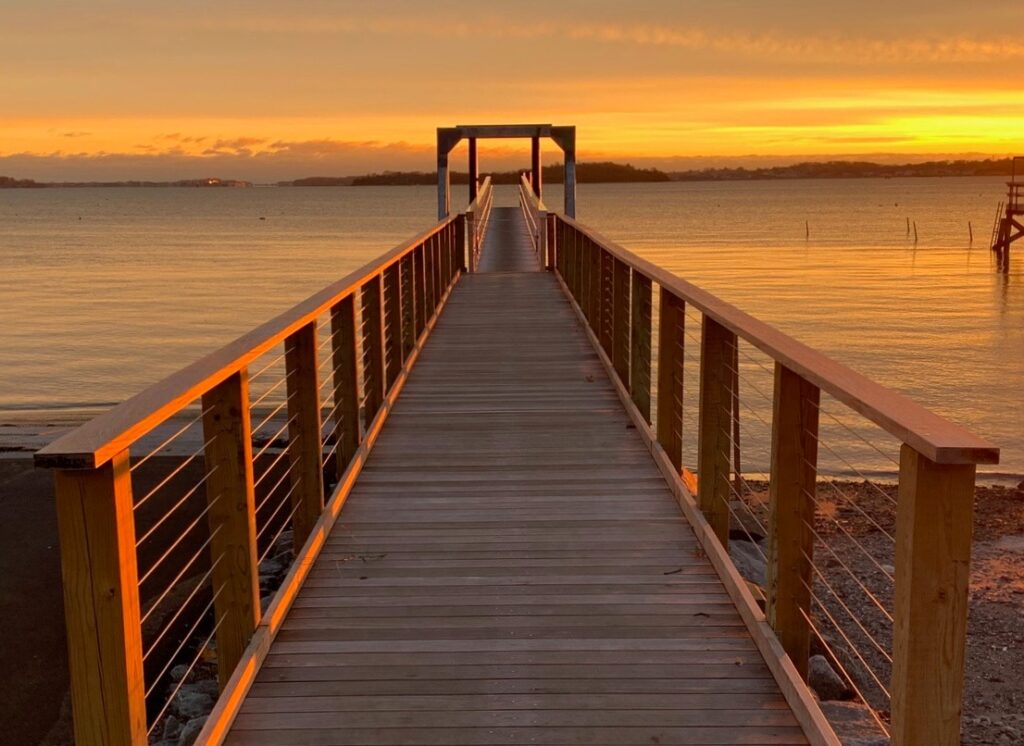
Best for: Premium waterfront walkways, pedestrian bridges, marinas, and projects where natural appearance is a priority.
Ipe (pronounced ee-pay) is a dense tropical hardwood known for its strength, durability, and rich natural appearance.
Its natural resistance to decay and insects makes it a popular choice for outdoor structures, including waterfront boardwalks and pedestrian bridges.
Key advantages:
- Natural durability: Dense hardwood fibers provide excellent resistance to wear and decay.
- High strength: Handles substantial pedestrian traffic when properly designed and installed.
- Premium appearance: Offers a distinctive natural wood finish.
- Long service life: Can provide decades of performance with appropriate installation and maintenance.
- Weather resistance: Performs well in many outdoor environments.
Considerations: Ipe is heavier and more expensive than many traditional wood products. Installation requires specialized cutting tools and fasteners, and the surface can become slippery when algae or biological growth accumulates.
Without periodic finishing, Ipe naturally weathers to a silver-gray color. Customers should also consider responsible sourcing and verified sustainable forestry practices.
The BoardSafe Approach: Ipe can be an attractive option when customers prioritize aesthetics and are prepared for its higher material and installation costs.
4. Pressure-Treated Wood: An Economical, Traditional Option
Best for: Budget-conscious waterfront projects, recreational docks, and lower-traffic applications where routine maintenance is acceptable.
Pressure-treated lumber remains a common decking choice because it is widely available, relatively affordable, and familiar to contractors.
Manufacturers treat the wood with preservatives to help protect it against decay, fungi, and insects.
Key advantages:
- Lower initial cost: Generally less expensive upfront than aluminum, Ipe, or premium composite decking.
- Availability: Easy to source and replace.
- Traditional appearance: Offers the familiar look and feel of natural wood.
- Repairability: Individual boards can often be replaced without removing the entire deck.
Considerations: Pressure-treated wood requires ongoing inspection and maintenance. Over time, exposure to moisture, sunlight, and changing temperatures can cause boards to warp, crack, split, or splinter.
Wet wood can also become slippery, particularly when algae or mildew accumulates.
Waterfront applications require properly rated preservatives, corrosion-resistant fasteners, and attention to environmental regulations.
The BoardSafe Approach: Although pressure-treated wood can reduce initial project costs, we encourage customers to evaluate its expected service life, maintenance requirements, and replacement costs before selecting it for commercial infrastructure.
5. BoardSafe Floating Dock with Concrete Decking: A Solid, Heavy-Duty Surface
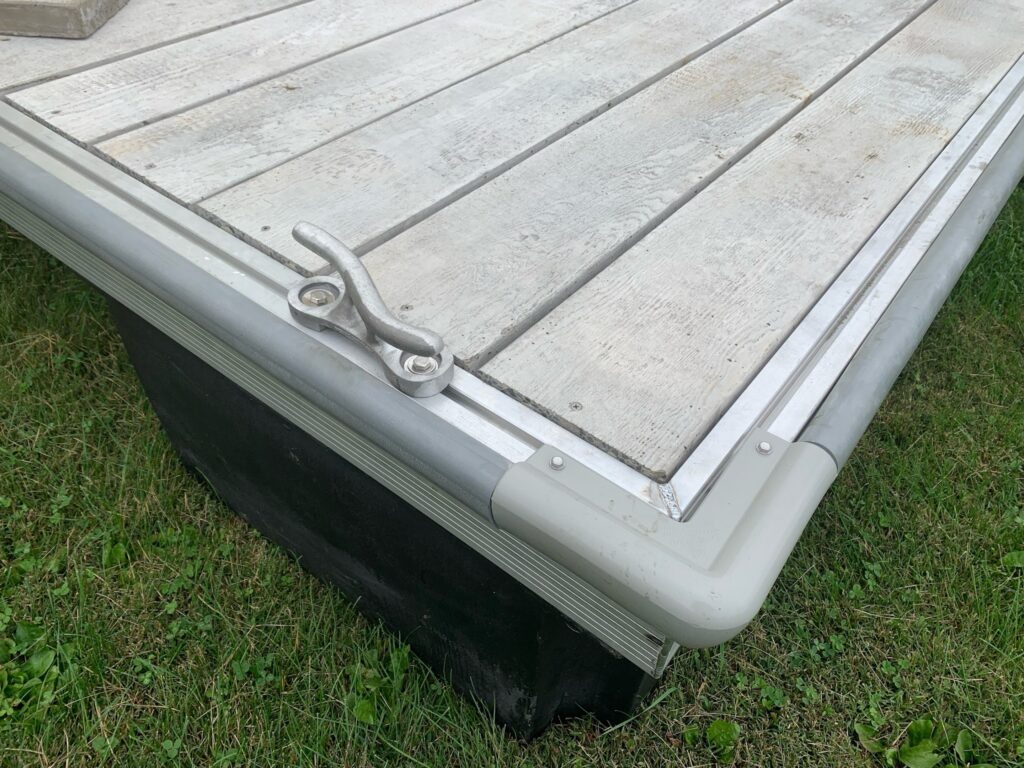
Best for: Certain fixed pedestrian bridges, commercial walkways, and engineered waterfront structures that can accommodate substantial weight.
Concrete decking provides a rigid, durable walking surface capable of supporting heavy pedestrian use when properly engineered.
Concrete surfaces can be precast or cast in place, depending on the structure and application.
Key advantages:
- High load capacity: Suitable for demanding applications when the supporting structure is properly designed.
- Durability: Resists rot, insects, and many types of surface wear.
- Low routine maintenance: Does not require staining or wood preservatives.
- Slip-resistant finishes: Broom-finished or textured surfaces can improve traction.
- Solid walking surface: Provides a firm surface that can be useful for pedestrian accessibility.
Considerations: Concrete is significantly heavier than aluminum, wood, or many composite materials. That additional weight increases structural support requirements and may make concrete unsuitable for some floating docks and lightweight gangways.
Concrete can also crack, spall, or deteriorate when exposed to freeze-thaw cycles, salt, or reinforcing-steel corrosion if not properly designed.
The BoardSafe Approach: Our engineering team evaluates whether concrete decking is appropriate for the project’s structural design, loading requirements, and environmental conditions.
6. Flow-Through Grating: Drainage and Performance in Wet Environments
Best for: Flood-prone areas, marine walkways, gangways, docks, and waterfront locations where drainage and water movement are important.
Flow-through grating uses an open-grid design that allows water, rain, and some debris to pass through the decking surface rather than accumulate on top.
Manufacturers offer grating in several materials, including fiberglass-reinforced plastic (FRP), aluminum, and steel.
Key advantages:
- Improved drainage: Allows rainwater and splashing water to drain through the surface.
- Reduced standing water: Helps limit puddles and certain moisture-related hazards.
- Lightweight options: Fiberglass and aluminum grating can reduce overall structural weight.
- Slip-resistant surfaces: Many products feature molded textures or grit-coated finishes.
- Flood-conscious design: Openings can reduce some water pressure on the decking during overtopping or flooding.
- Reduced maintenance: Certain grating materials resist corrosion, rot, and insect damage.
Considerations: Grating must be carefully selected for pedestrian comfort, accessibility, and safety. Openings that are too large can create problems for wheelchairs, mobility devices, canes, or narrow footwear.
Some grating systems can also feel less comfortable underfoot, and not all products provide adequate traction when wet.
The BoardSafe Approach: We evaluate opening dimensions, traction, structural loading, drainage, and accessibility requirements to determine whether flow-through grating is appropriate.
In flood-prone environments, we also consider the complete structure’s anchoring, connections, and ability to withstand hydraulic forces. Flow-through decking alone does not make a gangway or bridge flood-resistant.
Safety First: Why Decking Traction Matters
A safe waterfront structure starts with a walking surface that provides dependable traction in wet conditions.
Gangways, pedestrian bridges, and floating docks face conditions that traditional land-based walkways may never encounter.
Rain, splashing water, algae, changing temperatures, and heavy pedestrian traffic can all affect surface traction.
At BoardSafe, we place a high priority on selecting decking that supports safe and accessible waterfront use.
Textured aluminum decking is often our preferred choice for high-traffic commercial gangways and pedestrian bridges because it combines durability, strength, and available slip-resistant finishes.
However, no decking material is completely slip-proof. We evaluate several important safety considerations:
- Wet-surface traction: Does the material provide adequate grip when exposed to water?
- Accessibility: Can wheelchair users and people using walkers, canes, or other mobility devices navigate the surface comfortably?
- Surface stability: Will the decking remain secure under expected pedestrian loads?
- Drainage: Can water drain without creating unnecessary slipping hazards?
- Temperature: Will the surface become excessively hot in direct sunlight?
- Long-term wear: Will exposure to weather, saltwater, and heavy use affect surface performance?
Proper decking selection, drainage, cleaning, and maintenance all contribute to a safer waterfront experience.
For public projects, our design team also considers applicable accessibility standards, including surface firmness, stability, slip resistance, changes in level, and permitted openings.
Budget Matters: But the Lowest Bid Isn’t Always the Lowest Cost
Every customer wants the strongest, safest, and most durable waterfront structure their budget will allow.
However, the initial purchase price tells only part of the story.
A lower-priced decking material may reduce construction costs today but create higher expenses through maintenance, repairs, replacement, and lost public access over time.
That’s why BoardSafe encourages customers to evaluate the total cost of ownership, not simply the original bid.
When comparing decking options, consider:
- Initial material and installation costs
- Structural engineering and support requirements
- Routine cleaning and maintenance
- Repairs and replacement materials
- Expected service life
- Performance during storms, floods, hurricanes, ice, and heavy public use
- Downtime and temporary closures
- Long-term return on investment
Think Beyond the Decking: The Entire Structure Matters
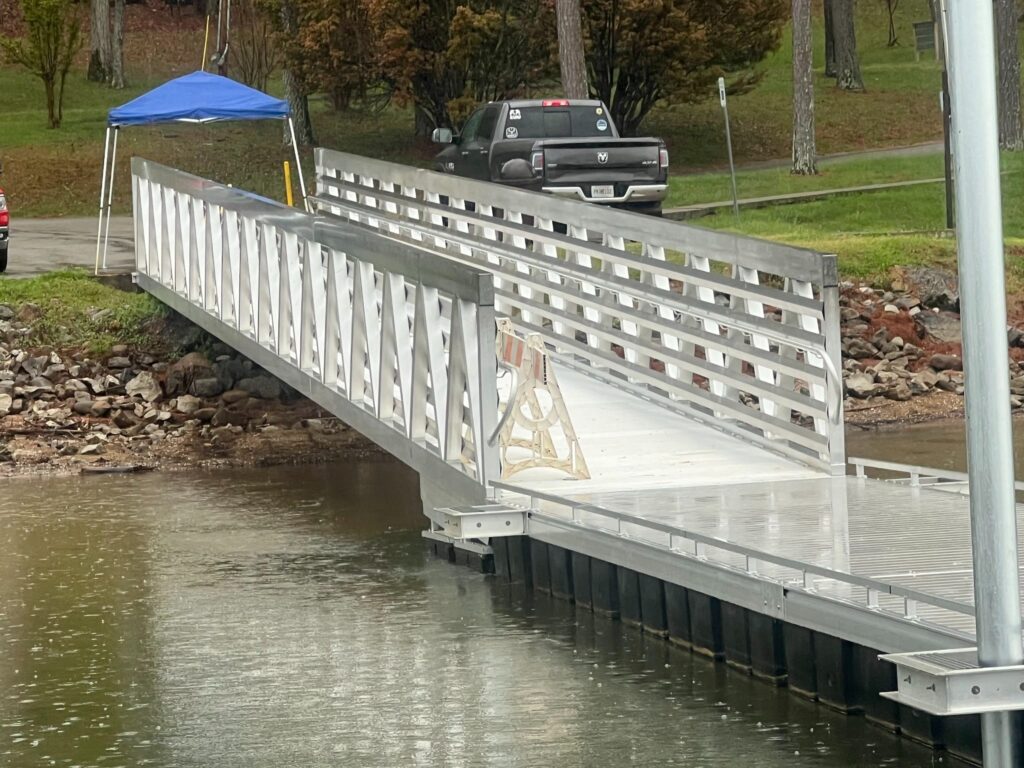
A gangway or pedestrian bridge must function as a complete engineered system. The frame, decking, connections, foundations, anchoring, and installation methods all contribute to its performance, and this is where BoardSafe is different!
For example, even the most durable decking cannot prevent structural failure if the gangway lacks appropriate engineering, structure or anchoring for its environment.
When a waterfront structure fails, the costs can extend far beyond the original purchase price. Emergency removal, replacement, redesign, re-engineering and permitting, repairs, and lost public access can quickly eliminate any upfront savings.
A gangway or bridge that remains closed for weeks—or an entire recreation season—cannot serve the community it was designed to support.
Waterfront infrastructure should be an investment in long-term access, not a recurring replacement expense.
Read and learn more here about evaluating waterfront infrastructure over its service life: The Real Cost of an Accessible Kayak Launch: A 25-Year Comparison on Total Cost of Ownership
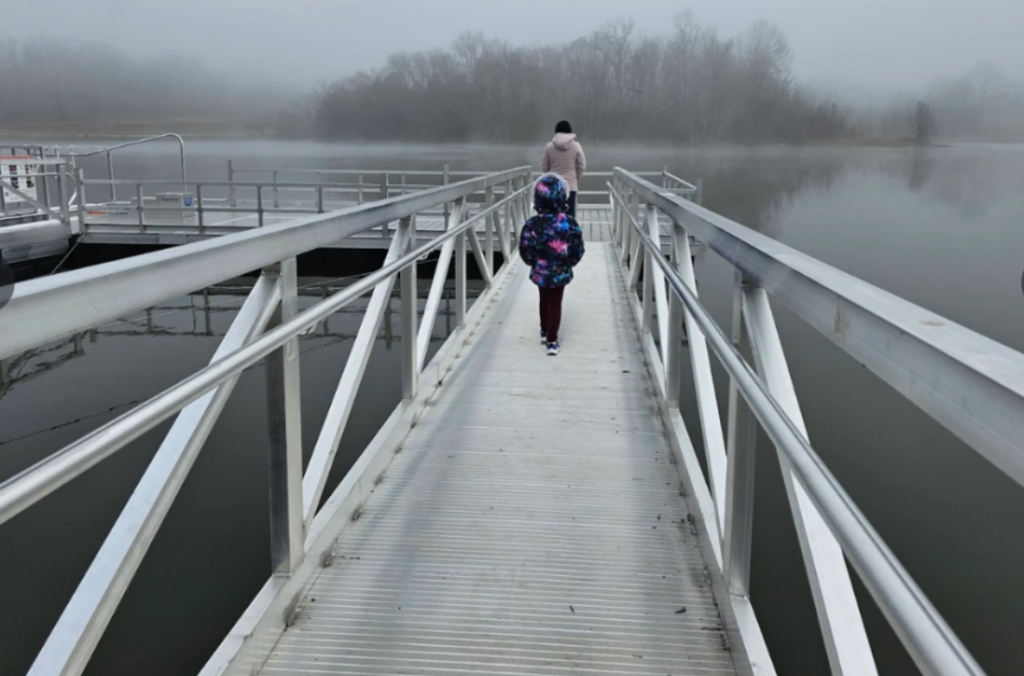
The BoardSafe Difference: Engineered for Your Environment
Two gangways may look similar, but appearances don’t reveal the quality of the engineering, structural components, materials, or connections.
At BoardSafe Docks, we believe every waterfront project deserves more than a one-size-fits-all solution.
Our team evaluates the unique challenges of each site and helps customers choose a structure designed to perform in that environment.
From material selection to structural engineering and fabrication, we focus on the details that affect safety, durability, accessibility, and long-term value.
We also understand that customers need reliable guidance throughout the buying process.
Our guided design process helps customers make confident, informed decisions from concept through installation.
Whether you’re developing a public waterfront park, replacing an aging gangway, building a pedestrian bridge, or improving access to a marina, BoardSafe can help you evaluate the best materials and structural solutions for your project.
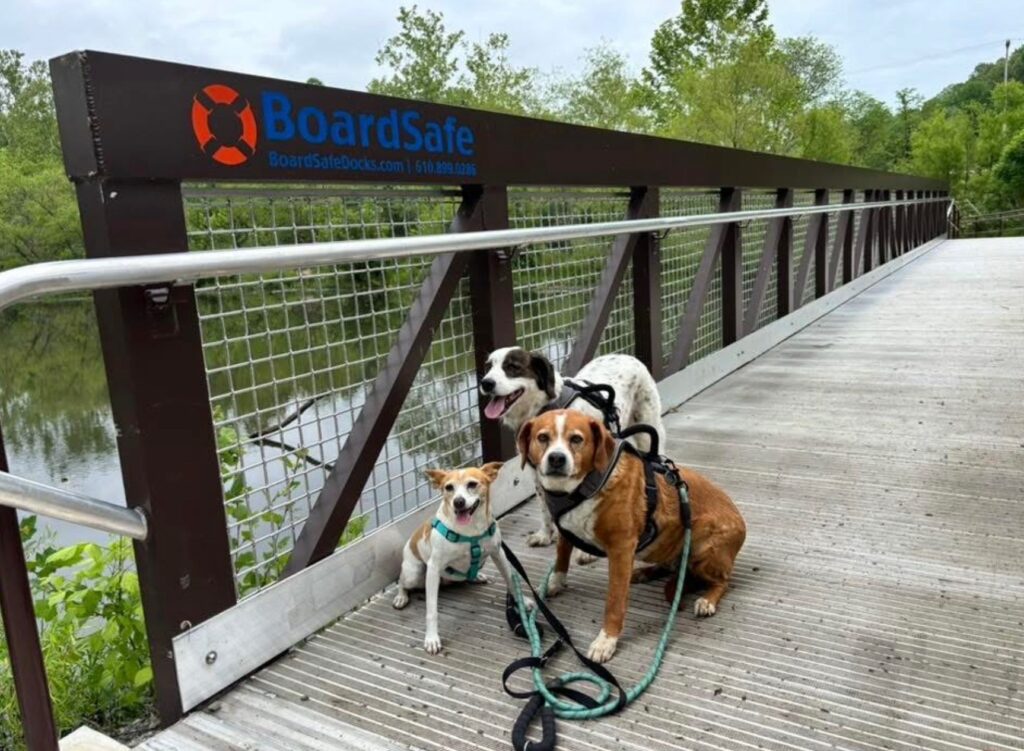
Which Decking Material Is Best for Your Waterfront Project?
There is no single decking material that works best for every waterfront application.
Aluminum provides exceptional durability and low maintenance. Composite offers attractive finishes and reduced upkeep. Ipe delivers natural beauty and strength. Pressure-treated wood provides an economical starting point. Concrete supports certain heavy-duty applications, while flow-through grating offers drainage advantages in wet and flood-prone environments.
The best choice is the one that balances safety, accessibility, structural performance, environmental conditions, maintenance, and long-term value.
Here’s a quick comparison:
| Decking material | Initial cost* | Maintenance | Key advantage |
| Aluminum | High | Low | Durability and long service life |
| Composite | Moderate–High | Low–Moderate | Appearance and reduced upkeep |
| Ipe hardwood | High | Moderate | Natural beauty and strength |
| Pressure-treated wood | Low | Moderate–High | Affordability |
| Concrete | Moderate–High | Low–Moderate | Solid, rigid surface |
| Flow-through grating | Moderate–High | Low–Moderate | Drainage and reduced standing water |
At BoardSafe Docks, we don’t simply help customers choose decking. We help them invest in waterfront infrastructure designed to provide safer, easier, and more reliable access to the water for years to come. We educate customers that a quality walking surface will not create a structurally superior gangway, and that’s it’s more important about what you don’t see: Durable decking material is only as dependable as the structure supporting it, and that’s where BoardSafe’s engineering, framing, anchoring, and connections set us apart from our competition. However, whatever surface you choose when working with us, we will make it look great!
Let’s build a quality system together!
If you have more questions about decking materials, ADA gangway design, pedestrian bridge construction, floating dock systems, accessible fishing piers, adaptive kayak launches, put BoardSafe’s marine industry experience and engineering expertise to work for your project. Visit us at BoardSafeDocks.com or call 610-899-0286 to speak with our sales and design team. You’ll be happy you called!
#AccessYourAdventure #WaterfontInfrastructure #ADAGangways #AccessibleBridges #AluminumWeldedDocks