
Mandarin Park Florida Adaptive Kayak Launch
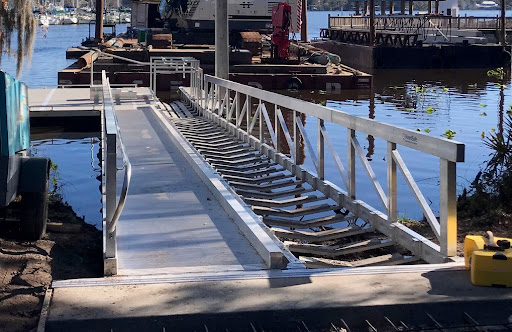
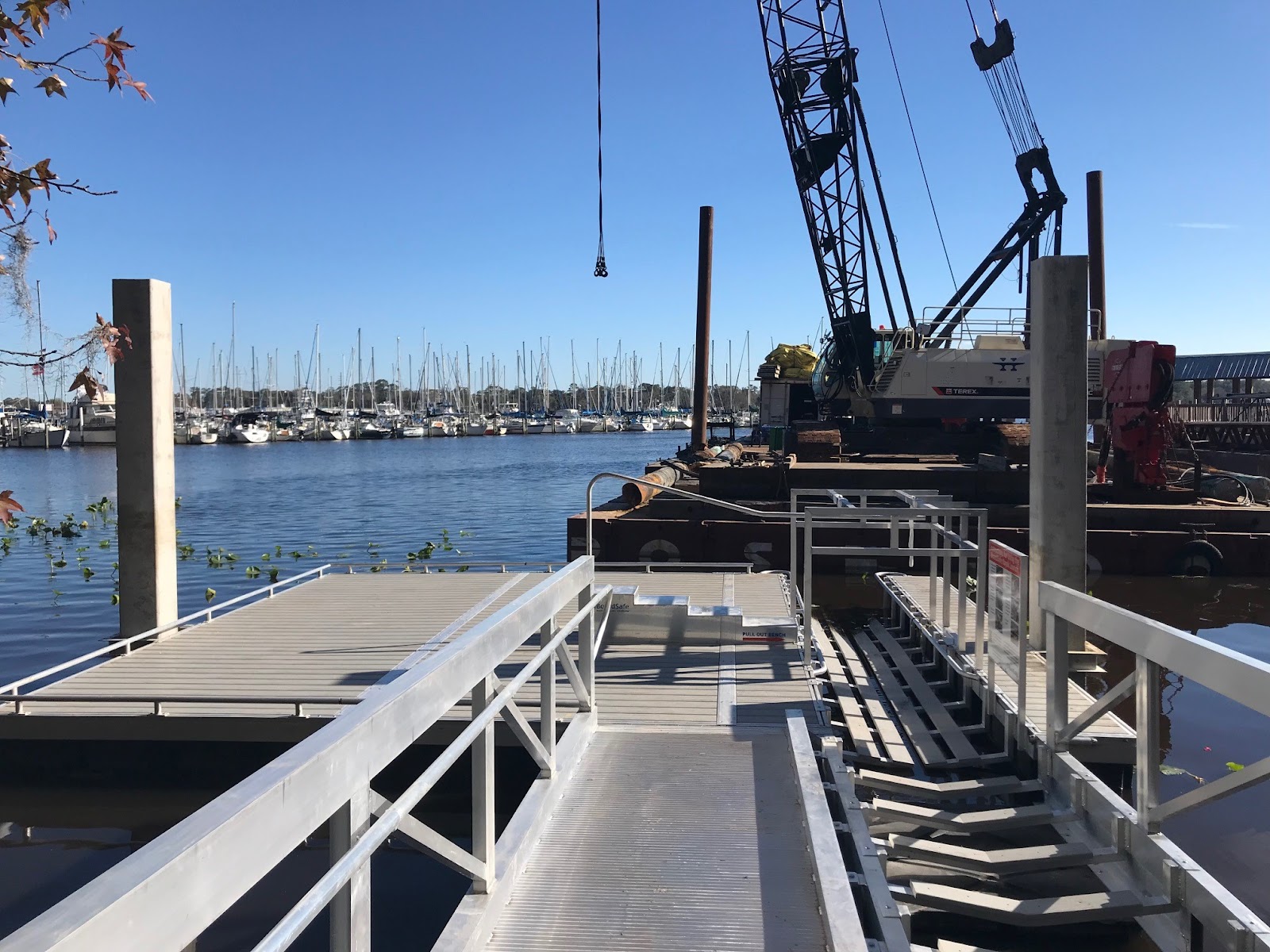
The City of Jacksonville, Florida, recently installed its fourth BoardSafe Adaptive Kayak Launch at their Mandarin Park location in December 2021. The fully-accessible launch is located at 14780 Mandarin Road, Jacksonville, FL, 32223-2650.
Jacksonville is home to the largest urban park system in the nation, and is committed to making its park system an equitable and inclusive destination for its city’s residents and visitors. Enjoying the outdoors and taking advantage of the available activities offered through the city’s parks and recreation department have been a priority for the city’s administration.
Jacksonville is proud of its accomplishments in supporting adaptive recreation. Their rivers and waterways also support a wide variety of outdoor activities that include boating, fishing, bird and wildlife viewing, and a slew of special events that now can include and be attended by everyone. History and tourism also attract visitors to their city. Over the last several years, the Parks, Recreation, and Community Services Department has striven to improve its park facilities by making them equitable and inclusive destinations for people of all abilities. They’re hoping others will help spread the word about their adaptive facilities and recreation programs, including their adaptive kayak launch systems that can be found at the updated Mandarin Park facility and other parks around the city.
Last year was the 30th anniversary of the Americans with Disabilities Act, and Jacksonville was pleased to share where they stand in supporting people with disabilities. The city created a video highlighting its efforts and identified adaptive recreation as a major initiative as part of its mission to make Jacksonville an accessible city for everyone. Adaptive paddling with the BoardSafe Adaptive Kayak Launch is highlighted 5 minutes and 30 seconds into their showcase video (below). Jacksonville is a river city as well as a beachfront destination, and they continue to find creative ways to be at the forefront of providing access to their natural resources, rivers, and the ocean, for people with disabilities.
Americans With Disabilities Act 30th Anniversary celebrated in Jacksonville.
Mandarin Park is located in the southeast section of Jacksonville, adjacent to Julington Creek. In addition to an adaptive kayak launch, there are accessible picnic shelters, walking trails, and ADA-compliant playground equipment.
How BoardSafe Docks helped improve Jacksonville’s accessibility
The original Mandarin Park amenities included a boat ramp, floating docks, and a fixed fishing pier. However, prior to the existence of the ADA and Jacksonville’s accessible initiatives, its parks were not originally designed with inclusivity in mind. The Mandarin Park site contained a large amount of vegetation along the shoreline and was not conducive to safe or easy access to the water. While people were drawn to the beauty of the area and its waterfront destination, the pre-ADA facility made accessing the water very difficult and challenging. Access wasn’t safe for the adaptive paddler or their friends, family, and paddling groups who had to carry, lift, and maneuver an adaptive paddler into his or her kayak or canoe.
The upgrade to the Mandarin Park facility included increasing the number of aluminum floating docks in the boat ramp area and adding an accessible walkway along the shoreline that invites people in wheelchairs to a site they were previously restricted from using.
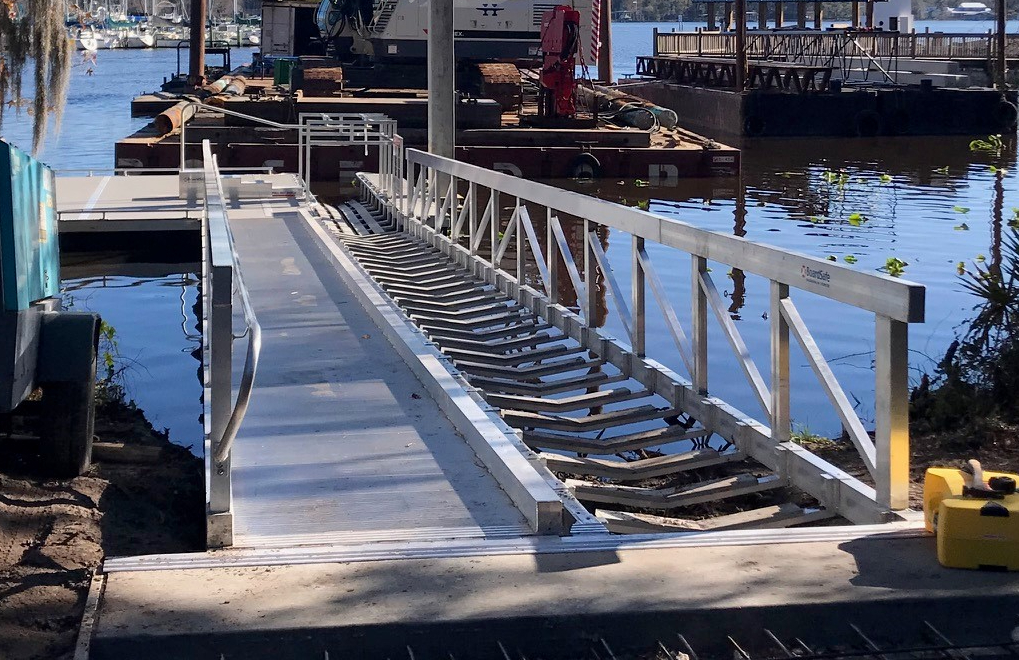
The BoardSafe Adaptive Kayak Launch allows paddlers a way to access their kayaking vessel and canoe both safely and easily. The facility update allows for people with disabilities to participate and enjoy the park, its facilities, pavilions, walking trails, and adaptive kayaking on the water along with their friends, family, and other user groups who may require specific adaptive features. It’s become a popular destination for locals and tourists alike.
The height of the new walkway and mean low water elevations (that spanned 48 inches at its lowest and widest point) dictated that the length of the new gangway and chute be 53 feet long. Jacksonville mandates the slope of the gangways in their city to be no greater than a 1/20 pitch. Their required slope is actually more stringent than the 1/12 slope mandated by the Americans with Disabilities Act. Under ADA guidelines, the gangway would normally have been acceptable at 32 feet. However, Jacksonville’s more stringent requirements increased the gangway length to 53 feet, thereby ensuring accessibility. What most people fail to realize or understand is that ADA standards identify minimum guidelines and standards. When structures are only designed and built to those minimum standards, they often exclude people with the most severe limitations and do not offer access to everyone.
The length of the 53-foot gangway was necessary to accommodate the 48-inches of elevation difference from the top of the water to the top of the gangway’s connection point and allows for fluctuations in the rise and fall of the tide.
Where you can find other BoardSafe Adaptive Launch Systems in Jacksonville
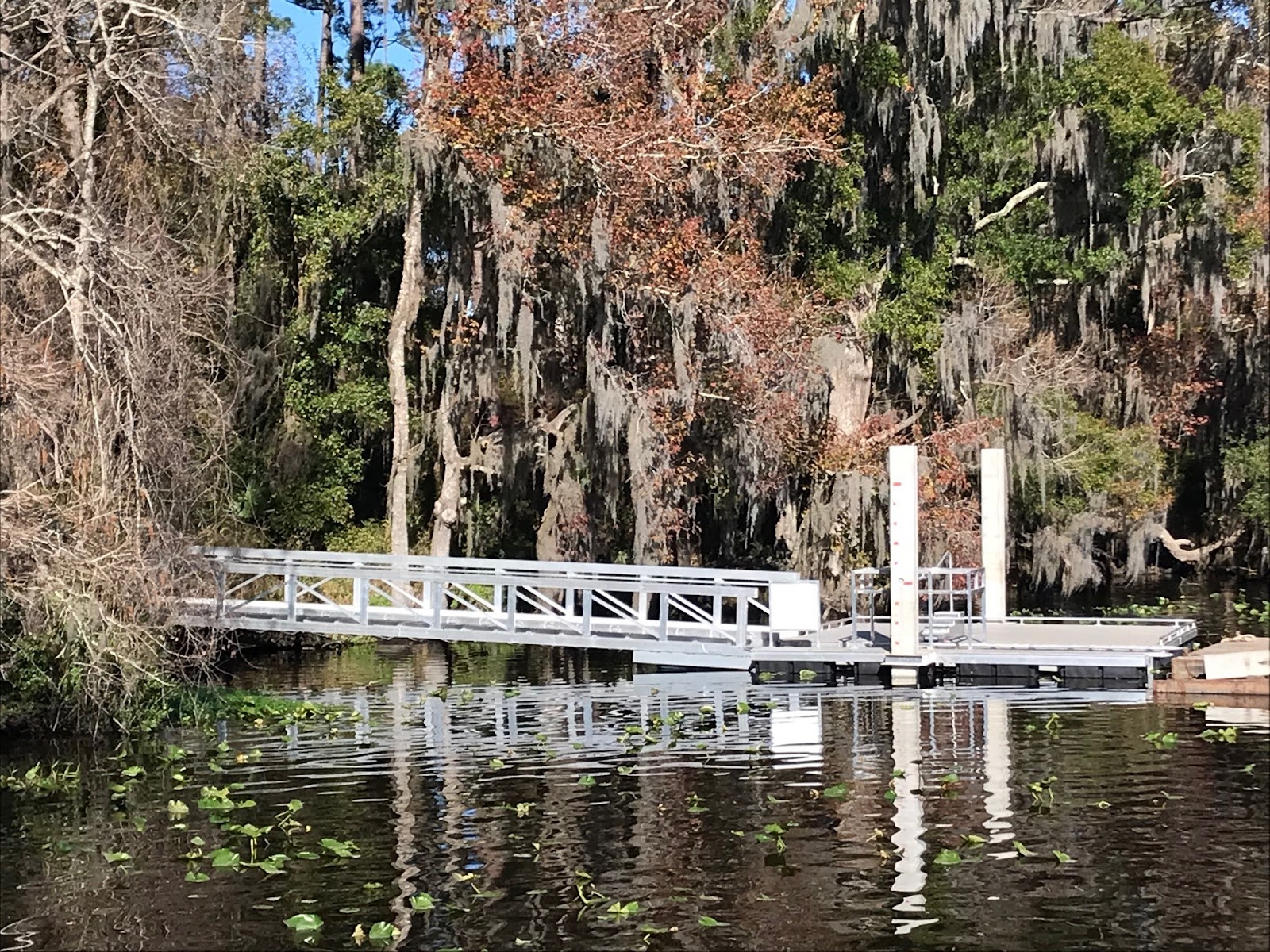
The City of Jacksonville has contracted with BoardSafe Docks for four waterfront projects for their city. Brian Burket, Waterfront Project Manager for the City of Jacksonville, has headed up all four of these adaptive projects. Brian has recognized the high level of accessibility a BoardSafe Kayak Launch offers to the City of Jacksonville and its adaptive paddling community. Other BoardSafe Adaptive Launches installed by the city that align with their mission of making Jacksonville an inclusive and accessible city can be found at:
- Bethesda Park, 10790 Key Haven Blvd., Jacksonville, FL, 32218
- Kathryn Abbey Hanna Park, 500 Wonderwood Dr., Jacksonville, FL, 32233
- Southbank Riverwalk, 1001 Museum Circle, Jacksonville, FL, 32207
BoardSafe’s versatile launch system can also be used with canoes and standup paddleboards — there’s a center void down the middle of the launch saddle that will also accommodate an SUP’s rudder. The launches may be used by anyone but offer specific adaptive features so the launch can be used and enjoyed by everyone.
The cost for this inclusive and versatile launch system was approximately $85,000 and included an 8’ x 20’ aluminum floating dock, the adaptive kayak launch kit with multiple adaptive features, and a 53-foot gangway.
BoardSafe Docks is a trusted designer, engineer, and manufacturer, of all types of aluminum floating docks and fishing pier systems. Their adaptive kayak launch and design knowledge about specific adaptive features that are necessary for paddlers in wheelchairs help make inclusion happen for many cities, towns, lakes, and riverfront communities.
BoardSafe also specializes in designing and manufacturing rowing centers for national collegiate rowing teams all across the USA. You’ll find their gangways located all across the United States in places like the TD Garden in Boston and Battery Park in New York. They find solutions to design questions that can leave architects and engineers scratching their heads.
BoardSafe is the go-to source for any project on the water. Their sales team is always available for questions, consultation, and to assist you with finding your optimal waterfront solution.
The most accessible kayak launch
To learn more about our projects, please visit our website, BoardSafeDocks.com, or call us at 610-899-0286.
5 Most-Commonly-Asked Questions About Floating Dock and Rowing Dock Freeboard
Unless you’re part of the boating industry, "freeboard" is a term not commonly used in everyday language. More than likely, most people would not be able to define what freeboard means or explain its meaning to others.
Although similar, but completely unrelated, freeboard is not to be confused with "Free Bird," the famous song released by the rock band Lynyrd Skynyrd in 1973. Most people probably have at least some familiarity with the lyrics of this song.
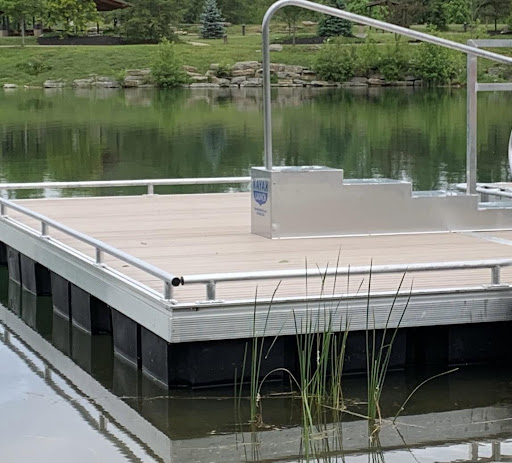
Now, getting back to the topic of freeboard, "freeboard" is the distance from the top of a floating dock to the top of the water. For those who like to boat, kayak, or row, freeboard will have an impact on your ability to enter and exit your vessel with ease and will determine how much a floating dock stands out above the water. The picture shown below is a visual representation of the freeboard and will help you understand its meaning. Freeboard is measured from the top of the rowing dock down to the top of the water.
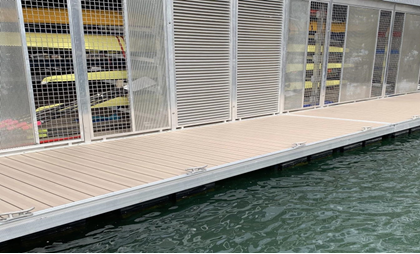
The freeboard of a typical rowing dock is 6 inches. As shown here, rowing docks sit relatively close to the water level.
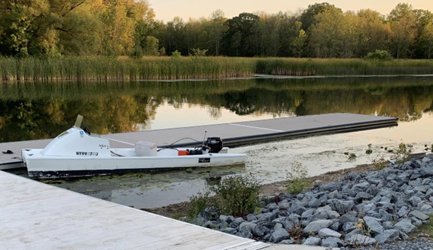
For a floating dock, the freeboard will remain a consistent dimension. It will not fluctuate unless excessive live loads are put onto the dock. A visual representation of a floating dock’s freeboard can be seen in the picture below. Freeboard is measured from the top of the dock’s aluminum frame down to the top of the water. A standard floating dock sits higher above the water than a rowing dock.
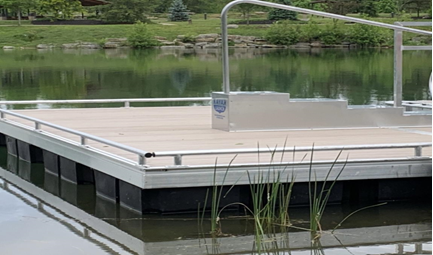
For fixed piers that do not move up or down, the freeboard dimension may change or vary any time there’s a tidal fluctuation, a drought, or any type of flooding condition. In this case, the dock is held to a fixed location and the water level is what moves up or down.
Why are certain systems designed for a specific freeboard (ex: 16”)?
Freeboard may be dictated by a customer’s specific design requirements. For example, in a marina application, the size of the vessels being moored at the dock may dictate the dimension of the freeboard. Smaller boats may require a smaller and lower freeboard whereas larger boats may dictate a larger and higher freeboard. The dock design and purpose of the dock typically call for a specific freeboard.
Why do you need to know your freeboard when building a dock?
When a new dock is being manufactured and built to connect to an existing dock or pier, the freeboards must be the same in order for the connecting docks and piers to be level with each other when floating on the water.
Is there a standard freeboard for rowing docks compared to boat docks, kayak launches, and fishing piers?
The freeboard for a rowing dock is normally 6 inches. The reason behind this is and the reason rowing docks float closer to the water is to allow for the crew members to enter their vessel at a level closer to the height of the floating dock and use their oars to hold the boat in place when boarding their sculls.
Boat dock, fishing pier, kayak, and canoe launch freeboards are normally 16 inches but can be adjusted to 15 – 18 inches due to the size and number of flotations attached to the bottom of the dock. These dock systems typically sit higher above the water.
What's the easiest way for me to measure the freeboard of my dock?
The easiest way to measure your dock’s freeboard is to use a straightedge at the top of the dock and measure down to the top of the water. In order to get the most accurate measurement, the measurement should be taken several times and averaged. This will provide you with the most accurate freeboard measurement. Be careful not to put weight on the point which would affect your measurement.
How will my gangway affect my dock’s freeboard?
The weight of your dock’s gangway will affect your dock’s freeboard. Additional flotation will need to be put on the end of the dock where the gangway lands to help keep the dock level. Another solution would be to hinge the gangway to the dock and put additional separate flotation under the gangway.
BoardSafe Docks manufactures high-quality commercial-grade floating docks, rowing docks, kayak launches, fixed piers, and gangways. The aluminum welded frames are a product whose quality stands out from others due to their versatility and ability to withstand the test of time and elements of weather.
For more information on products offered by BoardSafe Docks — customized aluminum floating docks and other adaptive kayak launch innovations — or to schedule a design consultation, visit BoardSafeDocks.com or call (610) 899-0286.
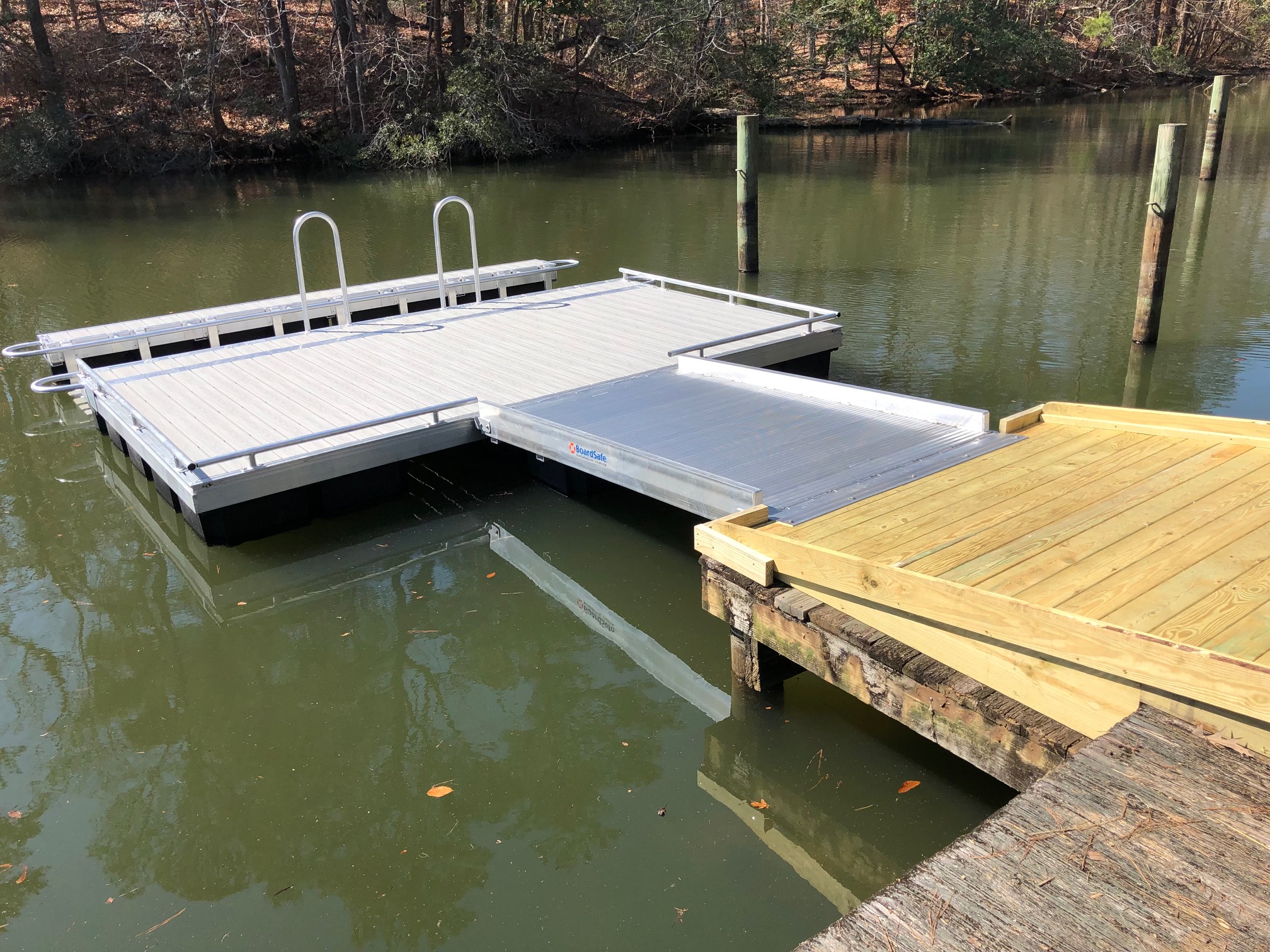
BoardSafe News at the Mariners' Museum, Newport News, VA
In early March of 2022. the following project was installed at the Mariners’ Museum in Newport News, VA. The client had a fixed pier with steps that lead to a floating dock. The floating dock was removed and a new pressure-treated ramp was installed by the customer on top of the pier, which then provided ADA-compliant egress to the dock. We then added an 8-foot-by-5-foot gangway, 8’ x 16’ floating dock, and Clip-a-Launch 16D (without an adaptive boarding kit). The cost of this project was approximately $27,000.00 (manufacturing only).