


Floating Docks with Launch Rollers: What You Should Know
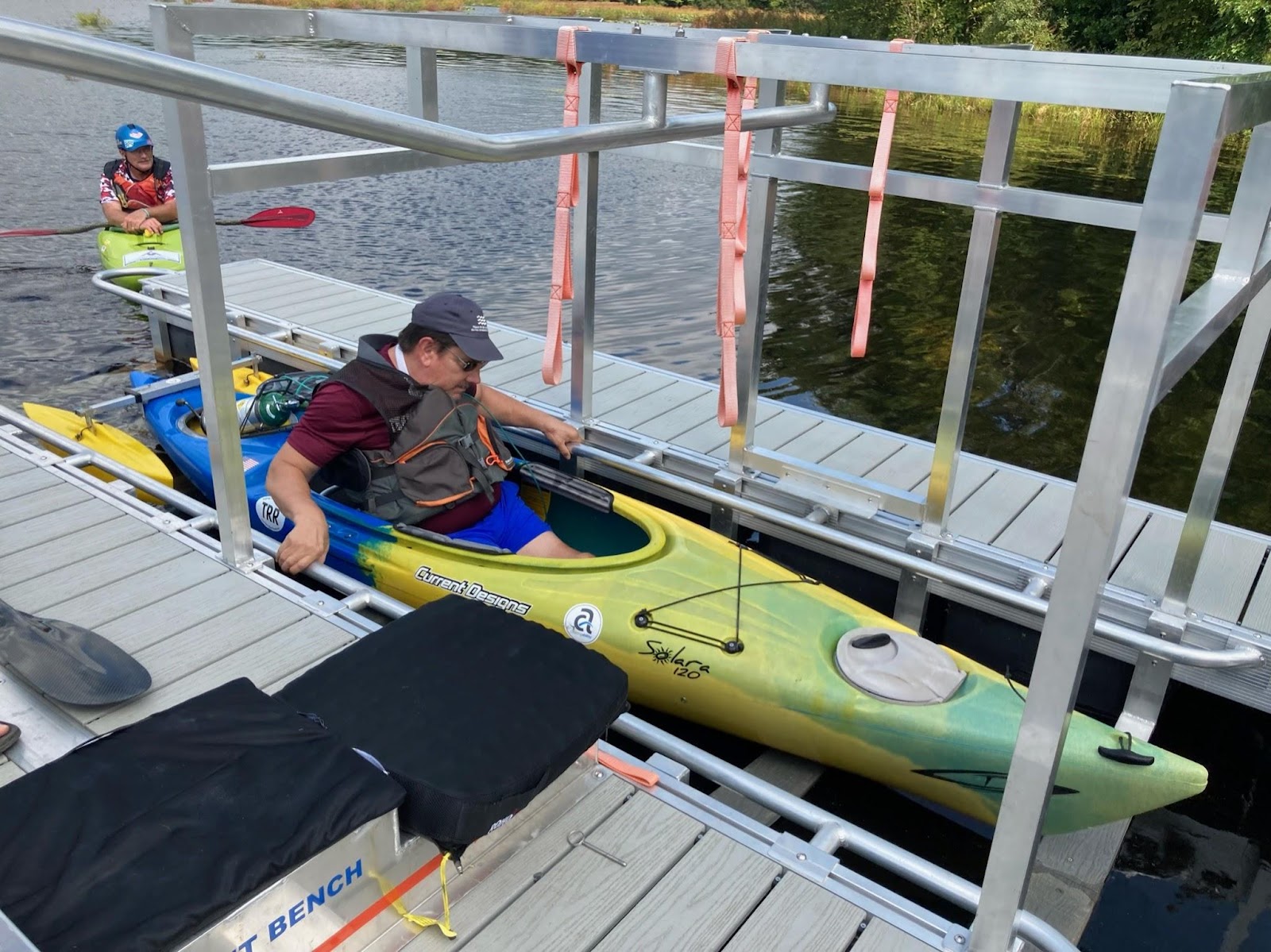
BoardSafe Docks is often asked if rollers will damage a kayak hull. First and foremost, it’s important to understand not all kayak launches are the same, and the BoardSafe Adaptive Kayak Launch does not use rollers on its launch system. BoardSafe uses a supportive saddle and cradle launch for a safe and smooth entry into the water.
History of BoardSafe’s Kayak Launch and its features
BoardSafeDocks developed its Adaptive Kayak Launch after being approached by the Leaser Lake Heritage Foundation, the Kempton Area Lions Club, and an adaptive paddling group, who were using their lake for adaptive paddling events. They were looking to make the lake more accessible to paddlers in wheelchairs who presented themselves with varied needs and paddling abilities. The adaptive athletes and the volunteer group that supported them reported that, more often than not, they struggled to get their paddlers in and out of their kayaks and safely out onto the water.
Working together with them, BoardSafe Docks identified the barriers paddlers were facing and created solutions to gain access to the water using adaptive features that would support their safety and independence.
Rollers on the kayak launch were not part of the solution, and here’s why.
BoardSafe’s Adaptive Kayak Launch was designed with adaptive paddlers in mind for safer and easier access to kayaking vessels. From the perspective of differently-abled paddlers, rollers were not recommended for the following reasons.
- Rollers lack stability for kayakers Roller launches do not hold the vessel steady and lack stability when placing an adaptive paddler in their kayak. Rollers do not provide the same type of support as a cradle launch system. This lack of stability makes it difficult for all paddlers to load and unload, particularly those with mobility limitations, especially in windy or rough water conditions.
- Fulcrum effect When the kayak's weight is not evenly distributed on the rollers, or if the kayak's weight is concentrated on a small area of the hull, it can create a pivot point (fulcrum) that places excessive stress on that part of the kayak, potentially causing damage to the kayak. When too much force is applied during the launching or loading process, it can cause the kayak to bend or bow. This force can lead to hull deformation over time. Due to the angle and drop found on roller launches, this launch type can create a point load on kayaks that leads to unintended stress and damage to kayak hulls.
As seen in the picture below, the front of the kayak is elevated, causing stress to the hull. There is no stability offered to the kayaker nor support to prohibit the kayak from tipping over. The width of this particular launch system is 6 feet, too wide to serve any paddlers. Functionality is limited for those who wish to keep their kayak steady, keep their feet dry, and not cause point load stress to their kayak hulls.
One paddler with personal experience with roller launches said, “Without constant maintenance, they soon start to fall apart.” Another kayaker commented, “My kayak became unstable when launching into the water, and the drop put stress on my kayak.”
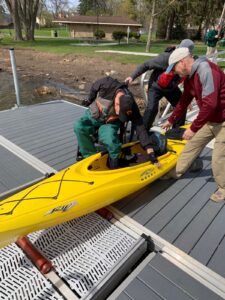
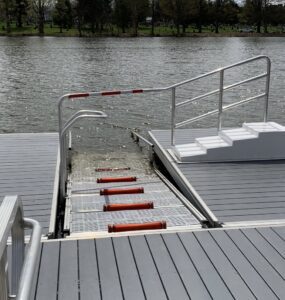
*Not a BoardSafe Adaptive Kayak Launch*
Kayak launches designed with roller systems should be avoided by users with higher-end kayaks made from fiberglass, kevlar, carbon fiber, and other hard-shelled composite boats. With so many different kayaks and kayak launches on the market, engineers designing launch systems need to become more aware of the unintended consequences that result when advertising these ramps for all kayaks. Most recently, people with higher-end kayaks have reported damage to their kayaks when using roller launches. One paddler with a nearly-new Kevlar boat reported his kayak sustained $700 in damage due to multiple cracks in the gel coat from the rollers and the stress caused by the point load on the roller ramp.
Anyone operating expensive vessels on a roller launch system should use caution—The material of the kayak's hull plays a significant role, and owners should understand their kayak's limitations. Kayaks made from materials like fiberglass, kevlar, carbon fiber, and other composites, are more susceptible to damage. Rollers can potentially create pressure points that damage the hulls of more fragile materials. If the rollers are not aligned, padded, or maintained, they can cause scratches, dents, and other damage to the kayak’s hull.
Kayaks that are less expensive and used for recreation, like high-density polyethylene (HDPE) and other durable plastics, are more suitable for launches with rollers. Roller launches typically work fine for plastic-hulled boats; however, keep in mind that roller launches lack the adaptive features necessary to provide access for paddlers in wheelchairs and those with physician limitations.
Problems reported with roller launches
- Misalignment If the kayak is not loaded onto the rollers properly, it can cause the kayak to scrape against the rollers or become misaligned, potentially leading to dents, scratches, or uneven pressure on the kayak's hull, potentially causing bending or deformation.
- Sharp edges or rough surfaces If the rollers have sharp edges or rough surfaces, they can scratch or gouge the kayak's hull as it is loaded and unloaded.
- Insufficient padding Some kayak launches have rollers with inadequate padding or cushioning. Without proper padding, the kayak's hull can suffer from excessive pressure points, leading to damage over time.
- Incorrect positioning Placing the kayak too far forward or backyard on the rollers can cause undue stress on specific areas of the kayak, potentially leading to damage.
- Debris or contaminants stuck to rollers If there are debris, dirt, or contaminants on the rollers, they can scratch or damage the kayak’s hull during the loading and unloading process.
- Low-quality rollers If rollers are made with inferior material or poorly constructed, they may not provide the necessary support and protection, increasing the risk of damage.
Tips to minimize the risk of damage to kayaks when using a roller launch
- Ensure proper alignment Position the kayak evenly on the rollers to distribute the weight evenly and avoid unnecessary stress on any area of the hull.
- Keep rollers clean Regularly inspect, clean, and maintain the rollers to remove debris or contaminants that could scratch the kayak. Regularly inspect the rollers for damage and rough spots and replace them if needed.
- Use additional padding or cushioning material to protect the kayak's hull.
- Use care and caution when applying force during the launch and loading process.
- Choose an appropriate launch method based on the kayak's hull material and design.
The most accessible kayak launch
A properly designed kayak launch will have a cradle launch or kayak chute long enough and narrow enough to hold on to both sides until the vessel is fully on the water to alleviate any stress to the vessel. It's crucial for kayakers to be mindful of potential sources of damage and take precautions to protect their kayak.
BoardSafe Docks takes pride in creating a positive user experience. The comfort and safety offered to our clients, as well as the quality, durability, and sustainability of our products, is a priority to ensure our customers are satisfied with our accessible products.
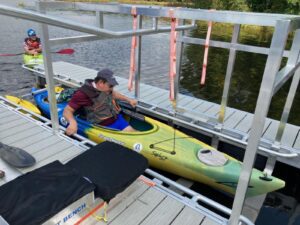
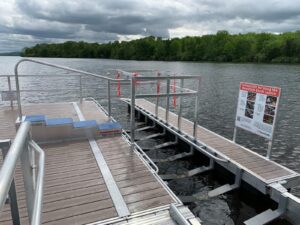
In summary, rollers on kayak launches can be useful for certain situations, but they are not without their drawbacks. The choice of launch method should include factors such as the kayak's hull material, the kayaker's skill level, environmental concerns, and the specific conditions at the launch site. Depending on these factors, alternative launch methods, such as cradle-style launches, may be preferred to minimize the risk of damage to the kayak and ensure a safe and stable launching experience. That is why the BoardSafe Kayak Launch is made with smooth low-friction slides and does not include rollers.
This video demonstrates the necessary adaptive features of a BoardSafe Kayak Launch and its cradle chute with an easy glide entry into the water.
The Most Accessible Adaptive Kayak Launch
For more information about BoardSafe’s Adaptive Kayak Launch, click the link below or contact us at 610-899-0286 or through our website at BoardSafeDocks.com.
https://20491040.fs1.hubspotusercontent-na1.net/hubfs/20491040/E-Brochure-BoardSafe-Kayak-Launch.pdf
BoardSafe Docks Provides Paddle Access for Legacy Parks Luncheon
BoardSafe Docks is pleased to provide two accessible kayak launches in advance of the Legacy Parks Luncheon for the Parks on September 29th at Seven Islands State Birding Park. Legacy Parks Foundation is an East Tennessee nonprofit organization working to ensure that their community enjoys exceptional recreational opportunities, natural beauty, and open spaces. They work collaboratively with local stakeholders to promote healthy living, connect friends and families with nature, and provide access to Knox County’s parks and rivers. Value is added to communities when providing close-to-home recreation that is accessible to all.
Below is a rendering of the BoardSafe Adaptive Kayak, Canoe, and Boat Launch planned for Seven Islands State Birding Park where the fundraiser will be hosted.
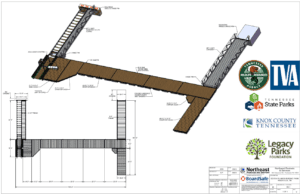
While accessibility projects can be eligible for grant funding and support from local government agencies, community support and financial gifts from donors also play a significant role and are necessary to bring these worthy projects to fruition. The Legacy Parks Luncheon for the Park is their biggest fundraising effort of the year.
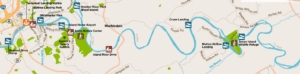
An additional BoardSafe Kayak Launch and takeout to be recognized at the luncheon will be installed about 5 miles downriver at Cruze Landing.
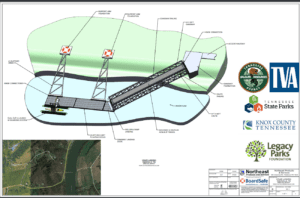
The popularity of kayaking is on the rise
According to a report published by the Statista Research Department, nearly 18.6 million Americans went kayaking at least once in 2021, demonstrating an increase in the popularity of paddlesports. In the period 2010–2021, kayaking participation in the United States grew by 87.3 percent. Paddling is an activity that almost everyone can participate in—young and old, novice and experienced, and people with mobility limitations. It’s easy to understand why people are getting hooked on paddle sports.
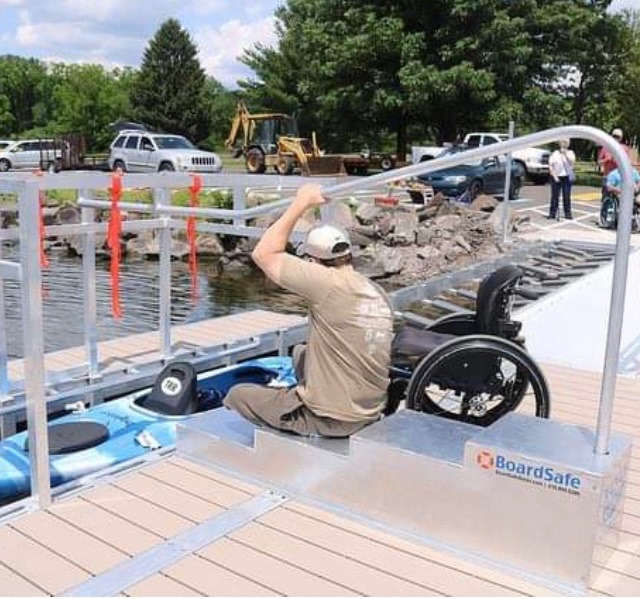
Kayaking, canoeing, and all paddlesports are truly inclusive recreational activities when launch sites include adaptive features like an ADA gangway, kayak chute, boarding bench, hand straps, and grab bars.
The most significant difficulty reported by almost all paddlers is getting in and out of their vessels. Upon entry, kayaks and canoes can tip, shift, or roll over. Adaptive features can ensure safe access in and out of the water. It’s encouraging to see leaders and planners striving to create a more inclusive society. They understand the importance of inclusive outdoor recreation. As recreation stakeholders, we all share responsibility for shaping the future of our country’s outdoor spaces and inclusive lifestyle and improving the quality of life for all. According to the World Health Organization (WHO) fact sheet on Disability, an estimated 1.3 billion people experience significant disabilities. This represents 16% of the world’s population or 1 in 6 people.
According to the CDC Disability Impacts All of Us Infographic, 11.1 percent of U.S. adults have a mobility disability with serious difficulty walking or climbing stairs.
The value of an accessible and adaptive kayak launch
An accessible kayak launch with adaptive features can benefit everyone and offer accessibility to all, including older adults, people with mobility impairments, and people with temporary injuries or permanent conditions.
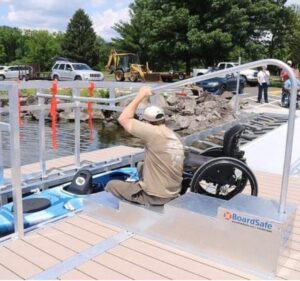
Ask any adaptive kayaker about their enjoyment, liberation, and empowerment after completing a paddle. Many will tell you they cannot wait to return to the water!
There are many ways to support the Legacy Parks Foundation through the Head of the Tennessee Initiative. Readers are encouraged to become a friend, learn more about their initiatives, or talk about planned giving by providing gifts of land or trail easements, or donations to support their cause. For more information, visit here: How to Help - Legacy Parks Foundation.
BoardSafe is a leading national manufacturer of high-quality aluminum-welded water access products: adaptive kayak launches, fishing piers, marinas, rowing centers, gangways, and pedestrian bridges. Whatever type of access your project needs, BoardSafe Docks will provide turn-key service, from product design and inception through delivery.
BoardSafe’s sales team is available for questions and consultation and will assist you with improving your water access site. You can learn more about BoardSafe Docks’ projects at our website, BoardSafeDocks.com, or by calling 610-899-0286.
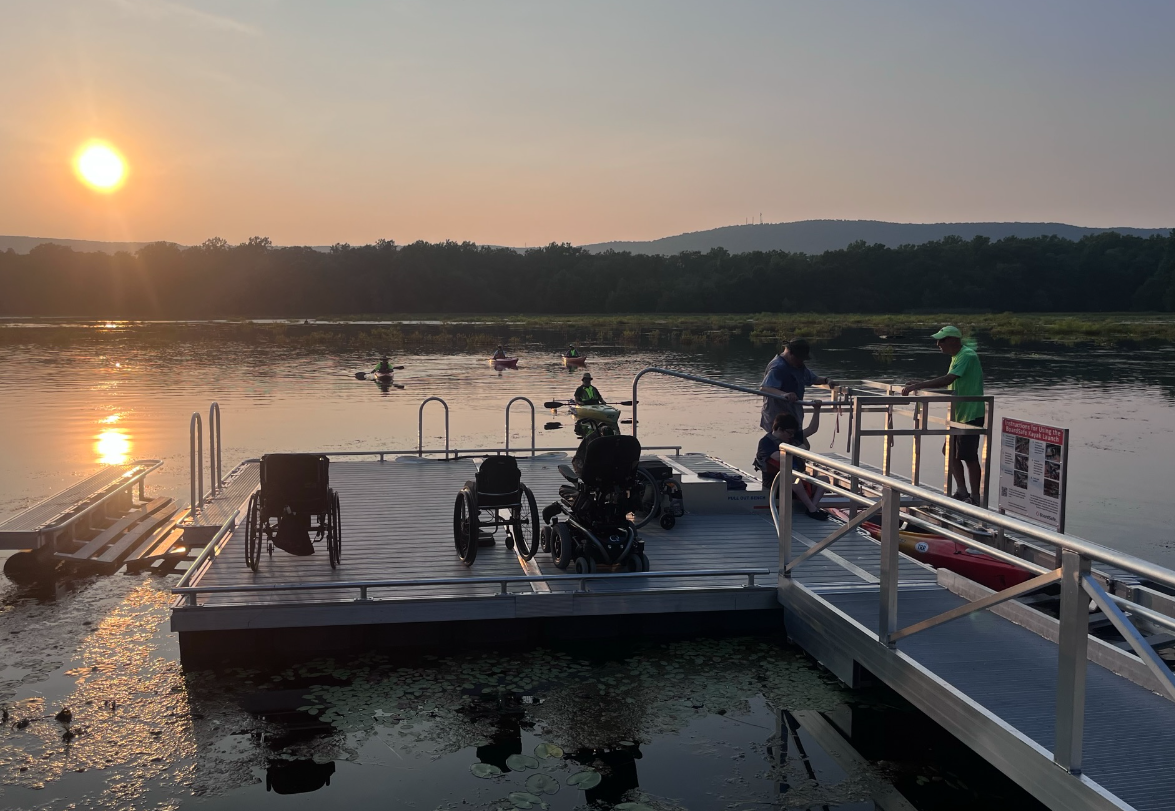
BoardSafe Docks Assists Legacy Parks for Annual Luncheon for the Parks
Legacy Parks Foundation is making final preparations for its annual Luncheon for the Parks on September 29, 2023, from 11:30 a.m.–1:00 p.m. at Seven Islands State Birding Park. The luncheon raises funds to conserve natural resources, create public places for recreation, and connect Tennessee communities. Through the generous support of donors, incredible open spaces are shaping into attractive recreational sites throughout the Knox County region. BoardSafe Docks provides water access products for Legacy Parks throughout East Tennessee by designing and manufacturing Adaptive Kayak Launches, Fishing Piers, Floating Docks, Gangways, and Pedestrian Bridges.
The guest speaker at this year’s sold-out luncheon is Chuck Leavell, who has been pleasing the ears of music fans for more than 40 years. His piano and keyboard skills have been part of The Allman Brothers Band, Eric Clapton, The Rolling Stones, The Black Crowes, Blues Traveler, Train, George Harrison, The Indigo Girls, Montgomery-Gentry, and many more. Watch his impressive documentary here: Chuck Leavell: The Tree Man (1080p) FULL MOVIE …

In addition to his brilliance in the music arena, Leavell is also a respected authority on conservation and forestry. He is a published author, co-founder of The Mother Nature Network, and host of the PBS series, “America's Forests.” In 2019, he and his wife, Rose Lane, were recognized as National Outstanding Tree Farmers of the Year.
His mission shares an important message about caring for and saving our forests.
Head of the Tennessee Initiative creates accessibility for all
Starting at the Seven Islands State Birding Park location, Legacy Parks, in collaboration with Knox County, TVA, Tennessee Wildlife Resources Agency, Tennessee State Parks, UT Research Park, and BoardSafe Docks, is working to create inclusive access to East Tennessee’s waterways. Together, they share the vision to expand access points along the 25-mile water trail between Seven Islands State Park and UT Research Park, and create recreational sites that are accessible to all.
Features of the Tennessee Rivers
The French Broad and Holston Rivers confluence at Knoxville to form the beginning of the Tennessee River. They are tremendous natural assets with exceptional recreational potential for Knox County and surrounding communities.
The French Broad River
The French Broad River is believed to be one of the oldest rivers in the world based on the dating of rocks examined along its riverbanks. Locally, it offers a variety of recreation opportunities, including tubing, paddleboarding, kayaking, and fishing. Its tributaries are ideal habitats for several trout species, bass, bluegill, crappie, and the eastern spiny softshell turtle.
The Holston River
The picturesque Holston River begins in the foothills of the Blue Ridge Mountains and runs for 274 miles through Virginia into Tennessee. The part of the river below Cherokee Dam is possibly the most scenic water trail in the Tennessee Valley. Paddlers enjoy this panoramic paddle as it winds its way into the Tennessee River at Knoxville.
Between 1940 and 1950, the Tennessee Valley Authority built four dams on the Holston to provide electricity and control flooding. Today, the river is the most critical source of drinking water for communities south of the river and a place for fishing and recreation.

The Importance of paddle access for all
Paddling and exploring the water bring people and nature together for a blend of relaxation and good physical fun. They bring families and friends together, connect people with nature, and most importantly, promote exercise and wellness. There are so many reasons propelling around the water is attractive. When you step into a kayak, push off into a canal or river, and take those first few paddle strokes, nature surrounds you at every level. People are getting hooked on paddle sports. Paddling is an activity that almost everyone can participate in—young and old, novice and experienced, and people with mobility limitations.
Kayaking has become increasingly popular for paddlers with physical disabilities, amputees, and those with paralysis. It offers rehabilitation, exercise, and socialization. Most importantly, kayaking allows adaptive paddlers to be out on the water like everyone else. They describe the freedom of leaving their wheelchairs and transitioning into a kayak as “liberating.”
According to the Disability & Health U.S. State Profile Data from the CDC, 15% of adults in Tennessee experience a mobility disability. Nationally, one out of four people lives with a disability, limiting their options for recreation and play.
Ensuring that water access points are inclusive and accessible to all encourages more people to participate in outdoor activities on the water. Disability transcends all ages, political persuasions, races, incomes, titles, and degrees. It impacts everyone, and yet, there is still work to be done to ensure that everyone feels welcome and included. The Legacy Parks Foundation invites everyone to be part of the solution to change things that have kept people with disabilities and physical limitations from participating and enjoying the water. Our Work—Legacy Parks Foundation shows the results of and improvements from the combined efforts of many stakeholders, yet there is so much more they can accomplish.
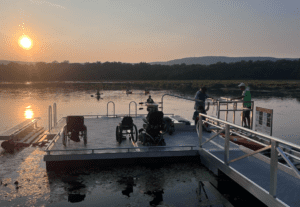
Financial gifts play an important role in supporting programs that offer accessibility to all, improve parks, and allow people with disabilities and mobility limitations to be active in their communities and feel welcome to participate with families and friends.
There are many ways to support the Legacy Parks Foundation and the Head of the Tennessee Initiative. To become a friend, read more about their initiatives, or talk about planned giving or providing gifts of land or trail easements, head over to How to Help—Legacy Parks Foundation.
BoardSafe Docks is honored to partner with the Legacy Parks Foundation and be a Platinum Sponsor for their upcoming Luncheon for the Parks. BoardSafe’s Accessible and Adaptive Kayak Launch provides paddlers the ability to enjoy the outdoor lifestyle they’re looking for—safely, easily, and responsibly. They understand the value their accessibility products bring to communities and to the people using them. BoardSafe’s aluminum floating docks, fishing piers, and boat launches are easy to install and will look amazing for many years to come.
Contact BoardSafe Docks at 610-899-0286 to learn more about the most durable and accessible aluminum floating launch options for any location. Our team will help you find the ideal solution to meet your water access needs.