
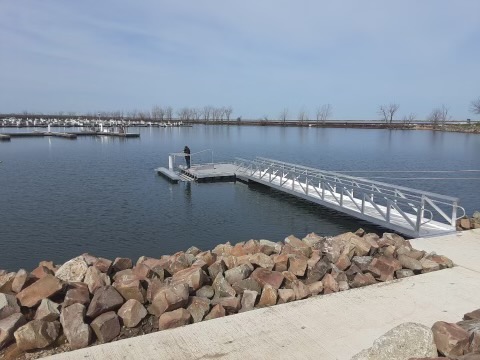
Cleveland Metroparks Adds Kayak Launch and Gangway
Established in 1917, Cleveland Metroparks spans more than 24,000 acres across Northeast Ohio including 18 reservations, more than 300 miles of trails, eight golf courses, eight lakefront parks, dining and retail venues, and nationally-acclaimed Cleveland Metroparks Zoo. The Park District offers thousands of education and recreation programs and events each year across the 49 communities it serves, helping to create connections to nature and promote conservation and sustainability. Cleveland Metroparks is the recipient of the 2021 National Gold Medal “Best in Nation” Award for Excellence in Parks and Recreation Management.
Cleveland Metroparks has been operating the East 55th Street Marina since 2013. Conveniently located off of I-90 on the shores of Lake Erie at a 1,200-foot fishing platform and one exit away from the popular E 72nd Fishing Area and Gordon Public Boat Ramps, they have everything you need for a successful day on the lake! Stop in by car or boat for bait, tackle, coffee, snacks, and beer to go. Full-service ship store covering all of your boating needs.
Visit their site at clevelandmetroparks.com/parks/visit/parks/lakefront-reservation/east-55th-street-marina.
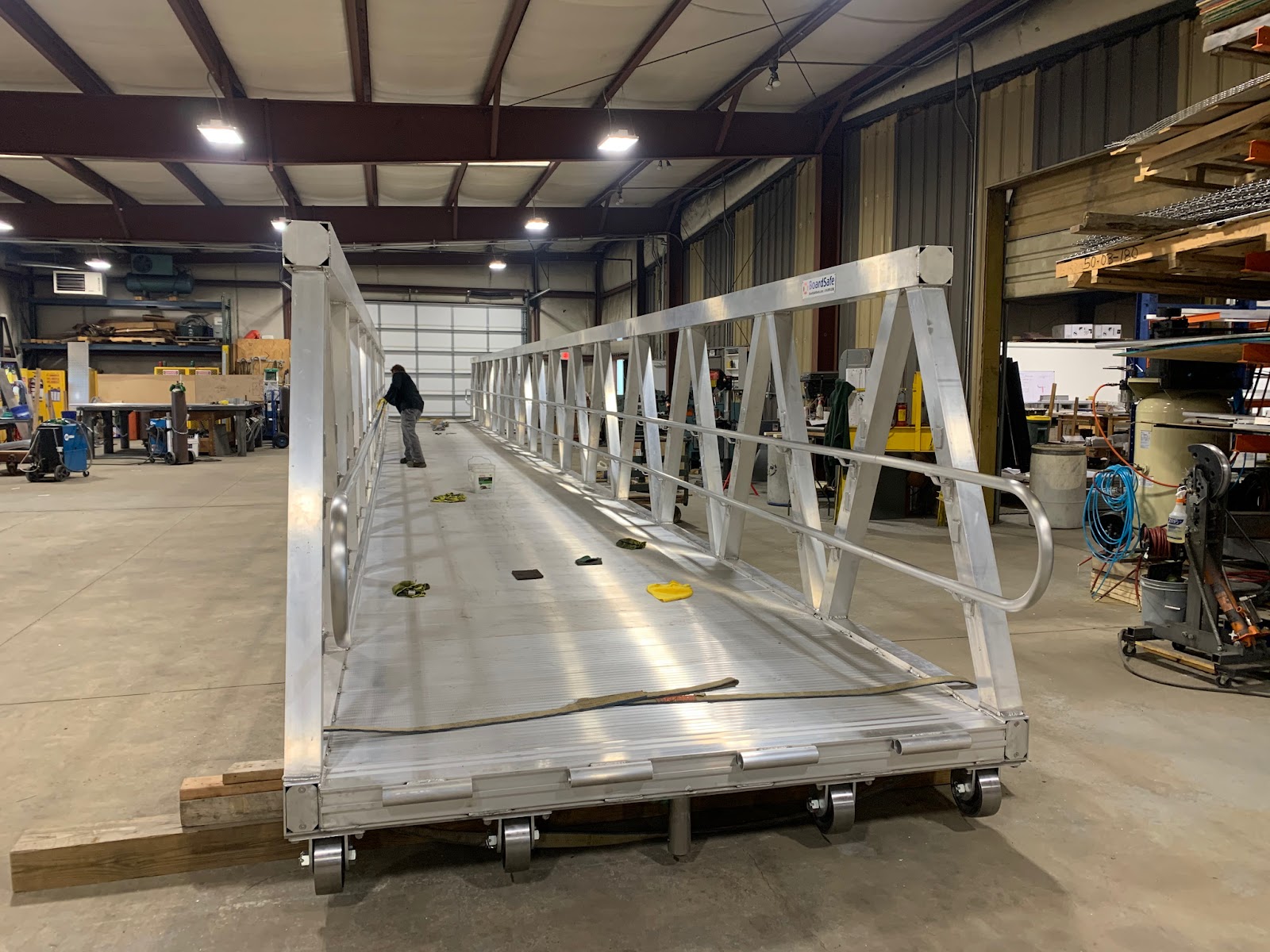
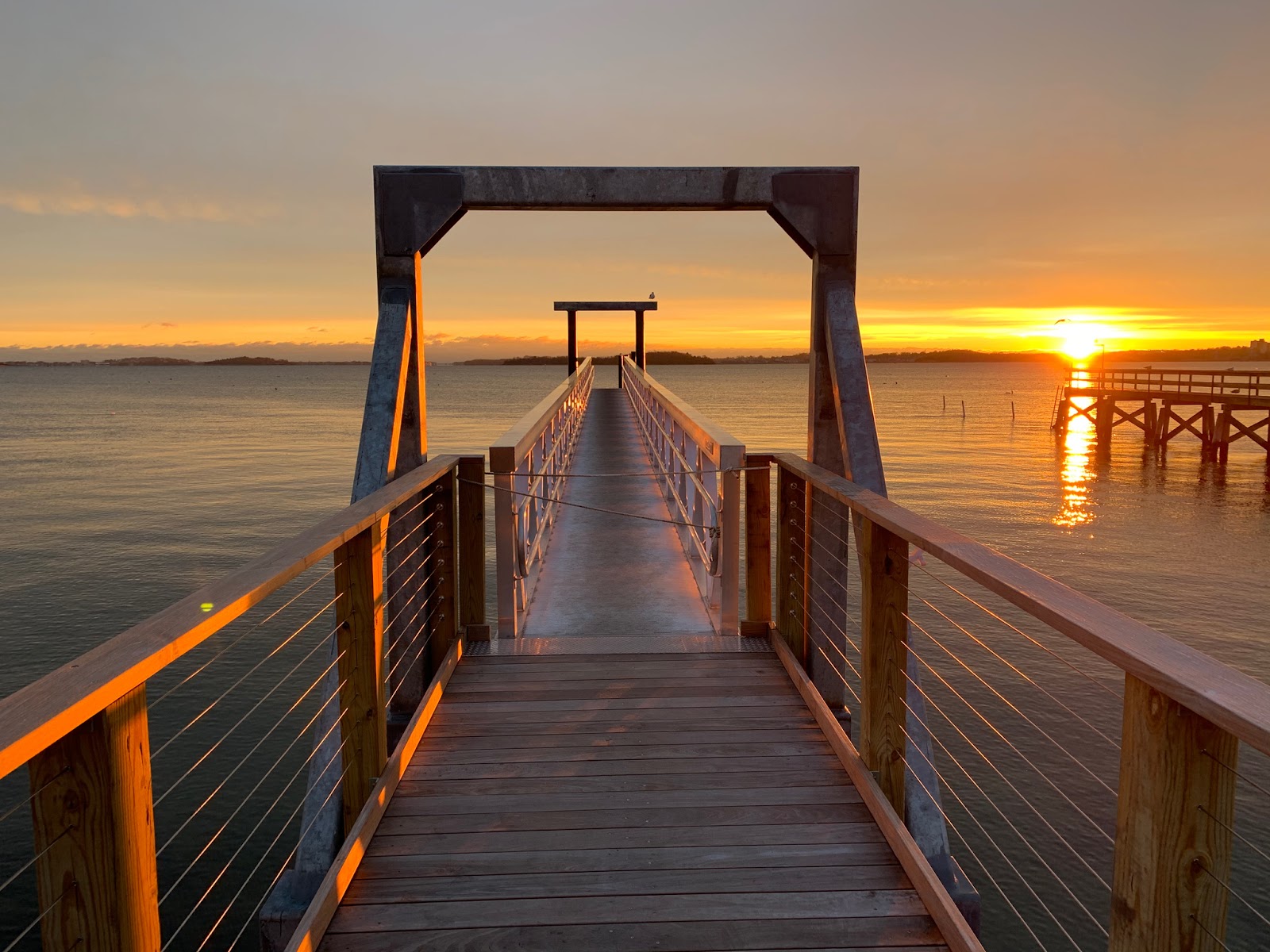
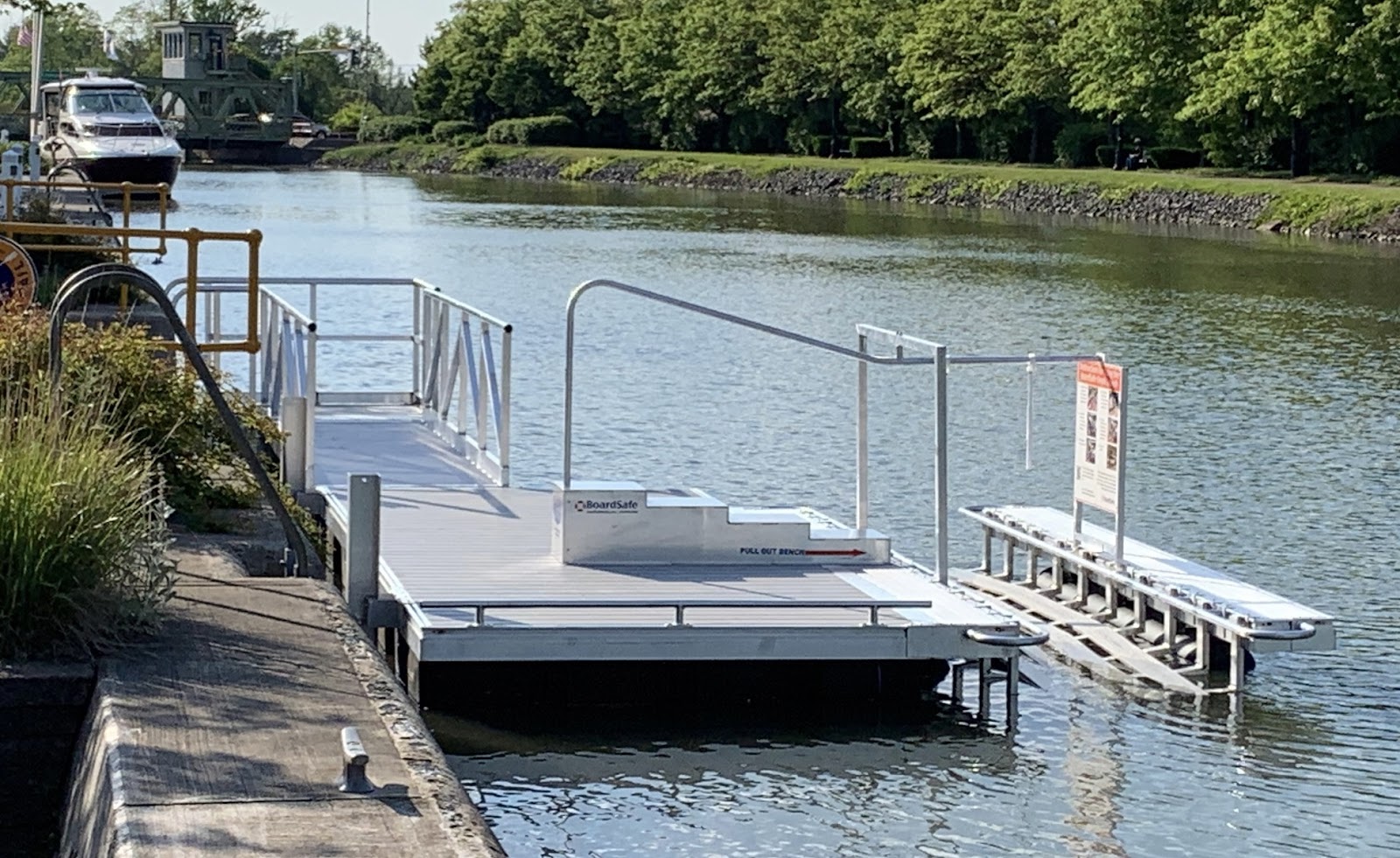
BoardSafe Docks has recently engineered, built, and installed our unique ADA-inspired adaptive kayak launch to make boating accessible to adaptive paddlers. We also installed a 50-foot, heavy-duty aluminum gangway to provide access to the launch.
Click here to read more about BoardSafe's accessible kayak launch.
Click here to read more about BoardSafe's aluminum gangway.
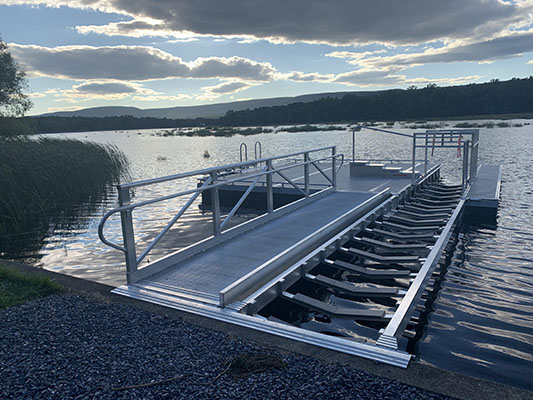
How Much Does a BoardSafe Adaptive Kayak Launch Cost?
One of the first questions our customers ask is, “How much does a BoardSafe Adaptive Kayak Launch cost?”
Let me explain some of our general pricing guidelines and the different components of our launch that directly affect pricing. The purchase of an adaptive kayak launch is much like the purchase of a vehicle or even a home — With so many options available, price ranges can vary depending on the options you select. Like a car, you’ll want to select the options that will make your excursions safe, comfortable, and easily accessible.
BoardSafe Docks manufactures a number of standard-size kayak launches, gangways, chutes, and floating docks. These components can be arranged in countless configurations to meet the site conditions and needs of our customers.
Click here to view the different kayak launch layouts that will affect your pricing.
There are 20 different configurations that BoardSafe Docks has put together to meet customers' unique needs and to ensure usability for adaptive paddlers. Our goal is to make sure our launch system provides the necessary features that accommodate the widest range of user abilities. We’ve evaluated hundreds of launch sites and have learned what’s needed to enable our customers to safely and easily access their vessels and get out onto the water.
BoardSafe’s sales team members are available to evaluate your waterfront and make recommendations about the launch system that will work best for your application and your intended users. After your site has been evaluated, our sales professionals will guide you on the layout that will be the best option for your users and your access point. They will also assist you with budgetary numbers for your site’s design.
Can I save money by purchasing a BoardSafe Kayak Launch system now and adding the adaptive kit when additional funds become available?
The BoardSafe Adaptive Kayak Launch has features that can be purchased separately or together. These features include the gangway and accompanying kayak chute, floating dock, adaptive kit (step-down bench, overhead roll cage with grab bars and straps, and signage), saddle launch or Clip-a-Launch. Each of these components can be personalized to your launch site with the features you find most important for the safety and accessibility of your identified users. The launch can be designed for the components in the adaptive kit to be added at a later time.
To keep the initial cost down, the kayak launch can be purchased with or without the Adaptive Boarding Kit (bench with pullout seat, overhead grab bar with hand straps, and instructional signage).
The length of the gangway and accompanying kayak chute is another feature that will affect pricing. Depending on the location and placement of the floating dock, the gangway and chute will be designed in varying lengths. The floating dock structure of an adaptive kayak launch needs a minimum water level of 18 inches in order for the encapsulated floats to remain floating in the water so the gangway, chute, and floating docks are not sitting in the mud.
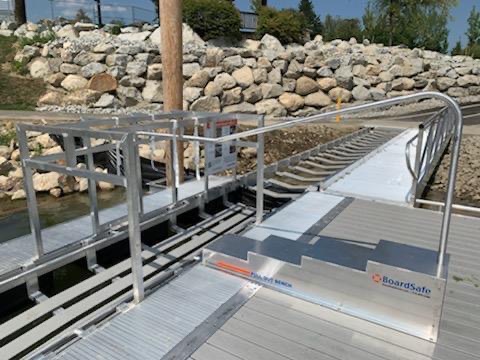
This is one of the reasons that BoardSafe Docks offers multiple solutions and layouts. Their design capabilities will assist you with choosing the best configuration.
How quality and longevity affect the cost of a BoardSafe Kayak Launch system
BoardSafe launches are manufactured using aluminum welded frames, composite deck lumber, encapsulated flotation, and proprietary extrusions that make their system durable and able to withstand the test of time. Our launches are also designed to be used with canoes and stand-up paddleboards, making their versatility very desirable for many user groups.
The approximate price range of these configurations is between $30,000 and $55,000, depending on the size and options you select.
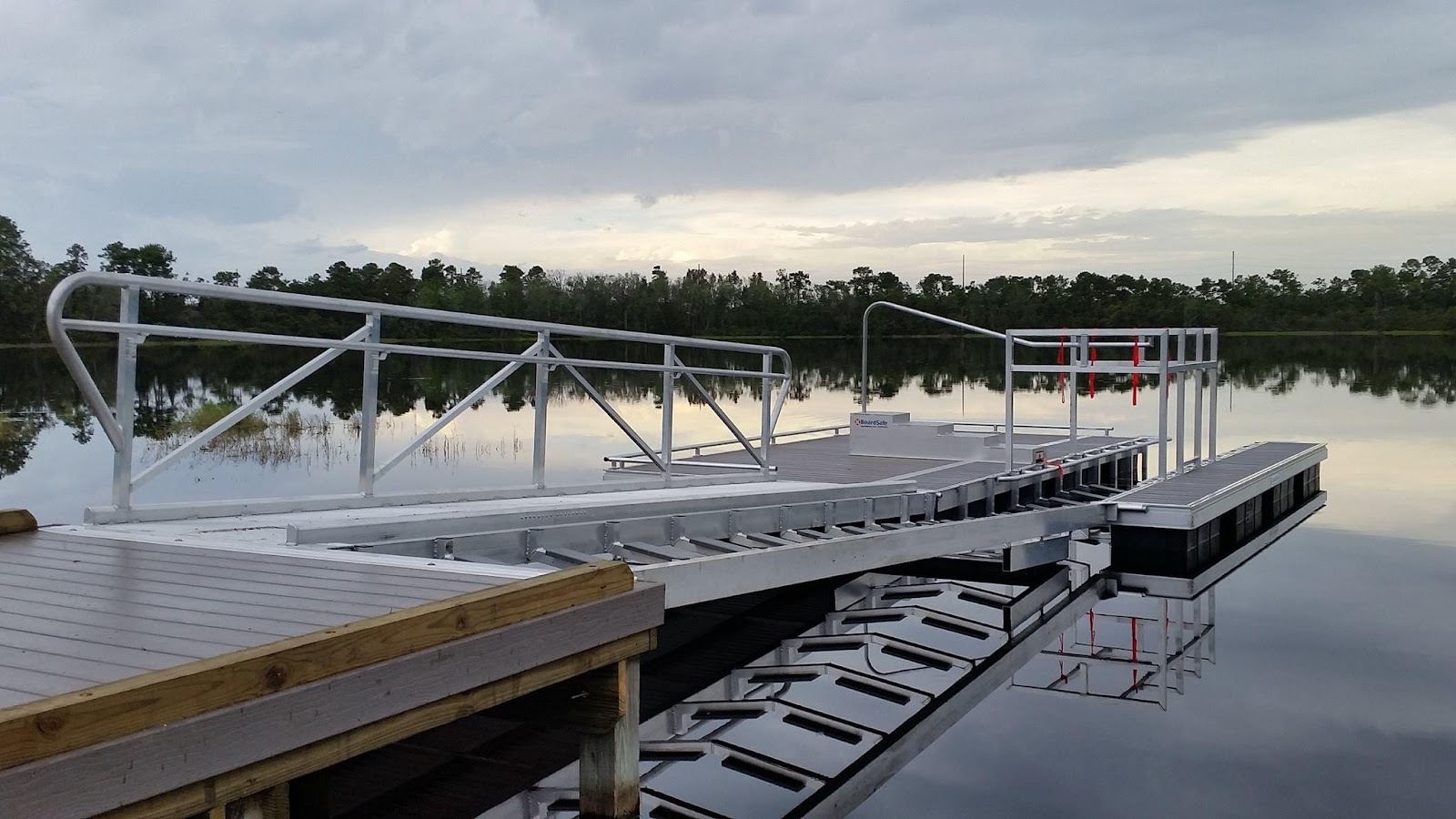
BoardSafe understands that you want your kayak launch to be around for a long time — longer than you might keep your car, and possibly as long as you plan to live in your home. Picking the right kayak launch with the right options and configuration the first time is critical to ensure maximum enjoyment with minimum maintenance. Because of this, most of our customers end up selecting the launch that will make them happiest in the long run.
Unfortunately, when customers only focus on the price of the kayak launch and are solely focused on finding the cheapest launch, they also sacrifice quality, warranty, low maintenance, and aesthetics. This can inevitably lead to regret — especially considering that, unlike a vehicle, a kayak launch cannot be traded in when someone is dissatisfied and disenchanted with their product or performance.
BoardSafe Docks is a trusted expert in the location, selection, site work, design, engineering, manufacturing, and installation of floating docks, fishing piers, gangways, pedestrian bridges, rowing centers, marinas, and the BoardSafe Adaptive Kayak Launch.
Our adaptive launch provides a truly accessible experience for the adaptive paddler as well as all able-bodied paddlers. To discuss your project, and for assistance with finding your optimal waterfront solution, please call 610-899-0286 or visit us at BoardSafeDocks.com.
How Much Does an Adaptive Accessible Kayak Launch Cost?
Across the nation, many people — from park rangers to city engineers — are seeking to improve access to their local community’s water and marine features. This is an extension and outgrowth of the Americans with Disabilities Act (ADA), with the objective to provide access for all abilities to all amenities. Access to nature for the disabled has been long overlooked, but now parks, towns, and clubs are clamoring for ADA-accessible picnic tables, bathrooms, and walking trails, as well as adaptive kayak launches.
With any new product, one of the first questions asked is, “How much does it cost?” The appropriate answer is almost always, “Well, that depends!” So, how much does an adaptive or accessible kayak launch cost? The answer is inevitably found within the range of quality, features, and durability. This can mean a few hundred bucks for an accessory to bolt onto an existing wood dock or tens of thousands of dollars for an elaborate commercial-grade adaptive floating kayak launch and dock system.
System vs. Accessory
A quick Google search finds accessibility accessories to attach to existing docks. The less expensive the item, the less utility it offers to those with a disability. Hanging a large hook from an algae-encrusted wooden dock to stabilize a kayak is not helpful to individuals who are unstable on their feet. It may be useful to hold the boat for Grandma or a daredevil teen, but it is not suitable for one with mobility challenges. As the price for those bolt-on accessories increases, so do the engineering and thought put into the design of the part to ensure safe and easy transition in and out of vessels.
An accessory’s usefulness is contingent upon the quality and durability of the existing dock to which it is attached. For example, a BoardSafe Clip-a-Launch can be bolted onto the aluminum frame of an existing rigid or floating dock, and costs a few thousand dollars. Depending on the range of abilities of the users, a Clip-a-Launch alone may not suffice to assist paddlers in and out of boats. A person’s needs may require additional bars, straps, a transition bench, and other adaptive features to enable the paddler to easily enter and exit their craft. These features can be added to an existing dock, and are also sold as a package or full adaptive kayak launch system.
A fully-accessible or adaptive launch system is not an accessory that can be attached to an existing dock. The best option is, depending upon the need, a floating dock, gangway, and other accessories that facilitate water access.
Adaptive Kayak Launch System Features
The gangway must offer an adaptive paddler a way of moving the kayak from the land to the launch area and vice versa. The gangway should have a maximum pitch of 1/12 (meeting ADA slope requirements and features) and a parallel boat chute where the vessel is placed in alignment with the kayak launch.
The chute and launch area should be large enough to accommodate kayaks with outriggers. However, it shouldn’t be too wide or it will create too great a distance between the boarding bench and the cockpit of the vessel.
Ample space on a floating dock As the paddler rolls up to the bench to begin the transition from the chair into the cockpit, sufficient space is required to maneuver the wheelchair, especially if there is more than one adaptive paddler leaving their chairs on deck. The floating dock should also have a toe kick around the perimeter as an added safety feature. This prohibits a wheelchair from accidentally rolling off the dock into the water.
A tiered bench allows the user to easily transfer from the wheelchair. The top step of the bench must be equal to the height of a wheelchair in order for the user to transition from their wheelchair over to the bench. The steps should be minimal in height (approx. 3”) to allow the paddler a small shift from step to lower step.
The bench must be equipped with a pull-out seat that slides out over the kayak and directly above the vessel’s cockpit. This allows the adaptive paddler to slide down into the vessel with a limited drop and shimmy himself or herself into their kayak.
The roll cage must provide support for an overhead grab bar as well as optional hand straps. Adaptive paddlers have varied upper-body strengths and varied preferences as they enter and exit their vessel. Some paddlers prefer the grab bar while others prefer the hand straps. There should be no obstructions on either side of the step-down bench, allowing the paddler to choose the side they prefer and are most comfortable using to navigate down the bench.
The pull bars on either side of the launch must be at the right elevation and distance from the paddler, making it comfortable and easy for a disabled paddler to pull himself or herself down the chute and into the water.
Stabilization saddles and launch area Too often, the launch area is sloped and includes rollers. When a kayak, canoe, or SUP, is placed into the launch, gravity will dictate the action of the vessel. If a kayak is not level in the chute, it will roll into the water and will not remain securely in place for the disabled paddler to board or disembark from. Remember, the design needs to accommodate the return of paddlers as well, and rollers can actually make this condition worse because they prevent the vessel from sitting securely and remaining in place. The width of the launch area is also a factor — if it is too wide, it makes it more difficult for a paddler to make their way from the step-down bench in order to transfer into their vessel.
Quality and Durability
With most products, value is inevitably determined through quality products enduring the test of time. Most entry-level accessible kayak launches consist of molded plastic floating docks and accessories with some metal features. While they may not be as aesthetically pleasing or able to survive severe storms, they are an affordable way to test the waters (so to speak), launch a program, and engage new paddlers without a large investment. These launches require regular maintenance and have a short product life. For organizations that desire a high-quality adaptive kayak launch and have the budget to match, a BoardSafe kayak launch system should be considered.
BoardSafe’s entire system has been engineered for paddler performance and product durability. This includes commercial-grade aluminum, stainless steel, weather-resistant and slip-proof composite decking, encapsulated floats, and many other design features that facilitate safe transfer in and out of the water. These systems last for many years and are the preferred products of clients who don’t want to remove the docks in the winter or who have fluctuating water levels or who are susceptible to heavy storms.
Accessible vs. Adaptive
Although often used interchangeably, the terms “accessible” and “adaptive” are distinct and need to be properly understood. In the traditional sense, “accessible” denotes something that is easy to get to, where barriers such as steps have been removed. It can also include features stipulated by ADA guidelines, like a 1:12 gentle pitch, specific height handrails, and alternative handrails. Accessible launches are great for able-bodied kayakers, beginners, children, seniors, and people with minor limitations like joint issues, arthritis, and developmental delays. An accessible launch may even work for a small number of paddlers with moderate disabilities. However, for adaptive paddlers with greater mobility challenges, an accessible launch alone does not meet their full range of needs, and will not get them into the water safely or easily.
An “adaptive” launch is an enhanced accessible launch. Adaptive kayak launches are engineered and designed with features that accommodate paddlers of all abilities. The adaptive kayak launch designed by BoardSafe Docks was created based on the input of physical and occupational therapists and adaptive paddlers. Adaptive kayak launches are feature-rich to empower all users to overcome any mobility challenges.
Value
Many kayak launch buyers determine the value of a kayak launch relative to its ability to assist a number of paddlers over a period of time. Most people are aware that a product that outlasts a similarly-priced product offers greater value. In a similar way, but often overlooked, a product that accommodates a greater number of users will offer more benefit to more people, and therefore be more valuable. Feature-rich adaptive launches could help three or four times the number of users than a standard accessible launch. Each potential buyer needs to calculate this cost of ownership and return on investment. Many buyers go beyond the basic quantifiable measures of determining a kayak launch’s value, because helping those who live with the most severe handicaps is priceless. Some inferior accessible launches keep many with mobility issues from even considering their use, but allow an organization to check off the “ADA” box. On the other hand, those who desire to empower all users — especially those who typically do not enjoy life’s simple pleasure of roaming access — do not equate an adaptive launch’s value to the ROI because helping those in our communities with the greatest needs is, as they say, priceless.
To discuss your project and evaluate BoardSafe’s adaptive kayak launch options, contact us on our website or call 610-899-0286.
The Supply Chain Impact on Floating Docks and Kayak Launches
What This Could Mean for Your Project
The supply chain shortage has affected every business and consumer on the planet—and over the past year or so, we’ve all seen and experienced what happens when it breaks down.
You have probably walked through your local grocery store and seen the empty shelves. Whether it’s toilet paper, paper towels, foodstuffs, or toiletries, the supply chain shortage has also caused havoc with the materials used in manufacturing.
These days, you’re more likely to see shortages of parts, materials, and stuff that makes other stuff, like building materials and mechanical parts. For example, car lots are empty and both new and used car prices keep climbing higher. We’ve all heard about the chip shortage that every car manufacturer is experiencing. Demand has overrun supply, which is unprecedented in the auto industry. The chip shortage has limited the production of every make of automobile.
The marine and boating industry has been impacted by the same issues in massive ways as well. This is why BoardSafe Docks wants you to understand how the supply chain may affect the manufacturing and pricing of your kayak launch, marina, rowing center, gangway, or pedestrian bridge. A confluence of two major factors has created a situation for everyone where demand is greater than supply.
- The interest in kayaking, paddle sports, and adaptive recreation has seemed to reach an all-time high as a result of the COVID-19 pandemic. Paddlesports have proven to be a wonderful exercise for the mind, body, and spirit. Paddling is a way for people to be together yet remain safely distanced from each other. Its interest took off when the pandemic was shutting down our world.
- The entire country and every industry is now working through a serious supply chain shortage. Our most critical materials used in the manufacturing and fabrication of our aluminum floating docks, gangways, and bridges, are in high demand with low supply.
For more information and better understanding, keep on reading.
First, let's take a look at the major components of the parts and materials we use in the production of our floating dock systems.
- aluminum
- composite deck lumber
- concrete decking
- plastic encapsulated flotation
- our proprietary extrusions
- protective rub rail trim
- tools used in the fabrication and maintenance of these systems
- and much more
Material shortages have not only stretched out the timetables on many of our projects but they’ve also (unfortunately) made many elements of these projects cost more than originally anticipated. The increase in the cost of these materials has been passed on to us and also our customers.
We wrote this article to help you understand the specific reasons behind the longer timetables we’re experiencing as a manufacturer and to explain the higher costs you might be experiencing in 2022.
All dock manufacturers, including BoardSafe Docks, have been dealing with the same supply chain issues, which we’ll explain in the rest of this article.
Material shortages and price increases exist in all facets of our production (aluminum, composite and concrete decking, flotation, extrusions, rub rail)
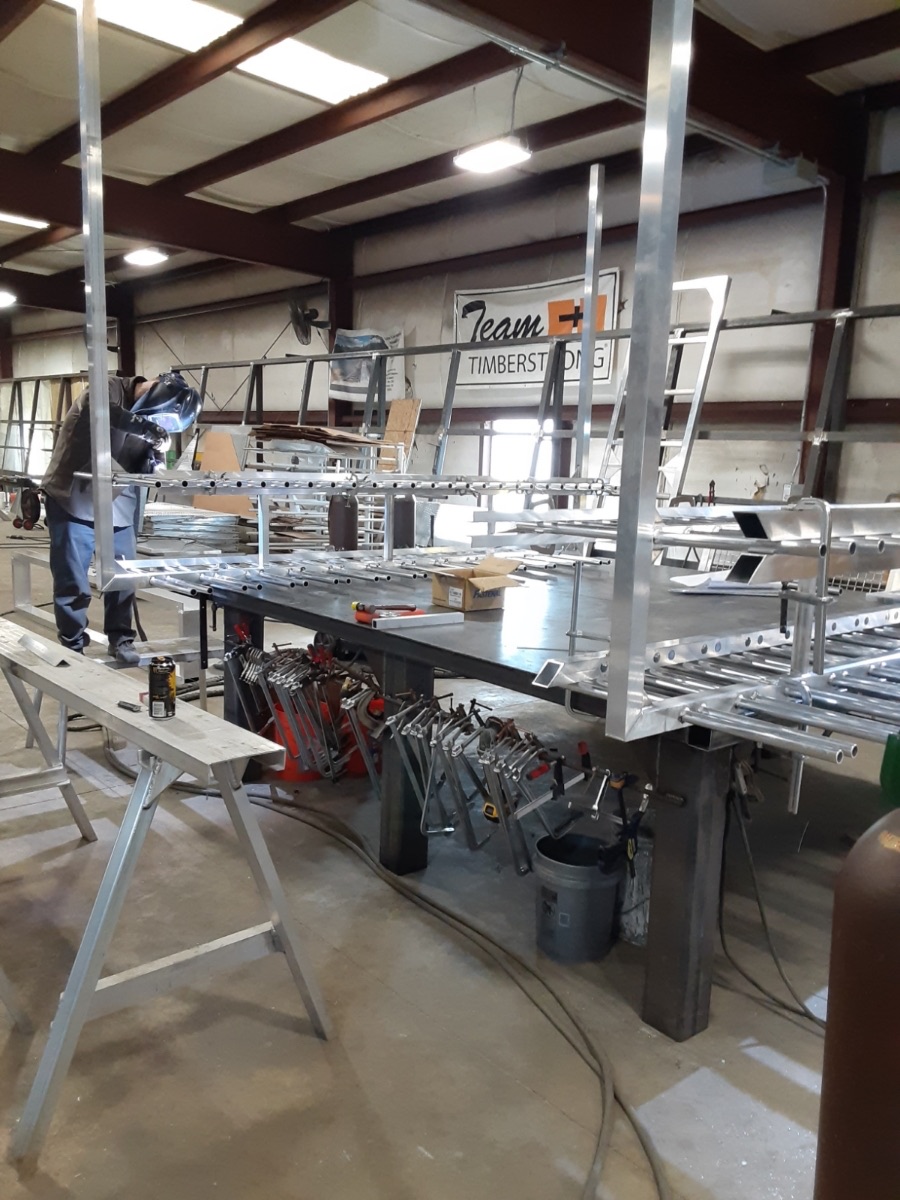
Aluminum, which is used to manufacture a wide range of durable waterfront products, suffered a severe production downturn when the initial lockdowns swept across the world about a year ago. Deliveries of raw aluminum are in short supply and prices for aluminum have been steadily increasing over the past year. To keep our pricing accurate, we’ve been tracking the steady increase in the price of aluminum starting back in 2021. Beginning in January 2021, and up through April 2022, we’ve seen the cost of aluminum increase 75 – 80% over last year’s prices. While inflation has caused prices to rise everywhere as we know them, an 80% increase is shocking to us all.
The reserve aluminum supplies across the USA are depleted. We used to be able to call our aluminum supplier and arrange for a next-day or 2-day delivery. Not anymore.
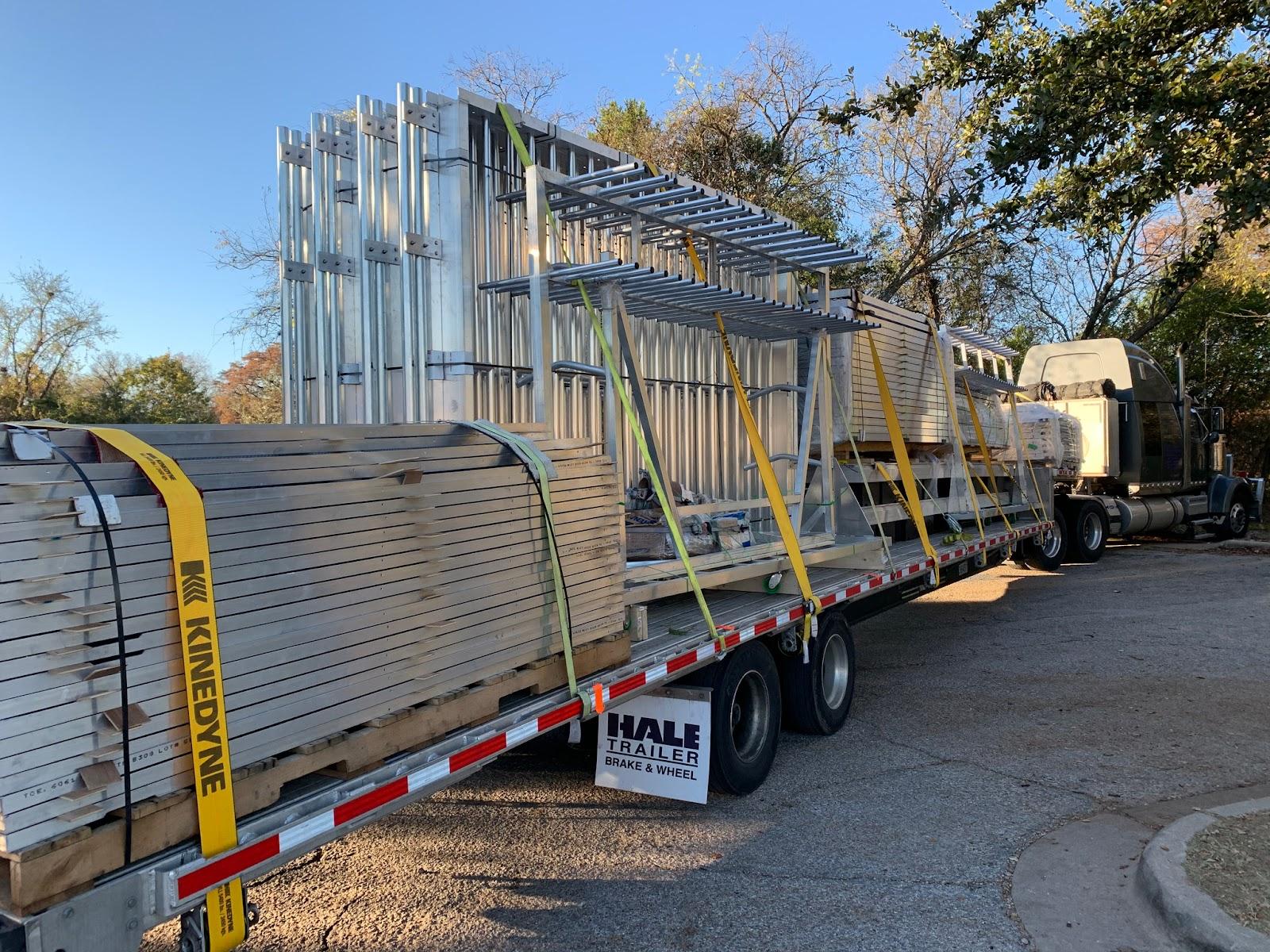
As a result of the pandemic and material shortages, product delivery of our custom extrusions orders can be as far as 8 months out. Our distributor’s products are stuck out at sea on shipping containers, waiting to be unloaded and delivered across the country. Before the pandemic, we all took the supply chain for granted; we didn’t even think about the logistics industry. The supply chain shortage has changed the way warehouses, manufacturers, trucking companies, and distribution centers, conduct their business. The Wall Street Journal recently noted that aluminum producers are now seeking new avenues to get their hands on scrap metal like old cans.
Composite decking prices have increased by about 25% since January 2021. However, we’ve been very fortunate in that our composite decking supplier has been able to meet our order requests in a timely manner. With decking, our only concern has been the increase in its pricing.
Plastic encapsulated flotations are the floats that are attached under our floating docks and gangways that keep them afloat. From the time of order, we’re now experiencing 8 – 12 weeks in lead time, about 3 months. Flotation has also experienced a 25% price increase since we began tracking these costs.
Rub rail is the rubberized trim attached to the perimeter of our dock systems that serves as the protective guard around our floating docks. Our supplier of this extruded product has informed us there’s about a 12-week (3-month) turnaround for them to get the rubber compounds they use to make the custom extrusions for our systems. The pricing for our rub rail insert has increased by 20% since 2021.
Unexpected disruptions
The COVID-19 lockdown felt like the mother of all supply chain disruptions when businesses were forced to shut down early in 2020. Only those deemed “essential” were allowed to remain open. We’re all paying the costs for it now. Everyone continues to experience the consequences of the pandemic with no real end in sight. Inflation is on the rise and we’ve seen increases in the price of homes, cars, gasoline, and food. Our products are not immune to these increases.
Severe weather, hurricanes, and employment shortages, add to the consequences of the pandemic. Since many of our producers of raw materials are overseas, the shipping standstill has deprived manufacturers of our most critical supplies.
Aluminum is in the middle of the greatest demand surge ever seen or experienced in its industry. This high demand is happening despite its 80% increase in cost. And prices continue to go up without lessening its demand.
What this means for manufacturers and their customers
In short, the market for kayak launches, marinas, gangways, and rowing centers, (with their main material being aluminum), has been hit by the perfect storm of perfect storms. However, we’ve survived the pandemic shutdowns, COVID, employee shortages, weather disruptions, supply chain shortages, and increased pricing for our main materials.
If you look at these events as a whole and look at the big picture, none of us ever imagined we’d experience events like these in our lifetime.
Like other dock builders and producers of goods and services, we’re working as hard as we can to design and manufacture each individualized project that we’ve planned with our customers. The simple reality is that we can’t work any faster if we want to maintain our industry-leading standards that BoardSafe is very proud of. Nor can we overcome supply chain issues and increased costs when they’re simply out of our control — regardless of our desire and efforts to prevent them.
One change we’ve been forced to make as a company regards the bidding and quotes of our marine products. We can no longer hold the price of our bids for longer than 30 days. In the past, when there weren’t drastic changes and increases in the cost of raw materials, our bid remained the bid. While we work hard to keep our prices fair, we must keep a close eye on what we’re paying for materials and their delivery fees.
Educating our customers and communicating these changes are important to us. If at any time you feel you need more information to make an informed decision about your product’s pricing, our sales team is always available to answer your questions.
How customers can help keep our industry moving forward
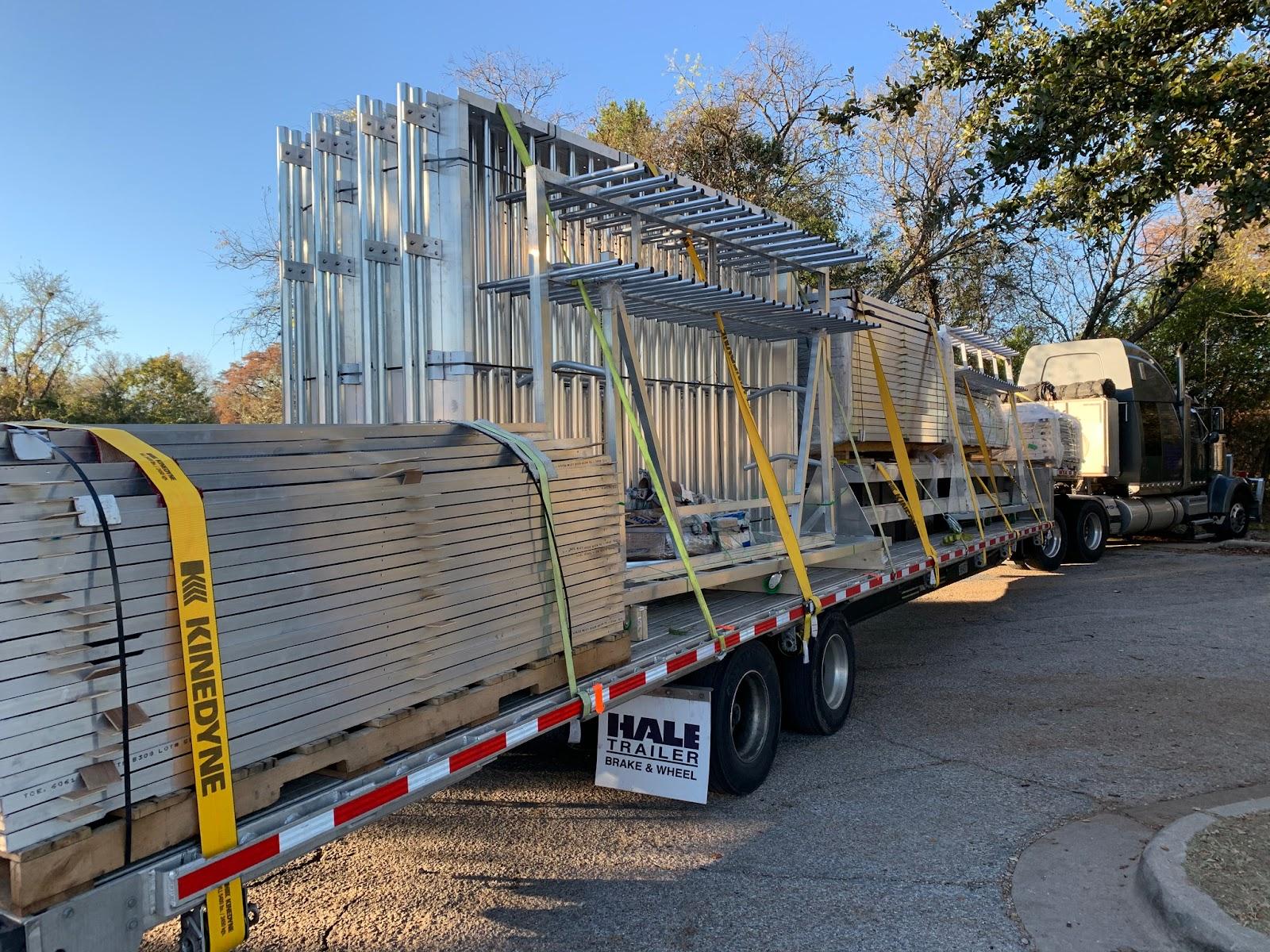
If you're planning to do business with us, we've explained the length of time it’s taking to get our materials for production. The length of time is not something we or any other dock builder can control. Please don’t wait until the last minute to confirm your order with us. There’s a new game in town, and with demand being so much greater than supply, aluminum suppliers are requiring upfront payments for their orders, as well as a customer’s signed purchase order to show evidence that our order is designated to a specific job. You see, demand for aluminum is so high, suppliers do not want to see manufacturers stockpile aluminum like many people were doing with toilet paper, paper towels, and disinfecting wipes in 2020. The price increase of manufacturing materials has also caused material suppliers to proceed with caution to ensure they’re getting paid in a timely manner for the materials they sell.
Working together on payment terms
The deposits we need to pay to material suppliers guarantee our place in line for the raw materials we need to build your job. Our deposit helps keep our supplier’s cash flow flowing. And since we need to pay for your materials in advance of receiving them, a deposit from you on your project is a reasonable request in today’s market. We understand that this can sometimes create hardship for all parties involved. However, due to increased material costs, we want our customers to understand why a deposit and clear payment terms are necessary.
BoardSafe Docks has absorbed a massive increase in up-front costs for all of our jobs. Therefore, our ability to be flexible with our terms has been greatly reduced. Final payment for our projects is expected upon delivery and installation. Our employees need to be paid, our overhead costs need to be satisfied, and our trucking companies and installation teams expect the same courtesy from us. Therefore, we appreciate you working with us to support these terms and prompt payment for the quality products and services that BoardSafe stands behind.
We’ve already entered the spring season of 2022. Kayaking and rowing season is just a few weeks away. We know our customers want their launch, gangway, bridge, rowing center, or marina project, to be installed in a timely manner and ready to go for the approaching summer season.
Every dock builder and manufacturer is doing their best to meet customers' installation wishes. But the obstacles identified in this article will likely continue to affect our entire industry (and many others) for the foreseeable future.
So, whether you’re planning on getting your launch, gangway, pedestrian bridge, rowing center, or marina from BoardSafe Docks, we can only say this:
Let’s keep pushing through this together, with everyone doing what they’re responsible for to get the job completed in a timely manner. BoardSafe offers high-satisfaction products that can improve the quality of life for those who like to kayak, canoe, row, or SUP.
At BoardSafe Docks, we manufacture world-class aluminum-framed floating docks, adaptive kayak launches, rowing docks, marinas, gangways, and pedestrian bridges for our customers all across the USA. If you're shopping around for quality, feel free to take a look at, or request custom pricing through, our website: BoardSafe Docks.com.