
What Length Gangway Provides Handicap Access for an ADA Floating Dock, Fishing Pier, or Adaptive Kayak Launch?
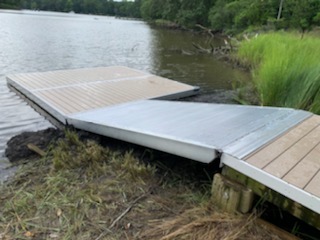
Many states, cities, and other government and nonprofit entities, are promoting safe water accessibility products for adaptive athletes and individuals living with a handicap. These include a range of products, like adaptive and accessible kayak launches, ADA fishing piers and floating docks, aluminum floating rowing docks, and more. As this new industry grows in popularity, there is much uncertainty about how to design and engineer products that truly accommodate all ages and abilities. BoardSafe has become the trusted expert to engineer, design, and manufacture accessibility products for those who are serious about ADA access for their community.
We often get asked, “What length gangway do I need for my dock project?” There are many site conditions that need to be considered before this question can be answered.
One of the most important considerations is the vertical dimension from the top of the floating dock to the connection point on land. The connection point may be a concrete foundation or fixed wood pier. It is important that this dimension be determined when the water is deemed at its lowest recorded daily average. This water elevation is referred to as “mean low water” (MLW).
The slope requirement for the gangway is also an important consideration. You will need to find out what regulations you are required to follow, such as those regarding the Americans with Disabilities Act (ADA). If your project is for commercial or public use, this is something that needs to be considered. If so, you will most likely need a gangway that provides either a 1/12 (8.3%) or 1/20 (5.0%) slope. Again, this needs to be clarified by your local permitting authority. If your project is a residential application, there may be no slope requirements you need to follow. We have, however, determined that a slope of 2.75/12, or 22.9%, is the maximum slope that is comfortable to walk up or down.
Another consideration is water depth. We manufacture our gangways with flotation added to the bottom of the gangway. The reason we do this is to ensure the weight of the gangway does not put an additional point load on the dock. Quite simply, we don’t want to sink the dock because of the gangway’s weight. As a rule of thumb, we require a minimum water depth of 18 inches at the end of the gangway. This dimension may be larger for longer, more heavy gangways.
To help you determine what length gangway you will need, we’ve developed a drawing showing key dimensions and definitions. Gangway length will be based on your specific site dimensions and dock freeboard (the dimension from the top of the water to the top of the dock — please reference sketch below).
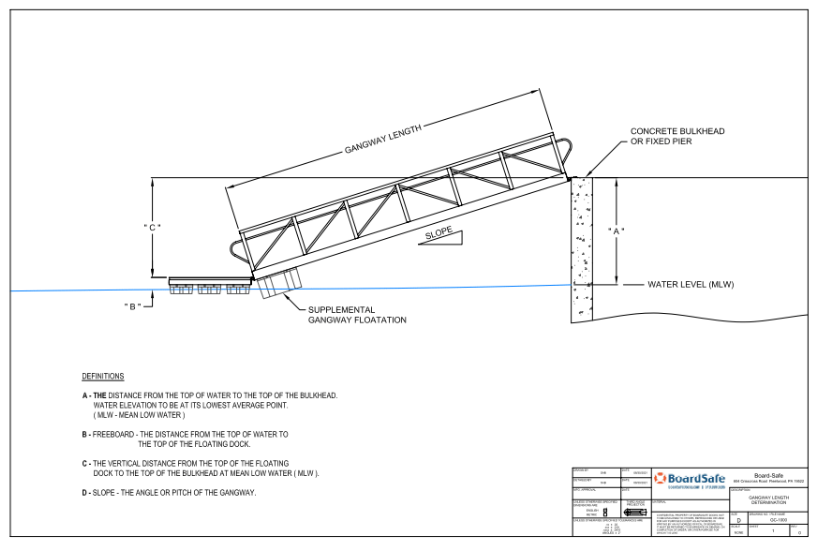
It is important to understand that BoardSafe Docks manufactures its gangways to be attached to our floating docks, not to sit on top of them.
For assistance in designing, engineering, and ordering an aluminum gangway for your project, please complete the contact form or call us at 610-899-0286.
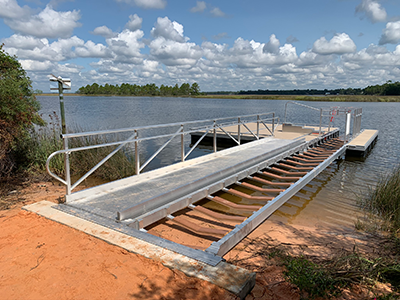
How to Calculate ADA Gangway Length to Provide Handicap Access for an ADA Floating Dock, Fishing Pier, or Adaptive Kayak Launch
Boating, paddling, and kayaking, have exploded in popularity as people of all ages and abilities seek new and exciting outdoor activities. Many community groups and government officials have taken notice of this trend and seek to open safe water access for all abilities — young and old, able-bodied and adaptive athletes. Some of the most popular accessibility products include adaptive kayak launches and accessible fishing piers that include many features that are considered Americans with Disabilities Act (ADA)-compliant. Included in this compliance is the slope of the gangway when the user moves from land, across the threshold, and onto the gangway that has a modest slope or pitch leading to the floating dock, pier, or boat launch. The slope requirement for the gangway is an important consideration.
The first step to compliance is to find out what regulations you may be required to follow, such as the Americans with Disabilities Act (ADA). If your project is for commercial or public use, this is something that needs to be considered. If so, you will most likely need a gangway that provides either a 1/12 (8.3%) or 1/20 (5.0%) slope. Again, this needs to be clarified by your local permitting authority. If your project is a residential application, there may be no slope requirements you need to follow. We have, however, determined that a slope of 2.75/12, or 22.9%, is the maximum slope that is comfortable to walk up or down. Even if your floating dock project is not subject to ADA requirements, following these requirements and features will ensure that the maximum number of users can safely use the dock or launch.
The second consideration regarding the gangway dimensions after the slope is identified is to calculate the length of the aluminum gangway. Understanding all site conditions is imperative, including the vertical dimension from the top of the floating dock to the connection point on land. The connection point may be a concrete foundation or fixed wood pier. It is important that this dimension be determined when the water is deemed at its lowest recorded daily average. This water elevation is referred to as “mean low water” (MLW).
Another consideration is water depth. BoardSafe manufactures our gangways with flotation added to the bottom of the gangway. The reason we do this is to ensure the weight of the gangway does not put an additional point load on the dock. Quite simply, we don’t want to sink the dock because of the gangway’s weight. As a rule of thumb, we require a minimum water depth of 18 inches at the end of the gangway. This dimension may be larger for longer, more heavy gangways.
Refer to the charts below to estimate the gangway length based on two factors: Dimension “C” and the slope required for your project.
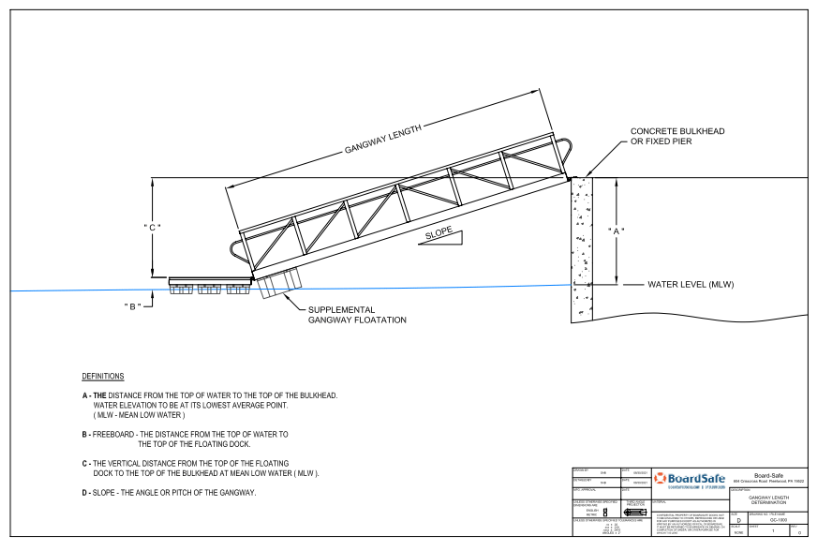
Typical Gangway Layout
Please note: Dimension “C” is determined by subtracting your dock’s freeboard (dimension “B”) from your overall height (dimension “A”) as shown on the layout below.
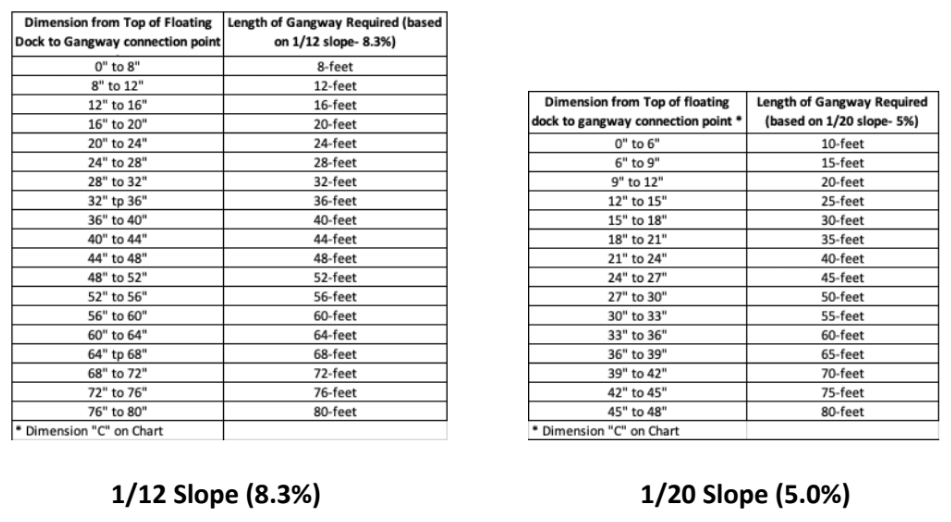
It is important to understand that BoardSafe Docks manufactures its gangways to be attached to our floating docks, not to sit on top of them. If your gangway sits on top of your floating dock, the slope and length may be different from what is shown on our charts above.
To help you determine what length gangway you will need, we’ve developed a drawing showing key dimensions and definitions, as well as charts showing gangway lengths based on your specific site dimensions and dock freeboard (the dimension from the top of the water to the top of the dock — please reference sketch below).
Please do not hesitate to contact BoardSafe Docks if you need assistance sizing the gangway for your project. Use the contact form or call our office at 610-899-0286.
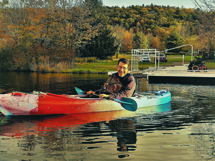
Ken Ryno, BoardSafe Spokesman, Returns to the Water
There are some people we can never forget, regardless of how long it’s been since we’ve seen them.
Due to ill health, BoardSafe spokesman and accessible sports advocate Ken Ryno has been away from the water for about 18 months. On September 13, 2021, Ken not only returned to kayaking — he had the privilege of cutting the ribbon at the dedication of a BoardSafe ADA-accessible kayak launch at Lake Minsi in Northampton County, PA.
The ribbon-cutting dedication motivated Ken to ramp up his therapy and other means to get back into the water. This is a milestone for both Ken and Lake Minsi. "A dock that was just recently installed that provides adaptive features for people that are disabled to be able to get from their wheelchair into a kayak and back out again," said Scott Tihansky, with Boardsafe Docks.
Here is a video of Ken's excursion on the waters of Lake Minsi:
BoardSafe's Launch-in-a-Box Makes Adaptive Kayak Launch Installation Easier
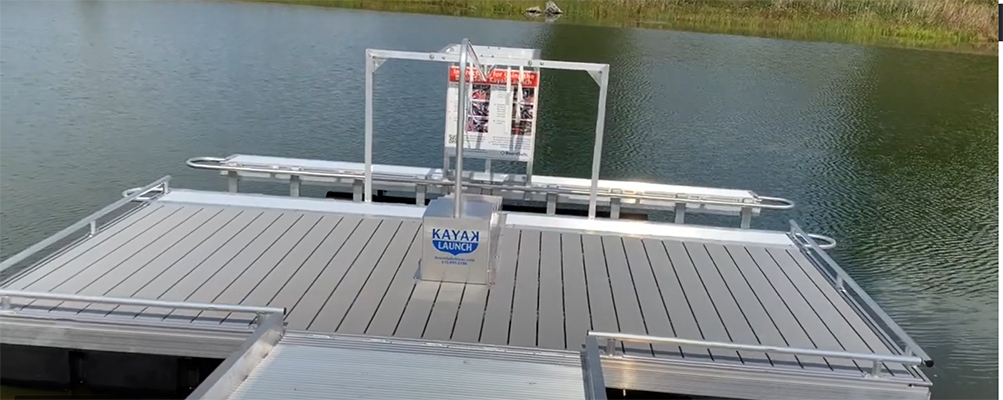
BoardSafe's custom-designed and installed adaptive kayak launches make it easier for the adaptive athlete to enter and exit a kayak and enjoy the freedom of this popular water sport.
Now, BoardSafe has pioneered a concept that makes the installation process easier for the user and the user's community: Launch-in-a-Box.
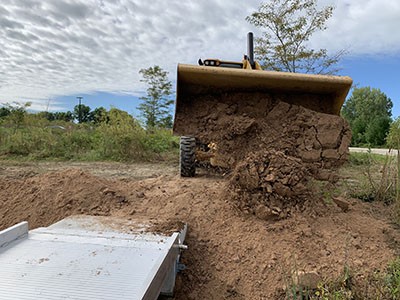
One of the essential elements of any installation is the concrete foundation that provides the anchoring for the gangway / floating dock system. In a typical foundation installation, the ground must be excavated, a concrete form installed, and then poured. A few days later, the forms are stripped and then backfilled. This process can take days to complete and cost between four and five thousand dollars.
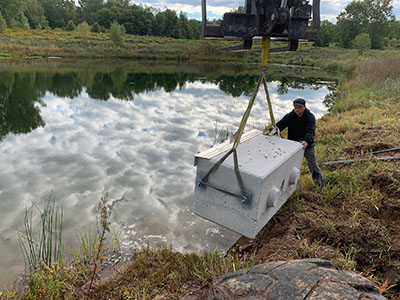
With BoardSafe’s innovative Launch-in-a-Box, the foundation arrives at your job site along with the entire dock system. All you have to do is excavate, set the precast foundation, and backfill. This process can take less than an hour to complete. There is no need for the customer to install a conventional foundation, and in most applications, the bulkhead mounting angle comes attached to the precast foundation, another time-saving benefit. This foundation option can cost as little as $2,500, a savings of up to 50% over conventional construction methods.
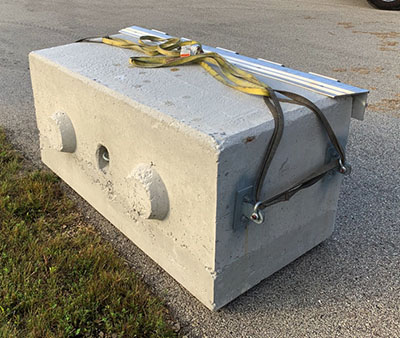
The following video of an adaptive installation in Oneida, Wisconsin, displays the ADA features of the Launch-in-a-Box. You will see the bulkhead mounting kit attached to the concrete, the gangway with toe kick, the 8' x 16' floating dock with toe kick, kayak launch, boarding bench, pull-out seat, roll cage with overhead grab bar (unique to BoardSafe), hand straps, and instruction sign with QR code that accesses an instructional video.
A few questions to consider
What size precast foundation do I need? The size of your concrete foundation will be determined by a number of factors: the length of the gangway, the size of the floating dock, and the geographical area of the installation. These are the most important factors that need to be evaluated before a recommendation can be made. To ensure that you are supplied with the correct-size precast foundation, we recommend that you contact our sales engineers for a free evaluation of your site conditions, as well as the dock system. In some areas, the recommended size of the foundation may need to be verified by a structural engineer, as well as local permitting agencies.
What if the bulkhead mounting kit isn’t installed on the foundation before arriving at my job site? In some cases, the foundation system may arrive in multiple sections, meaning the bulkhead angle will have to be attached by you in the field after the foundation block(s) is set. To help you better understand the installation process of the angle kit, we’ve developed an installation video detailing the entire process. Please note: All of the hardware shown in the video is included as part of the kit. You will, however, have to provide all of the tools referenced.