


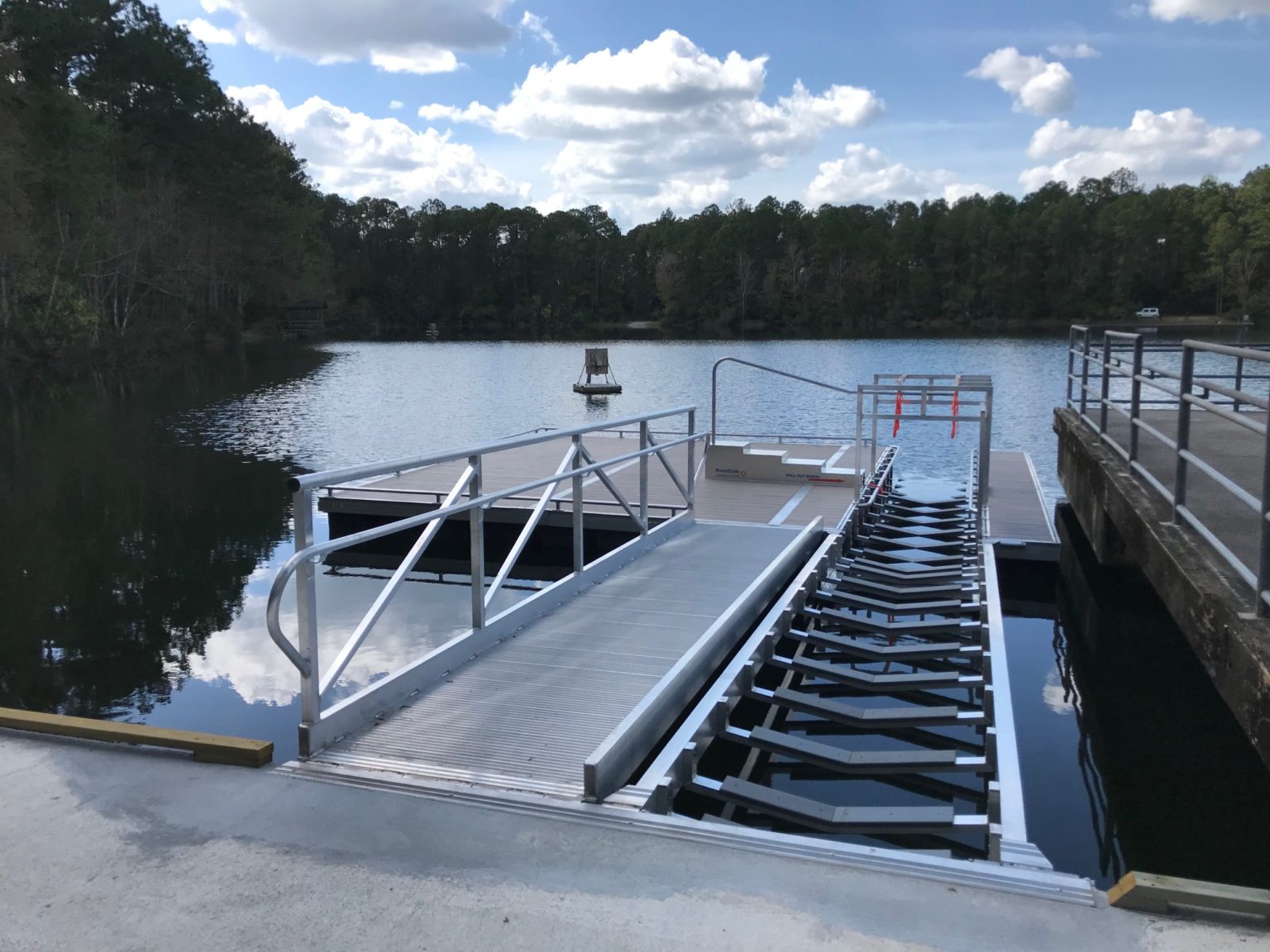
Jacksonville, Florida, Receives Another Adaptive Kayak Launch
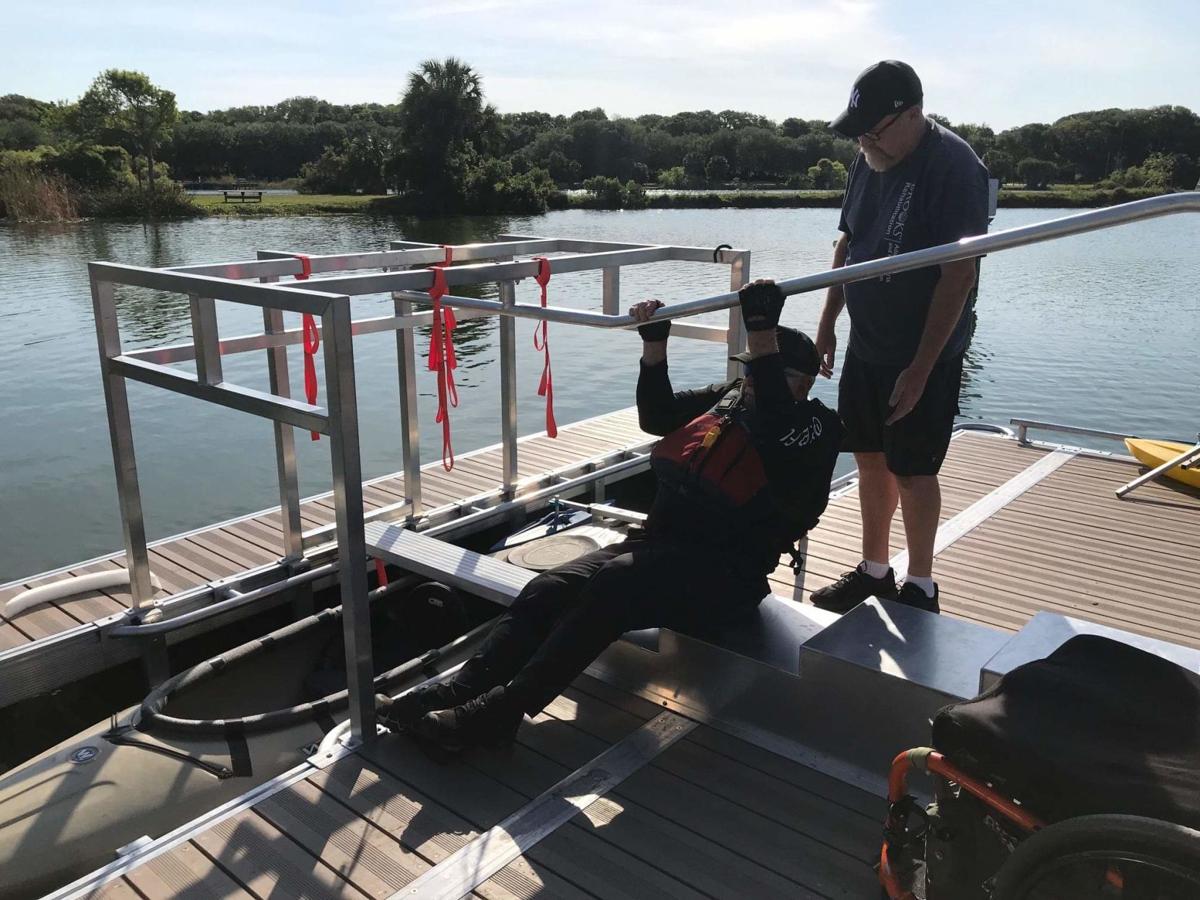
Another of BoardSafe's Made-in-America adaptive kayak launches has brought pleasure and renewed enthusiasm to watersport lovers in Jacksonville, Florida's, Bethesda Park. Share the excitement with this video:
Texas Rowing Center Austin Gets New BoardSafe Docks and Storage
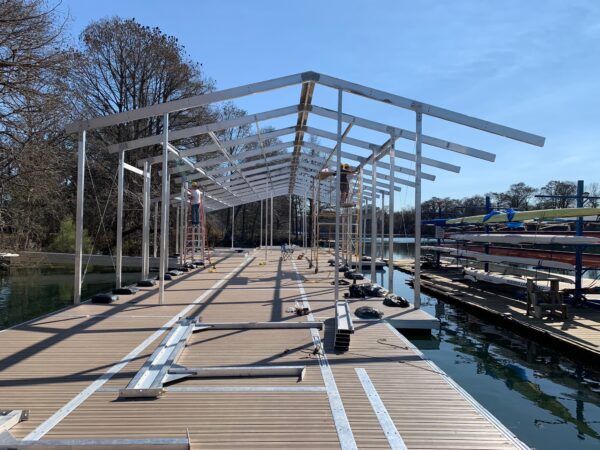
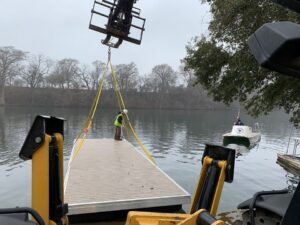
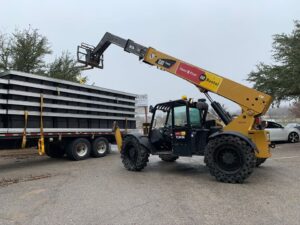
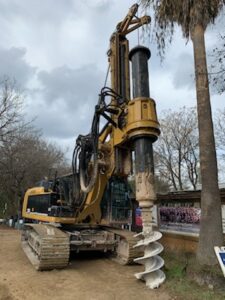
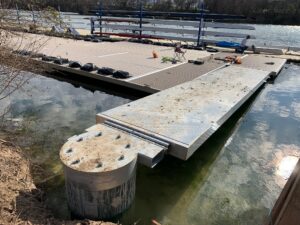
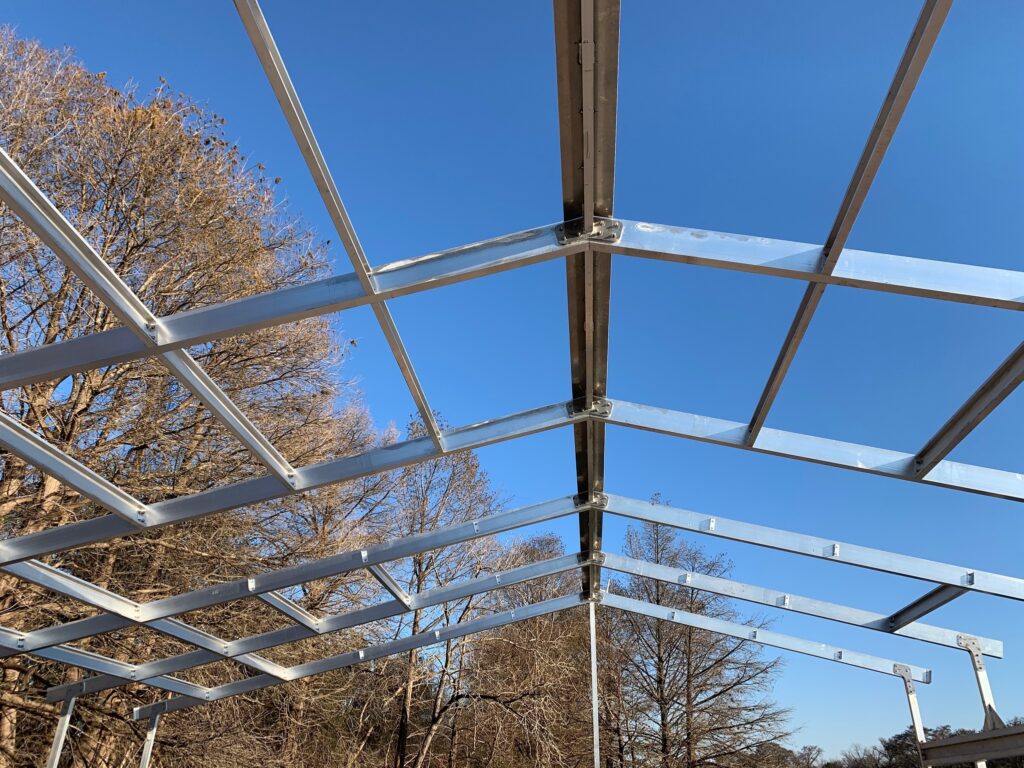
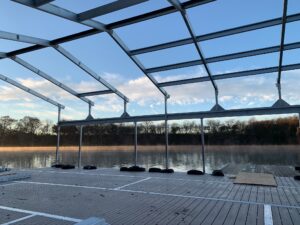
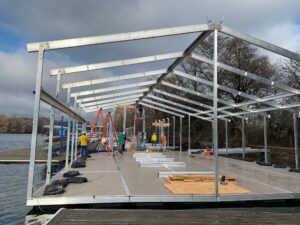
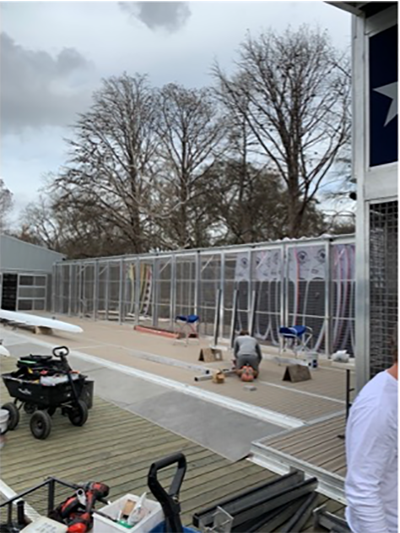
Take a look at these photos from the installation of BoardSafe docks at the Texas Rowing Center in Austin, Texas. The Center is a rowing, kayaking, and stand-up paddleboard (SUP) concession located in downtown Austin on the north shore of the Lady Bird Lake hike and bike trail, directly across from Austin High School.
Here is a recent video showing what a world-class rowing center looks like:
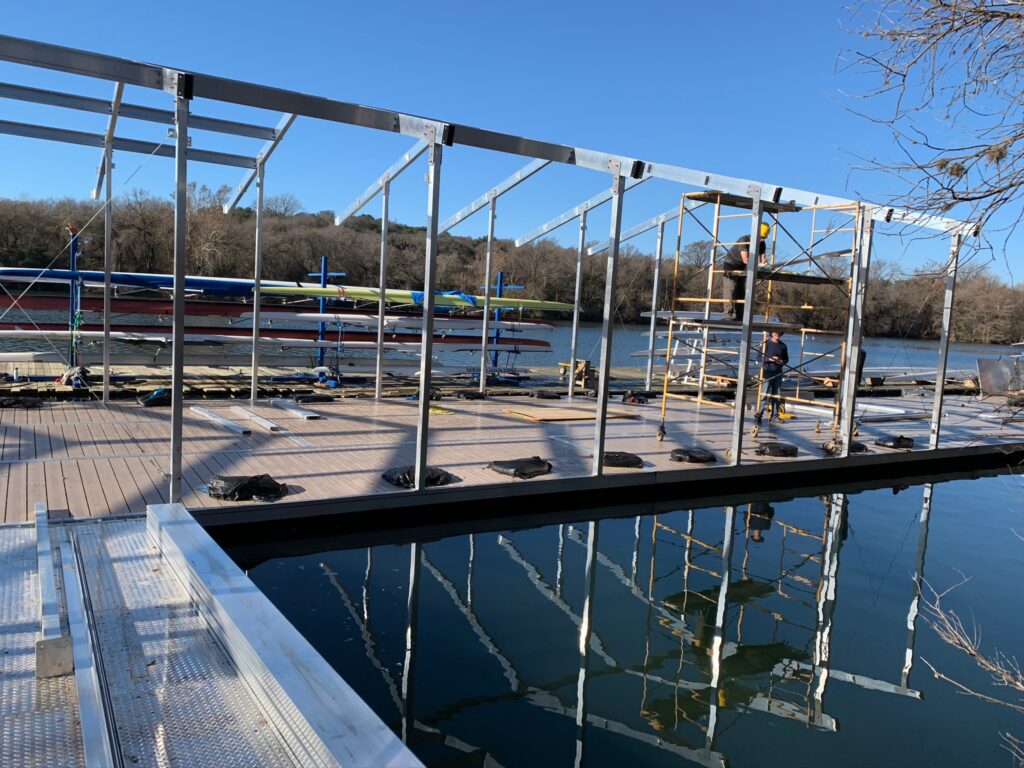
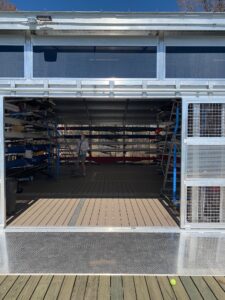
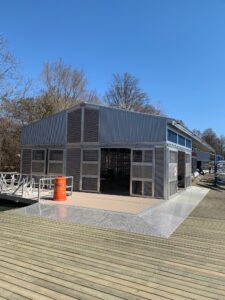
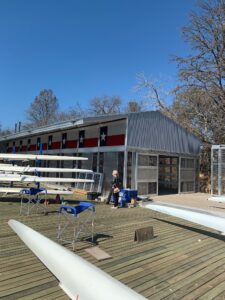
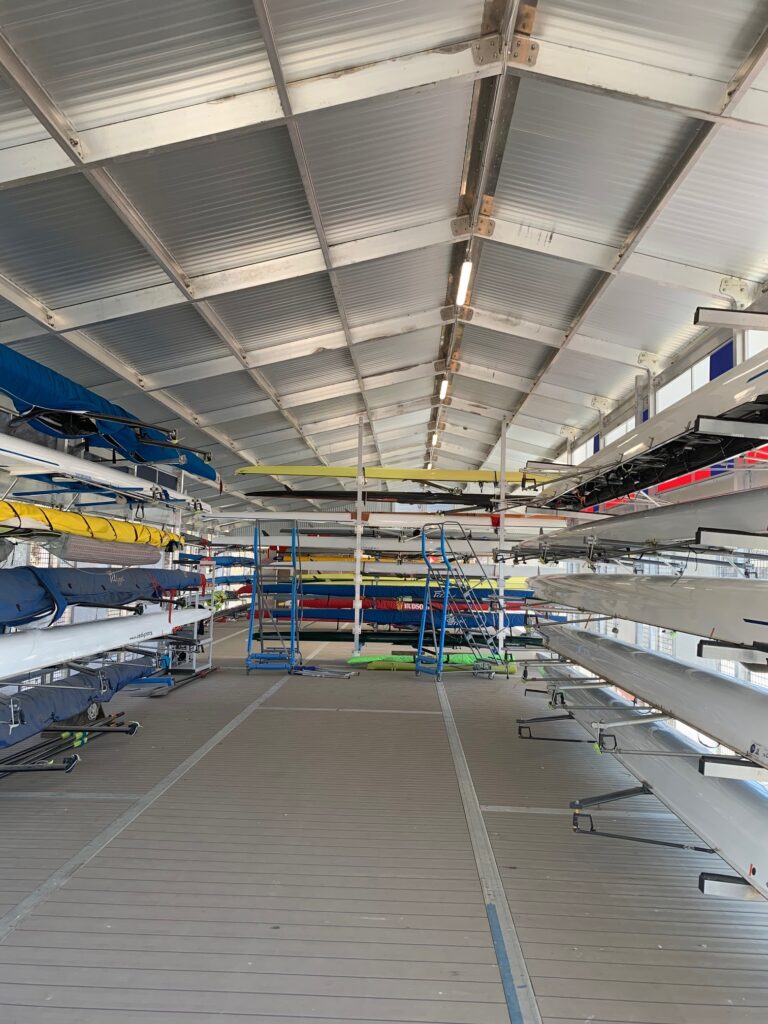
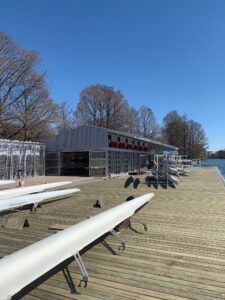
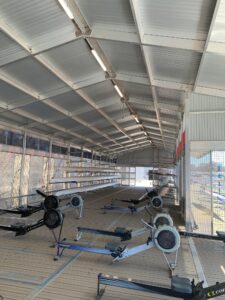
The main dock is 50’ x 300’ (15,000 square feet). We’ve also engineered and manufactured two 3,000-square-foot buildings that will be located directly on the dock. The building will house the racing sculls and equipment. We manufactured custom aluminum racking systems as well.
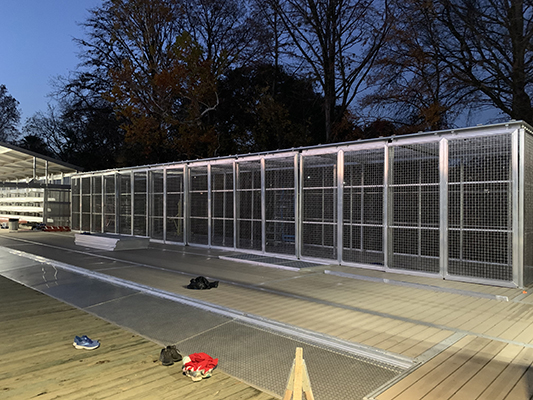
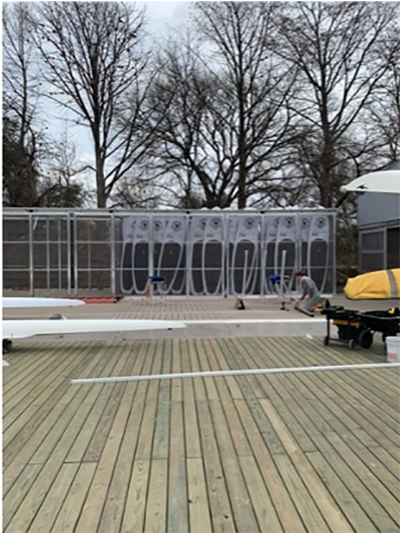
This is a major part of the ongoing improvement of the Texas Rowing Center. BoardSafe is building cages for storing the increasingly-popular standup paddleboards that are the favorite marine recreation for residents and tourists alike.
NEW: BoardSafe also provides boat storage solutions! Read about our paddleboard cages and kayak racks here.
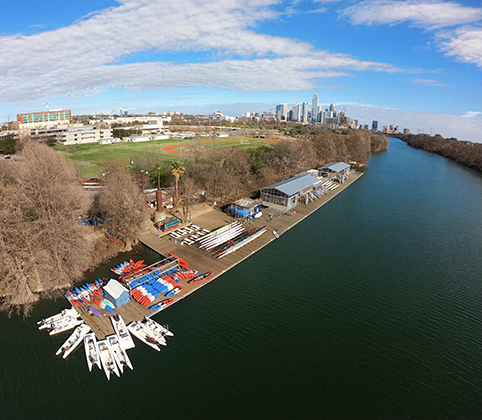
Here are some photos of the actual on-site construction and the finished project:


BoardSafe Docks Featured in Michigan Symposium
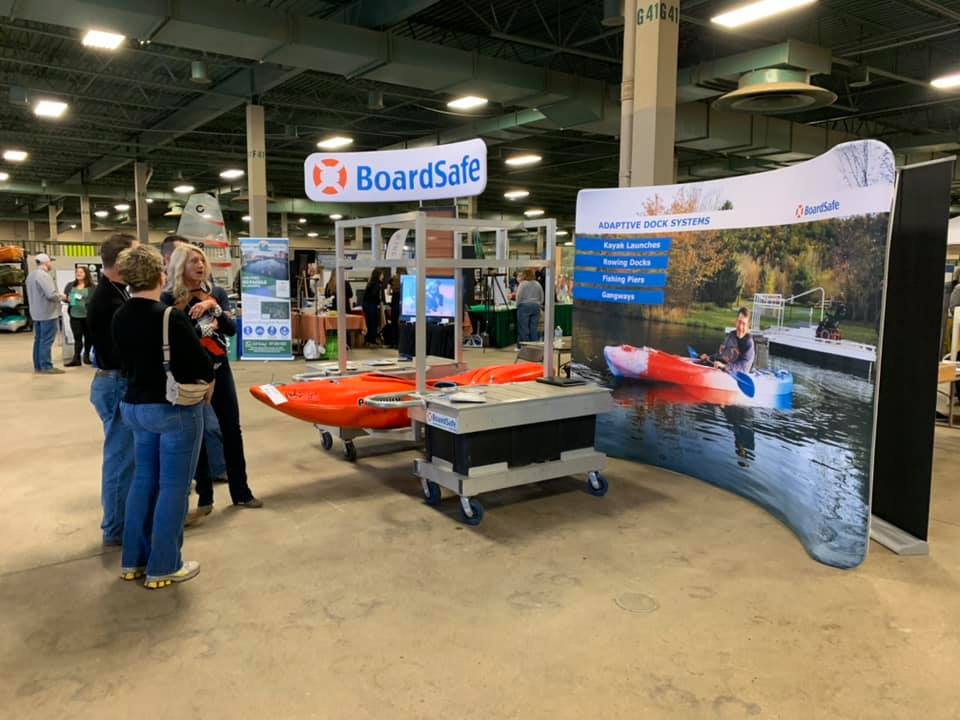
BoardSafe Docks was on display at the Quiet Adventures Symposium, held in the Michigan State University Pavilion in East Lansing, Michigan. Part of the mission of the Quiet Water Society is to educate the public and encourage participation in non-motorized outdoor recreation.
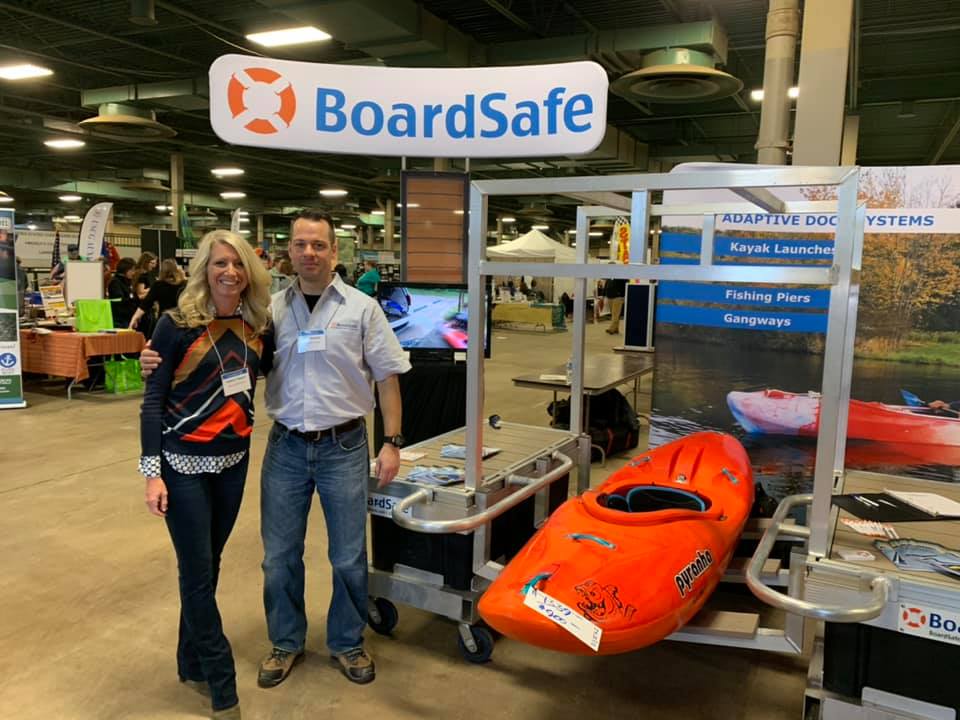
Stephen J Fleming was on hand to talk about our Adaptive Kayak Launch and Dock Systems. We are looking forward to installing our systems throughout Michigan. Let us know if your community would be interested in a FREE site evaluation.
Applications Open for Community Organizations to Apply for Millions in Adaptive Sports Grants
The U.S. Department of Veterans Affairs (VA) is accepting applications through March 17, 2020, for up to $15 million in grants for civic groups providing adaptive sports and therapeutic recreational opportunities to Veterans and members of the armed forces with disabilities.
BoardSafe has the experience, trust, and expertise to design, deliver, and install ADA-compliant adaptive water products for every need. Click here to read about our exclusive features.
Application instructions and eligibility information for these grants — that will help qualified organizations plan, develop, manage, and implement these programs — are available at VA Adaptive Sports Grant Program.
“Built on VA clinical expertise and operations, with essential support from community partners, the adaptive sports grant program allows VA to extend its level of care beyond the clinical setting,” said VA Secretary Robert Wilkie. “We are pleased to offer grant funds to community organizations as it means there will be more Veterans engaging in the challenge of sports and more Veterans who are exposed to new skills for healthier living.”
In 2019, the VA awarded $14.9 million in adaptive sports grants to 126 organizations, estimated to serve more than 11,000 veterans and service members from every state, the District of Columbia, and Puerto Rico. Of the total awarded, $1.5 million is being used to assist organizations that offer equine-assisted therapy to support mental health.
All applications must be submitted to www.grants.gov by 8 p.m. EST, March 17, 2020. The VA will announce awards based on a competitive selection in fall 2020.
BoardSafe Manages All Shipping Details

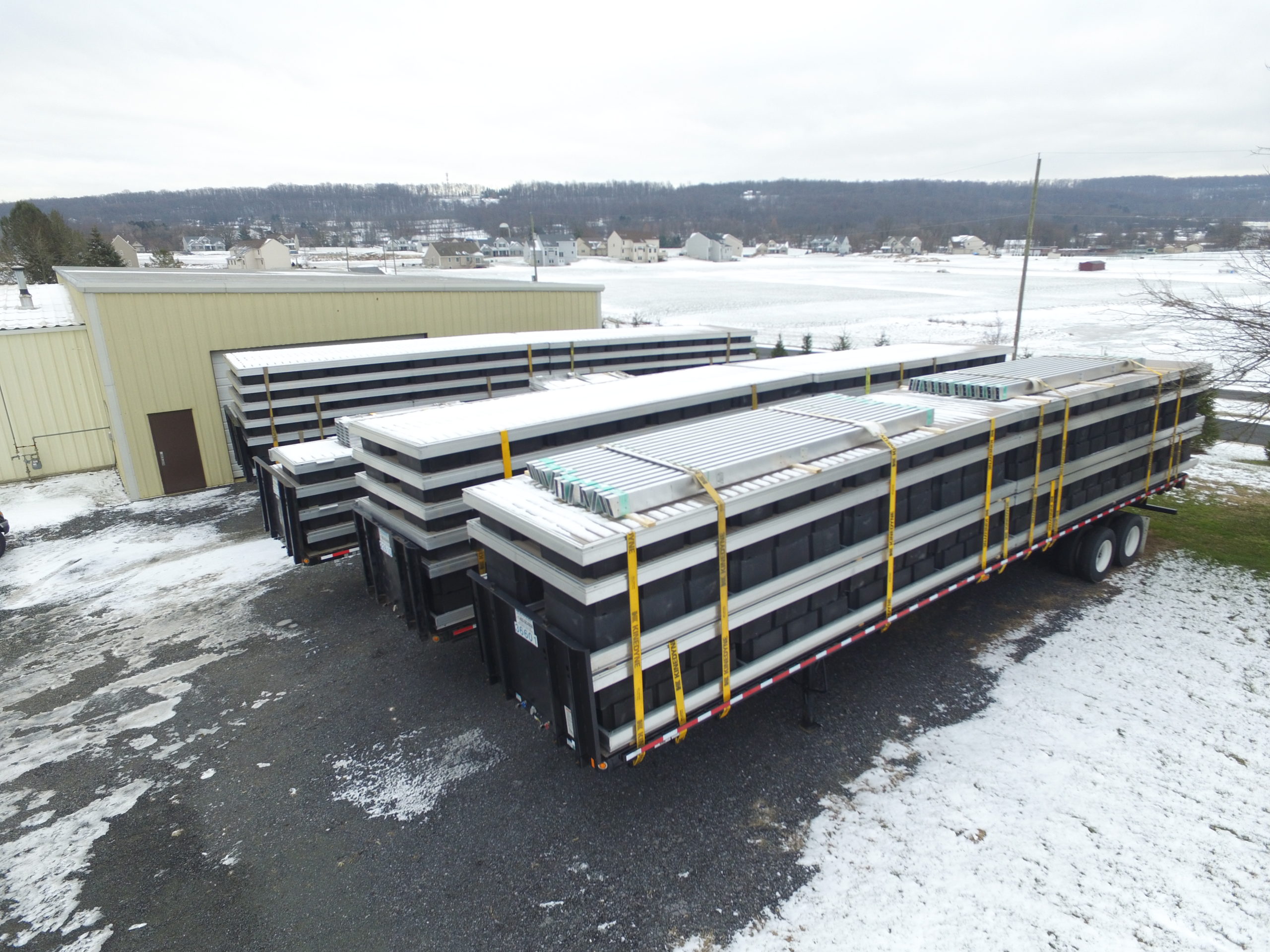
As you can imagine, shipping tons of materials to any site, near or far, can be complicated. With BoardSafe, clients don't need to worry — we take care of all the shipping details.
Just one example is our large rowing center project in Austin, Texas. The main dock will be 15,000 square feet and will house two 3,000-square-foot boathouses. These boathouses will store rowing equipment and gear right on the dock. A total of 5 trucks will carry the materials from our manufacturing center to the site in Austin, Texas.
Commercial Aluminum Gangways
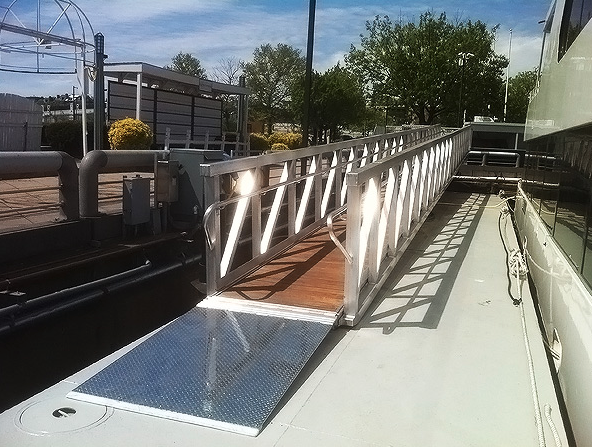
BoardSafe has developed its heavy-duty 100 Series aluminum extrusion to meet the needs of commercial marinas and waterfronts. The heavy-duty design includes a marine-grade 6160 aluminum and proprietary extruded-aluminum frame. Aluminum commercial gangways can be manufactured in any length to meet any need. Each order receives a design analysis based on the use and environment of the installation for custom design considerations, such as the bulkhead and roller hinges.
Visit a novel custom commercial gangway installation in Boston Harbor here.
Optional accessories: toe kick, transition plate, intermittent handrail, gate, and 42" high handrail
Considerations When Designing and Selecting Floating Docks for Rowing Centers
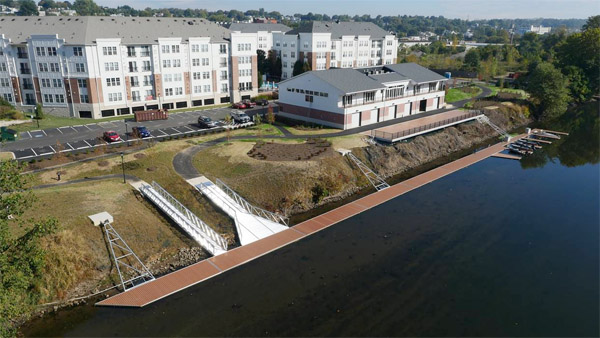
Rowing centers on the East Coast and across the United States want to ensure safety for their athletes and longevity for their rowing center investments. Not all floating docks perform well in varying situations, especially under the heavy use of a rowing season. There are several factors to be considered when a rowing club, school, college, or association, designs or purchases docks for their rowing center. BoardSafe is an expert in designing and manufacturing floating docks for rowing centers. The below characteristics are built into the unparalleled design and construction of each BoardSafe dock.
Environment
The first question for any rowing center project is, "Where is the rowing center located?" Floating docks manufactured for lakes that have little variation in water levels are much different from floating docks built for tidal waters, like bays and marshes, that see dramatic fluctuations in water levels. However, some lakes see elevation changes in water because they are river-fed or have floodgates. Rivers experience a constant downstream force and vertical movements with the change in seasons and weather patterns. These factors are calculated into the production of the docks — not only their long-term durability, but also their stability and integration. Integrating a floating dock into a rowing center includes many calculations, such as the size and location of the bulkheads, pilings (internal pilings guides or external piling guides), and gangways.
Stability
As mentioned above, stability is an important factor for floating docks in rowing centers as crewmembers board and exit their boats. Additionally, rowers must remove and carry their boats from the water. BoardSafe has a proprietary calculation for floating docks to adequately support many people, accommodate point loads, and maintain a consistent position above the water level. This includes the exact placement, size, and type of floating on the floating dock. BoardSafe rowing docks also have a 5-inch freeboard. This, coupled with the dock’s overall stability, gives rowers confidence as they enter and exit their rowing shells.
Use
Rowing centers and rowing docks are obviously used for rowing. The real question is, "How are they used?" How many crews, staff members, and others, will be using the floating docks? What are the ideal dimensions for the floating docks, finger docks, and gangways? Where are the boats stored and loaded? What is the configuration of the rowing center, floating docks, finger docks, gangways, etc.? Are the boats parallel or perpendicular to the main floating docks when they are boarded?
Safe surfaces
BoardSafe specializes in manufacturing aluminum docks with composite or synthetic lumber. Specifically, BoardSafe uses NyloDeck, a composite lumber made of recycled carpet fibers, that contains no wood flour or PVC. This means that NyloDeck is ground-rated and resistant to rot, insect damage, and other wood afflictions. NyloBoard has a slip-safe surface, and the decking is held in place by the proprietary TimberStrong hidden fastening system. There are no face-nailing, splinters, or nail pops, and boards stay consistently in place over time.
High quality
All BoardSafe docks use the highest-quality materials. These include marine-grade 6160 aluminum, a proprietary extruded-aluminum frame, and plastic-encapsulated foam floats. The NyloDeck composite lumber decking on the floating dock is the only 1-inch composite deck board rated to span joists at 24 inches on center and at 16 inches on diagonals. It is twice as strong as other leading decking materials. Lightweight and easy to work with, NyloDeck is impervious to moisture, mold, mildew, and insects. The NyloDeck boards are fastened with a unique hidden fastener system developed by TimberStrong. Additionally, the hinges on the floating docks are mechanically attached to the dock. This means they are stronger. There is no welded connection holding the floating docks, like on competitors’ docks, that can compromise the integrity of the dock. It also means that dock sizes can easily be increased by connecting additional floating docks together.
Options
BoardSafe docks are built smart. They are environmentally-friendly, offering a float-through-float design that allows light to pass through to vegetation and water, and debris and plants and wildlife to pass underneath unhindered. We recommend that rowing centers work with experienced dock manufacturers who can anticipate needs and issues as well as offer solutions that make the rowing center the best it can be.
BoardSafe manufactures aluminum floating docks, piers, and gangways. We have designed and manufactured numerous specialty projects, including rowing centers and ADA docks and boat launches. For more information on your rowing center project, marina, and commercial or residential docks, call 610-899-0286 or visit boardsafedocks.com/.
Composite Decking vs. Pressure-Treated Lumber for Docks and Piers
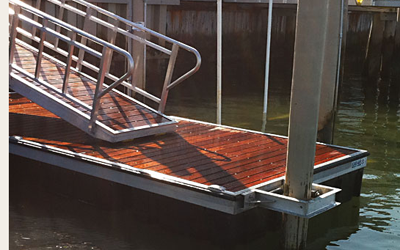
Composite decking is superior to pressure-treated lumber for floating docks and piers regarding performance and total cost of ownership.
BoardSafe has manufactured millions of square feet of aluminum floating docks, piers, and gangways. The goal of BoardSafe is to provide the highest-quality product for owners of rowing centers, marinas, and other commercial and resident docks. In the construction of these products, composite decking is superior.
Many purchase pressure-treated lumber because of the perceived cost savings. If the application is in a warm climate, the sun will destroy the wood in less than 8 years. If the application is in the northern part of the United States, the wood is subjected to freezing temperatures and ice, making its lifespan approximately 8 – 9 years. Manufacturers of composite lumber confidently state that this synthetic wood product will last over 20 years. This being the case, the total cost of ownership for a composite wood dock is less than a dock made of pressure-treated lumber.
Treated lumber today
Recently, the process and chemicals used in creating pressure-treated lumber have changed to become more environmentally-friendly. The new chemicals have created an inferior treated-lumber product that is not as durable as the pressure-treated lumber of yesteryear. Additionally, the pressure-treated lumber is more corrosive to fasteners. Experts recommend using stainless steel screws and bolts in lieu of the traditional galvanized steel. To jack up costs even more, the environmentally-friendly pressure-treated lumber is now more expensive to produce than ever before.
Consider composite decking
Composite lumber is stronger and longer-lasting. Within the family of composite wood, one product leaves the others in the dust: NyloDeck. NyloDeck is the only composite deck board that BoardSafe uses to manufacture its floating docks and piers. NyloDeck contains no wood particles; it is made of recycled carpet fibers — essentially, fiberglass. For these reasons, NyloDeck is rated for ground contact because it resists moisture, mold, and mildew. It is also the only 1-inch composite deck board rated to span joists at 24 inches on center and 16 inches on diagonals. It is twice as strong as other leading decking materials, and lighter, too. On BoardSafe docks, the NyloDeck boards are fastened with a unique hidden fastener system developed by TimberStrong. This means no nail pops or face nailing.
The last feature that makes composite wood superior is the frame. BoardSafe manufactures floating docks, gangways, and piers from 6160 marine-grade aluminum, with their proprietary extruded-aluminum frame. When looking at the quality of the overall investment, aluminum-frame docks with synthetic-wood deck boards are the way to go.
When it comes to building floating docks and piers, composite lumber is best. When it comes to manufacturing aluminum floating docks, BoardSafe is the best.
BoardSafe manufactures aluminum floating docks, piers, and gangways. They have designed and manufactured numerous specialty projects, including rowing centers and ADA-featured docks and boat launches. For more information on your rowing center project, marina, or commercial or residential dock, call 610-899-0286 or visit BoardSafe.com.
ADA Boat Launch, Floating Dock, and Fishing Pier
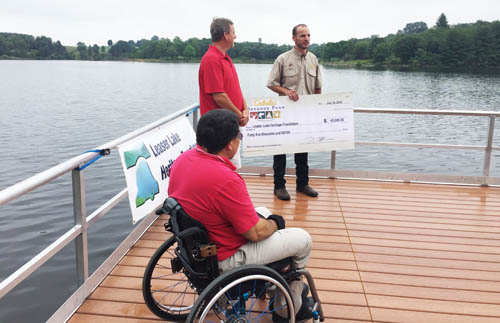
Leaser Lake in Pennsylvania created an accessibility park for those who are disabled or have limited mobility. The accessibility area includes paved walkways and a wheelchair-accessible boat launch and fishing pier. BoardSafe was contracted to build and install the floating docks, gangways, and ADA boat launch, for handicapped access to the 117-acre lake. BoardSafe was selected because of its reputation as a high-end dock builder and its proximity to the lake. They also specialize in Americans-with-Disabilities-Act-featured accessible commercial aluminum floating docks, boat launches, and fishing piers. The project included an ADA-accessible kayak launching ramp.
Providing equal access to all is important. If you are in need of ADA-featured commercial aluminum products for your marina or home dock, contact BoardSafe below to see our selection of ADA-featured applications.
BoardSafe specializes in manufacturing aluminum docks, gangways, and rowing centers. They offer both standard and ADA-featured products. If you have a rowing center or marina project and would like to learn more, visit BoardSafeDocks.com or call 610-899-0286.
100-Foot Aluminum Gangway Built for Boston Harbor, MA
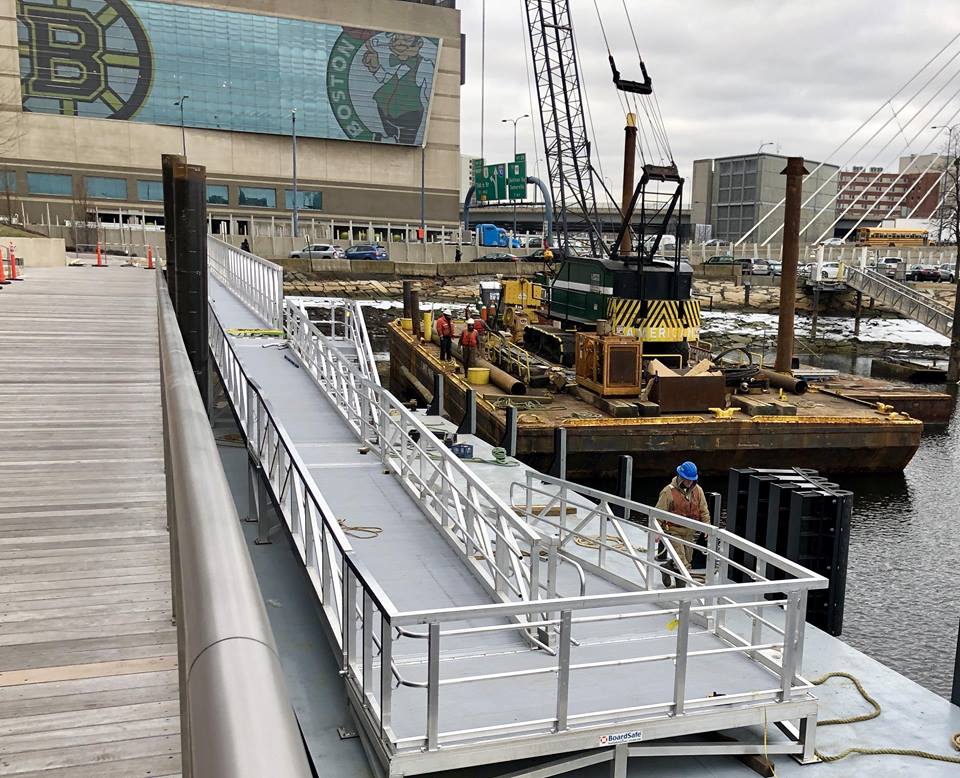
Lovejoy Wharf is in Boston's North End waterfront neighborhood. It is a newly-renovated section of the city that is enjoying a renaissance. The neighborhood is home to the Boston Garden, Converse's world headquarters, restaurants, bars, and downtown shopping. It now is also home to a brand-new BoardSafe aluminum gangway.
At Lovejoy Wharf, there is ferry service that whisks passengers throughout the harbor. Passengers board and exit the boat from a barge that is accessed via a 100'-long x 5'-wide aluminum gangway that has a landing and steps. This huge gangway was manufactured at BoardSafe's Topton, PA, facility, and shipped in two truckloads. This is a project that we are very proud to say is ours.
To learn more about our aluminum gangways, click here.