


BoardSafe Manages All Shipping Details

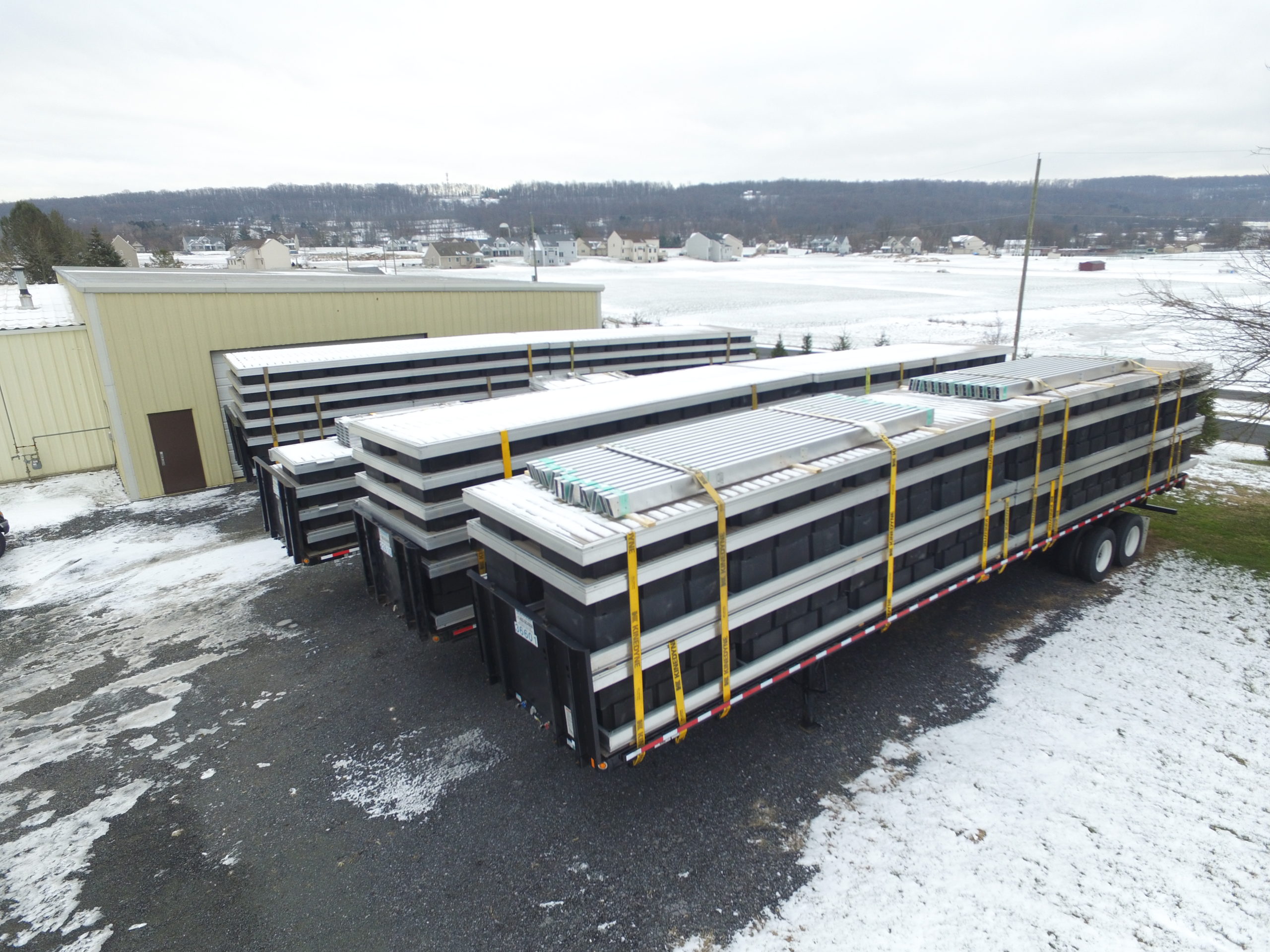
As you can imagine, shipping tons of materials to any site, near or far, can be complicated. With BoardSafe, clients don't need to worry — we take care of all the shipping details.
Just one example is our large rowing center project in Austin, Texas. The main dock will be 15,000 square feet and will house two 3,000-square-foot boathouses. These boathouses will store rowing equipment and gear right on the dock. A total of 5 trucks will carry the materials from our manufacturing center to the site in Austin, Texas.
Composite Decking vs. Pressure-Treated Lumber for Docks and Piers
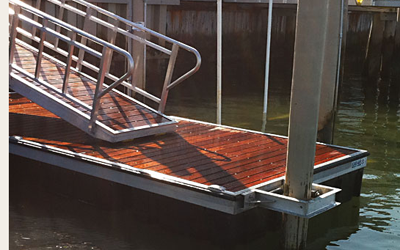
Composite decking is superior to pressure-treated lumber for floating docks and piers regarding performance and total cost of ownership.
BoardSafe has manufactured millions of square feet of aluminum floating docks, piers, and gangways. The goal of BoardSafe is to provide the highest-quality product for owners of rowing centers, marinas, and other commercial and resident docks. In the construction of these products, composite decking is superior.
Many purchase pressure-treated lumber because of the perceived cost savings. If the application is in a warm climate, the sun will destroy the wood in less than 8 years. If the application is in the northern part of the United States, the wood is subjected to freezing temperatures and ice, making its lifespan approximately 8 – 9 years. Manufacturers of composite lumber confidently state that this synthetic wood product will last over 20 years. This being the case, the total cost of ownership for a composite wood dock is less than a dock made of pressure-treated lumber.
Treated lumber today
Recently, the process and chemicals used in creating pressure-treated lumber have changed to become more environmentally-friendly. The new chemicals have created an inferior treated-lumber product that is not as durable as the pressure-treated lumber of yesteryear. Additionally, the pressure-treated lumber is more corrosive to fasteners. Experts recommend using stainless steel screws and bolts in lieu of the traditional galvanized steel. To jack up costs even more, the environmentally-friendly pressure-treated lumber is now more expensive to produce than ever before.
Consider composite decking
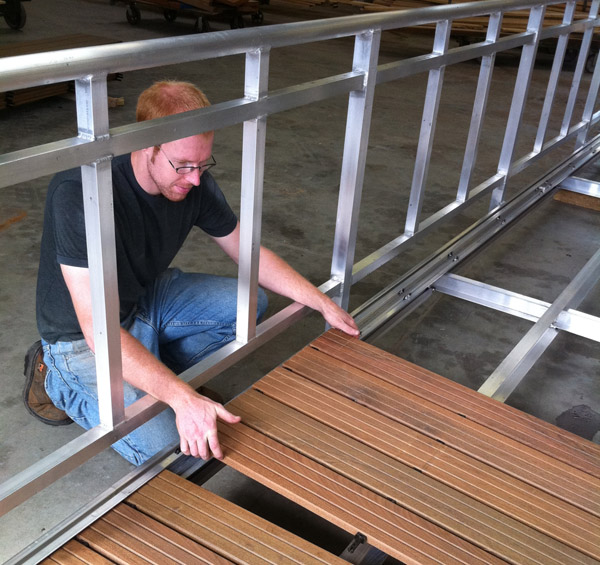
Composite lumber is stronger and longer-lasting. Within the family of composite wood, one product leaves the others in the dust: NyloDeck. NyloDeck is the only composite deck board that BoardSafe uses to manufacture its floating docks and piers. NyloDeck contains no wood particles; it is made of recycled carpet fibers — essentially, fiberglass. For these reasons, NyloDeck is rated for ground contact because it resists moisture, mold, and mildew. It is also the only 1-inch composite deck board rated to span joists at 24 inches on center and 16 inches on diagonals. It is twice as strong as other leading decking materials, and lighter, too. On BoardSafe docks, the NyloDeck boards are fastened with a unique hidden fastener system developed by TimberStrong. This means no nail pops or face nailing.
The last feature that makes composite wood superior is the frame. BoardSafe manufactures floating docks, gangways, and piers from 6160 marine-grade aluminum, with their proprietary extruded-aluminum frame. When looking at the quality of the overall investment, aluminum-frame docks with synthetic-wood deck boards are the way to go.
When it comes to building floating docks and piers, composite lumber is best. When it comes to manufacturing aluminum floating docks, BoardSafe is the best.
BoardSafe manufactures aluminum floating docks, piers, and gangways. They have designed and manufactured numerous specialty projects, including rowing centers and ADA-featured docks and boat launches. For more information on your rowing center project, marina, or commercial or residential dock, call 610-899-0286 or visit BoardSafe.com.
Adaptive Boat Launch, Piers, and Rowing Products
Adaptive Boat Launch, Piers, and Rowing Products
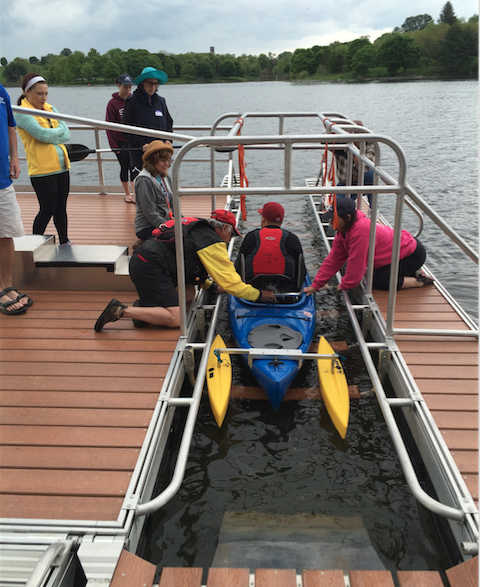
BoardSafe has developed a line of ADA-accessible products specifically for the adaptive athlete. These products include an adaptive kayak, canoe and boat launch, accessible piers, and floating docks with ADA features, as well as adaptive rowing docks for adaptive rowing (See links below). These products were developed in conjunction with adaptive athletes and conscientioulsy designed to meet their needs. Because adaptive rowers and paddlers had input on the products' proprietary designs, BoardSafe knows that their adaptive boat launches, fishing piers, and adaptive rowing docks, are the best-performing and highest-quality products on the market. All of our adaptive products are made with the same best practices, features, engineering, and quality measures used in all BoardSafe products. Each adaptive rowing product is specifically designed with the rowers in mind.
If you need an adaptive kayak launch, fising pier, or adaptive rowing dock, BoardSafe will customize your product by adapting their standard designs, engineering, and product sizes, to build a product that fits your needs.
Follow these links to learn more about our adaptive products:
> Adaptive kayak, canoe, and boat launch
> Accessible fishing pier and floating dock
Need help with fundraising? Read our recommended best practices for fundraising for your accessible project.
BoardSafe Floating Docks, Piers, Gangways, and Other Marina Products
|
Quality and Experience Made in the USA and centrally-located in the Mid-Atlantic region, it's no wonder that marina owners, homeowners, conservationists, rowing clubs, and other associations, trust BoardSafe for their projects. Our collaborative and comprehensive approach with customers leads to projects they are highly satisfied with — done on time, within budget, and aligned with their goals. Commitment to Innovation BoardSafe takes great pride in manufacturing boat docks and boat dock components that are environmentally-friendly, safe, require minimal maintenance, retain their structural integrity, and offer ADA accessibility features. |