


BoardSafe Cosponsors the 2022 SOBA Education & Training Symposium
The 2022 States Organization for Boating Access (SOBA) Education & Training Symposium will take place August 29–September 1 in Cleveland, Ohio. The SOBA Annual Conference brings together state boating officials, consultants, engineering firms, manufacturers, suppliers, publishers, and other businesspersons interested in boating access.
Scott Tihansky, Sales and Engineering Director at BoardSafe Docks, will present an education module on "Adaptive vs. Accessible."
The States Organization for Boating Access (SOBA) would like to thank BoardSafe Docks for their platinum sponsorship for this year's SOBA Education & Training Symposium and SOBA Awards Luncheon. BoardSafe Docks is the premier designer, engineer, and manufacturer of aluminum floating docks, adaptive kayak launches, fishing piers, gangways, pedestrian bridges, and collegiate rowing centers. In 2012, a group of adaptive paddlers partnered with BoardSafe to make a local lake accessible for all paddlers. From this collaboration, BoardSafe created numerous adaptive product innovations to empower paddlers to transition safely and easily in and out of their vessels. Since then, BoardSafe continues to champion adaptive accessibility for waterfronts across the USA. This commitment to education and advocacy has made BoardSafe the trusted expert in aquatic recreation accessibility for design and engineering, as well as the manufacturing source for the best-performing and highest-quality launch systems available. Parks directors, landscape architects, marine engineers, and paddlers, seek BoardSafe Docks' products to ensure the inclusion of all abilities and benefit the widest possible range of users. Click here to view the BoardSafe adaptive launch system.
BoardSafe Docks is proud to be a sponsor of this important event as we continue our tradition of advocacy and community education regarding adaptive access for paddlers.
MetroParks of Butler County, OH, Opens ADA-Compliant Kayak Launch
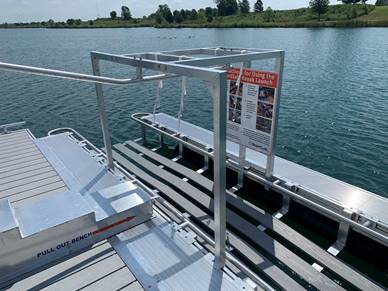
MetroParks of Butler County, Ohio, and BoardSafe Docks, completed construction of an ADA-compliant adaptive kayak launch at the VOA Lake at Voice of America MetroPark, which is now open for public use. In 2020, MetroParks was awarded a $75,000 Paddling Enhancement Grant from the Ohio Department of Natural Resources (ODNR) to build the adaptive kayak launch on the lake, located on the north side of the MetroPark.
$500,000 in ODNR Paddling Enhancement Grant funding was available statewide, and MetroParks was one of the few organizations that qualified for funding in 2020. The grant program identified meeting the needs of people with disabilities as a priority in determining which projects to fund.
VOA’s new kayak launch uses a series of ramps, handrails, and platforms to assist those with varying mobility needs to launch canoes, kayaks, and other hand-powered watercraft into the VOA Lake. A gently-sloped ramp provides a sturdy avenue for people who use wheelchairs, walkers, and other mobility devices to access the floating dock. Once on the dock, individuals can place their boat in an underwater saddle that securely holds the watercraft in place while the boater uses an overhead support to lower themselves safely into their boat.
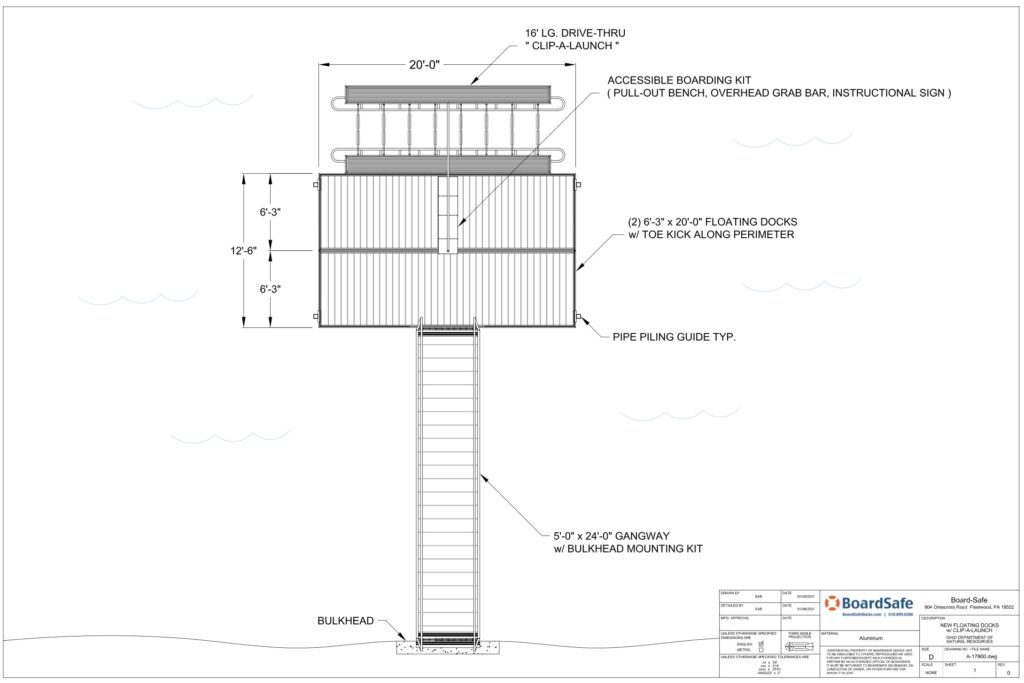
The project included the following items:
- 5’ x 24’ Gangway
- Two (2) 6’ x 20’ floating docks
- One (1) Clip-A-Launch 16D
- Adaptive Boarding Kit
- Bench with pull-out seat
- Overhead Grab Bar with straps
- Instructional sign
[metaslider id="7952"]
For more information about BoardSafe Docks' adaptive products and installations, click here.
Flotilla at Beaver Creek, TN, Enjoys 2 BoardSafe Adaptive Kayak Launches
What an amazing day of paddling the Beaver Creek Kayak Club created for their local community on Saturday, May 14, 2022, at their 5th annual Flotilla sponsored by First Bank. A passionate group of kayakers and a very long list of community stakeholders and volunteers also accomplished something for their community far beyond their successful Flotilla.
Charlie Austin, president of the Beaver Creek Kayak Club, played a substantial role in building the club to almost 3200 members who support the club’s efforts.
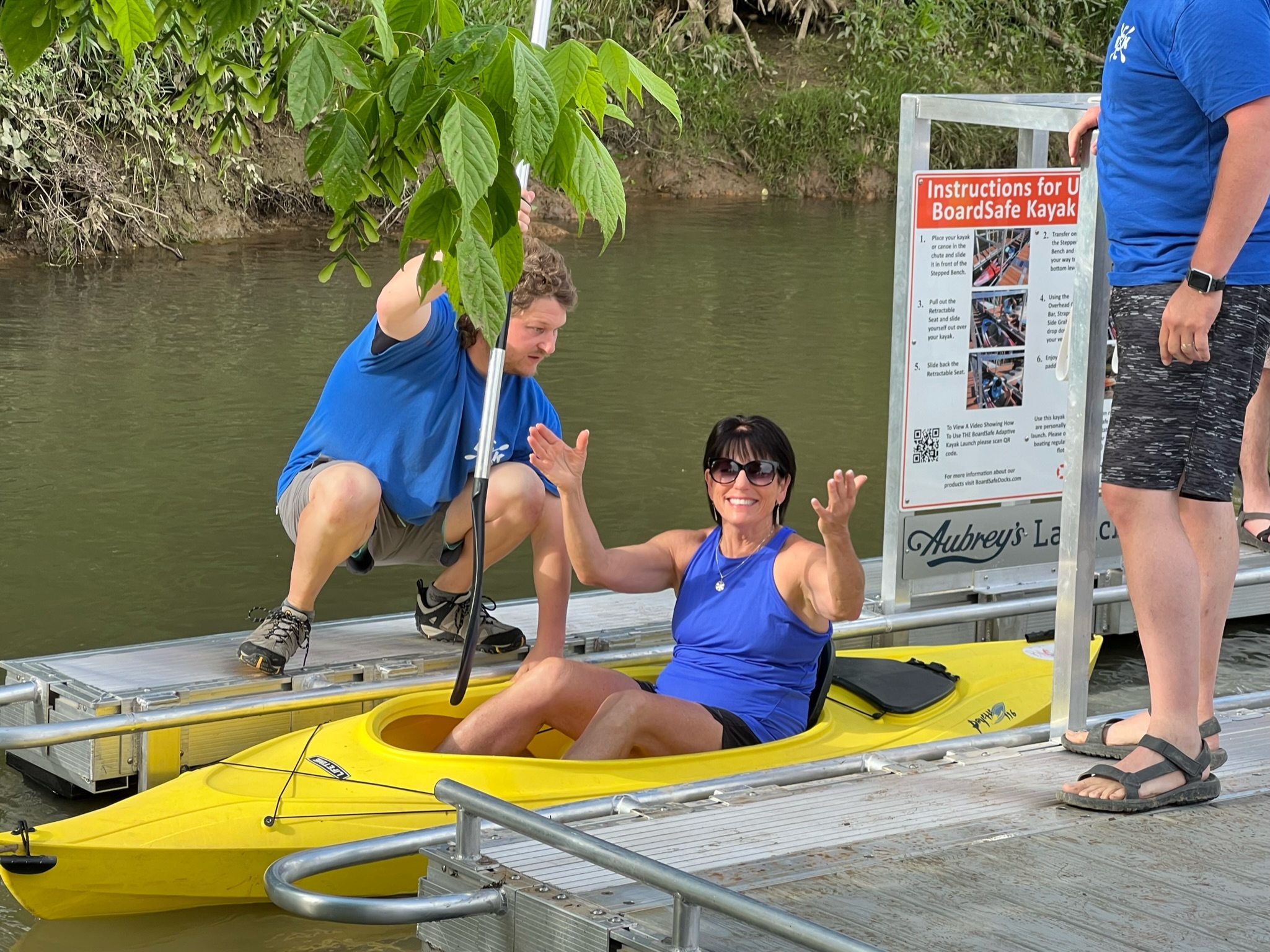
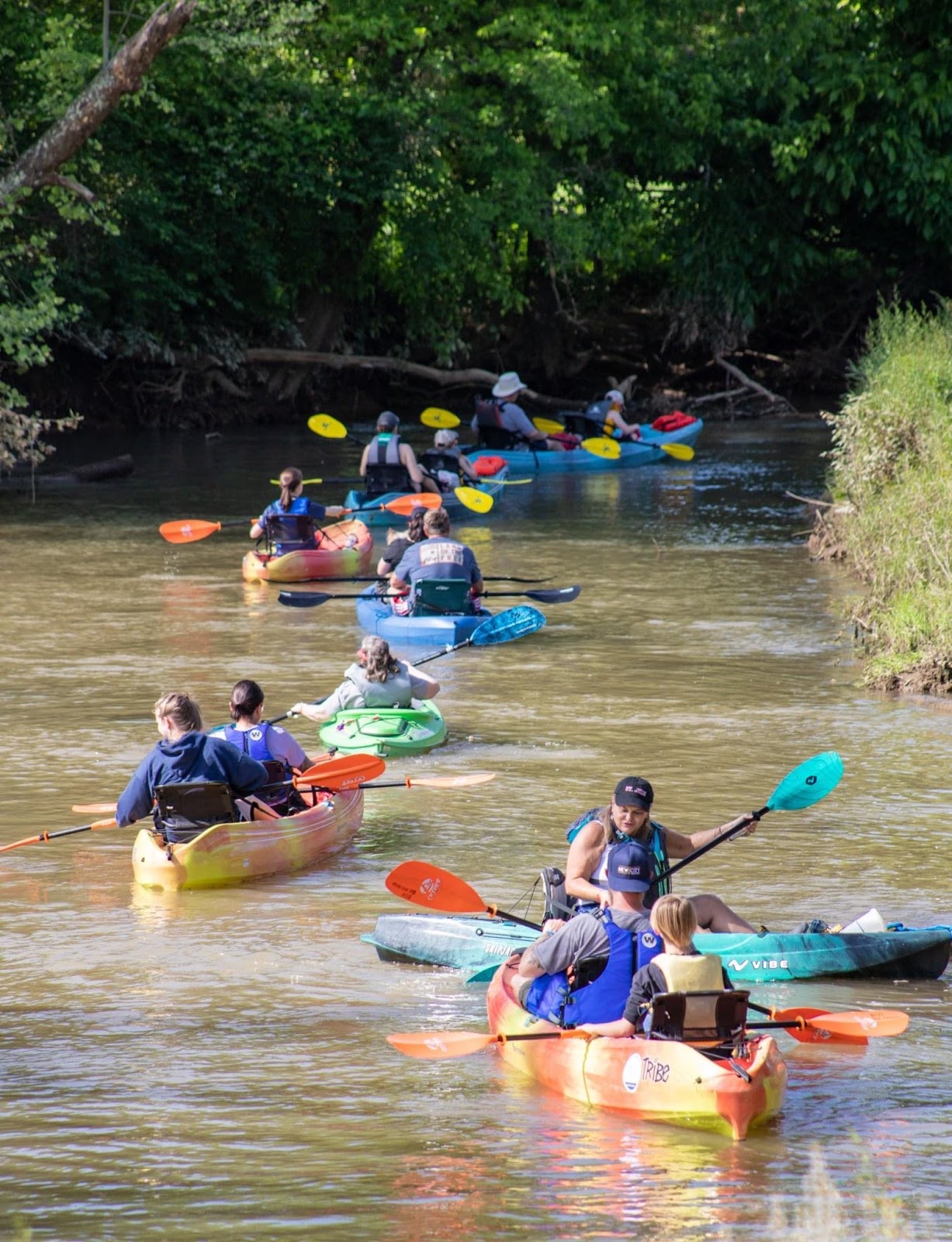
At the kickoff to the day’s events, Charlie Austin exuded enthusiasm and graciousness for the overwhelming community support they received. He asked for a show of hands to gauge how many paddlers were local to the Powell and Karns communities, where two BoardSafe Adaptive Kayak Launches have been installed. The inclusive launches are located in Powell behind the high school and in Karns at the Roy Arthur Stormwater Park. The accessible launches are 6 miles apart on the picturesque Beaver Creek. Paddlers completed the 6-mile paddle in about 3.5 hours and enjoyed some beautiful nature and sites along the way.
.
Charlie asked the attendees to raise their hands if they were from outside the Powell and Karns communities. Almost half of the attendees put their hands in the air. With such an enormous turnout to the flotilla, it was evident the paddlers want what Charlie has created for his devoted community: close-to-home recreation; safe, easy, and inclusive access to the water; the ability to paddle the picturesque Beaver Creek; and a desire to connect with their community.
The installation of two BoardSafe Adaptive Kayak Launches has provided all that and a fun day of paddling that included everyone. “If you build it, they will come,” is a common theme where BoardSafe launches are installed. BoardSafe’s Adaptive Kayak Launches are designed for the widest range of users: young and old, novice and experienced, those who are physically able, those with limited mobility, and even paddlers in wheelchairs. The launch has been designed with the help of Ken Ryno, a C-5, C-6 paraplegic, and input from other adaptive paddlers who enjoy the freedom and independence they gain on the water. Here is a video of Ken entering his kayak independently:
The Most Accessible Adaptive Kayak Launch
The inclusive launch is fitted for kayaks, canoes, and SUPS, and gets everyone in the water safely and easily. Saturday’s flotilla connected families with each other, connected families to their community, and connected communities with other communities. The flotilla was clearly a win-win event!
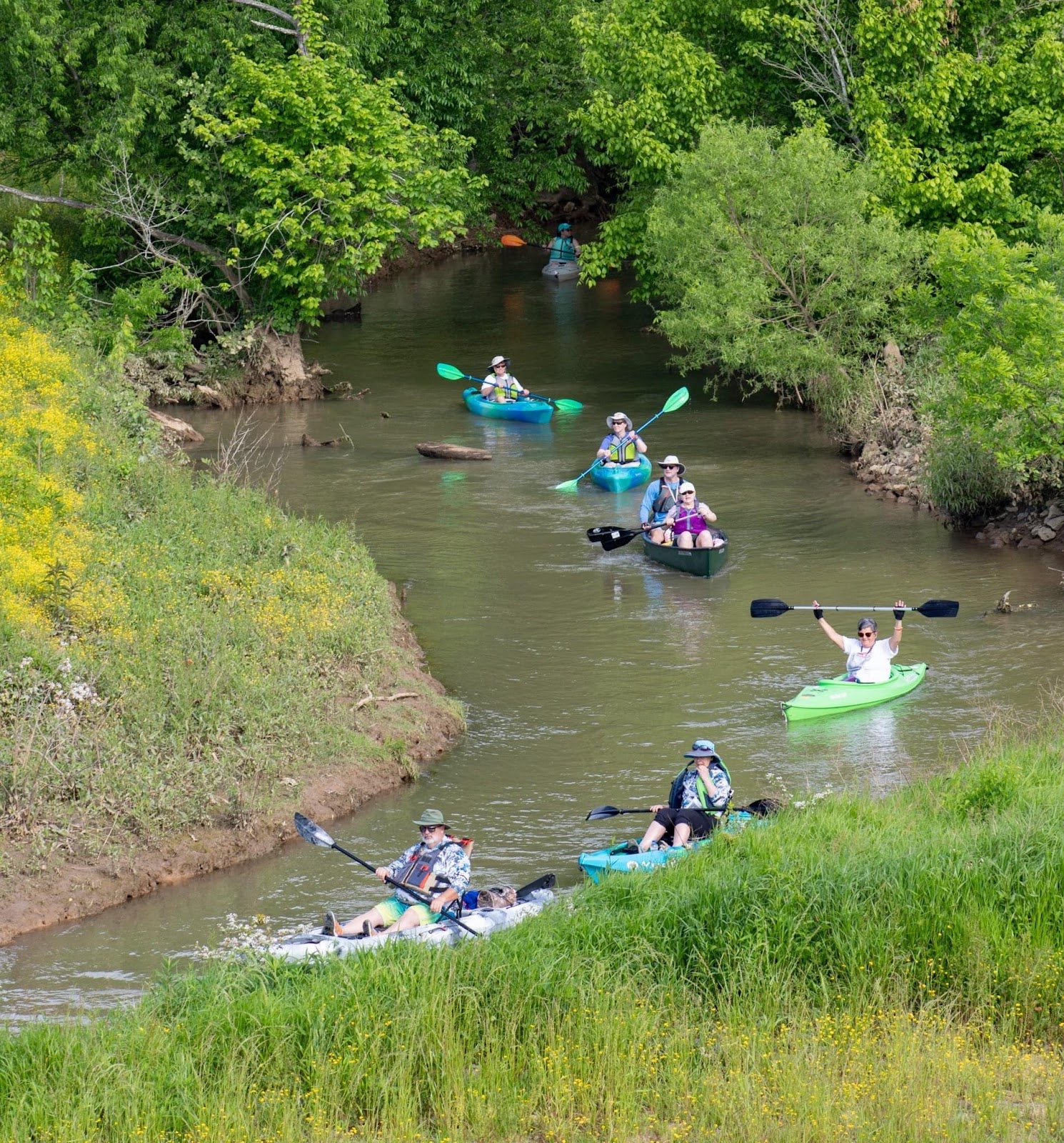
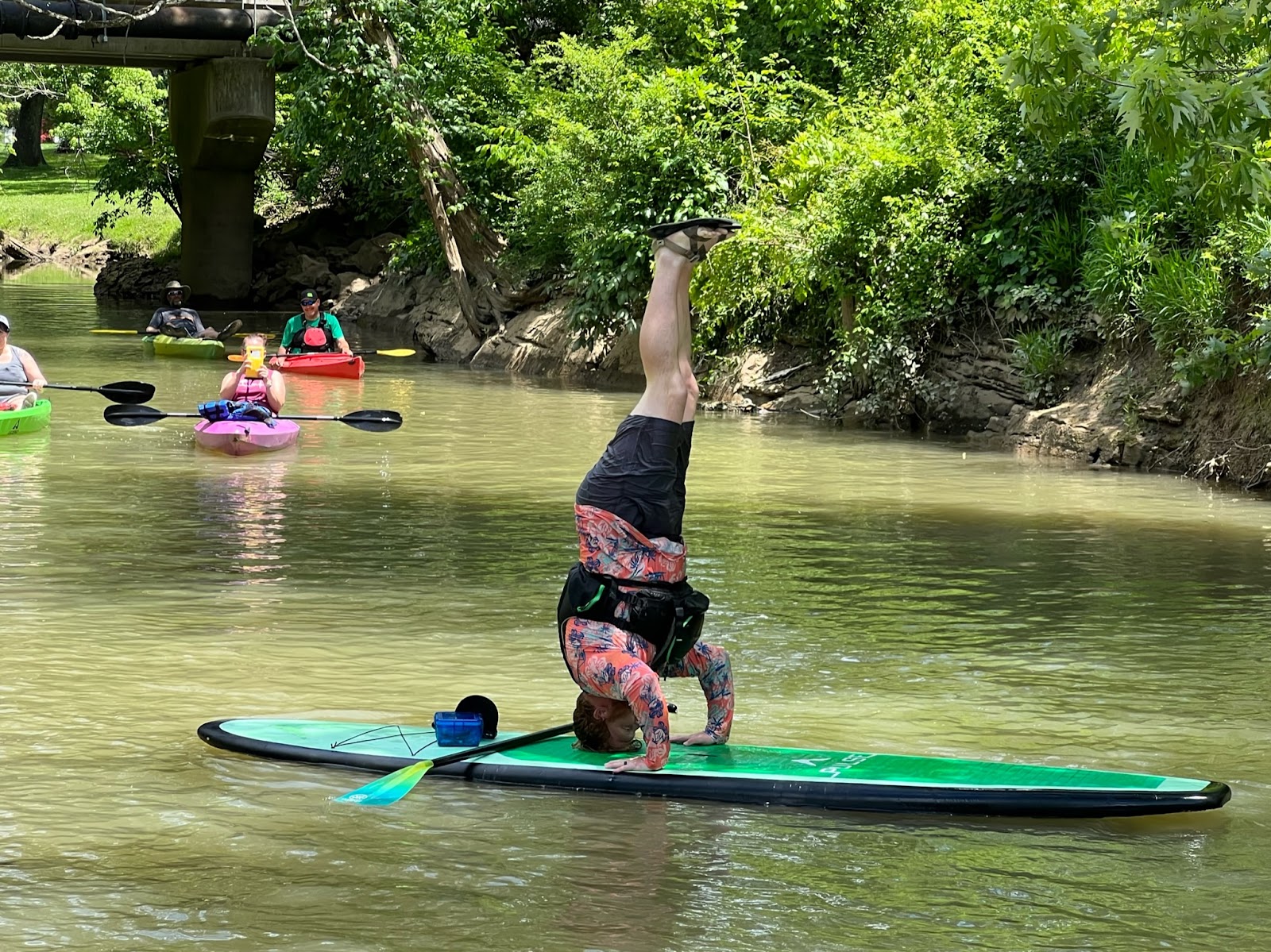
The final number of registrants for the 2022 flotilla reached about 420 paddlers, a significant increase from last year's 225 participants.
Attending the event and showing support for the club’s efforts were Glenn Jacobs, Knox County Mayor; Carol Evans, Legacy Parks Foundation Executive Director and Floatmaster of the flotilla; Chris Parrot, Senior VP of First Bank, the community bank that sponsored this year’s flotilla; Joe Mack, Director of Knox County Parks and Recreation; Larsen Jay and Terry Hill, Commissioners for Knox County; and Justin Lafferty, State Representative.
Carol Evans, the Floatmaster for the flotilla, attended the first planning meeting about 7 years ago and recognized that people want close-to-home recreation opportunities. “The Great Smokey Mountains are a short drive away, but Beaver Creek is in our backyard and a place where people can stop after work or spend part of their weekend” she said. Ms. Evans also recognized Randy Burleson on the 30th anniversary of Aubrey’s Restaurant, whose generous donation to the Legacy Parks Foundation and Knox County Tennessee - Water Trail paid for the BoardSafe Adaptive Kayak Launch at Powell, now being identified as "Aubrey’s Launch."
Larsen Jay, a commissioner for Knox County, stated that he has been involved in this project for the last 4 or 5 years. He and his co-commissioners understand the value to the community of the cleanup of Beaver Creek. So much so, that Knox County mayor Glenn Jacobs allocated one million dollars to improve and maintain the 44-mile stretch of water. A dedicated maintenance crew floats the creek every day to take something out. To date, they have removed 704 tons of debris, from small trash to downed trees and dams that have caused stormwater runoff and flooding of the community. Their vision of “Clear it, Clean it, and Care for it” has received overwhelming support from the communities along Beaver Creek.

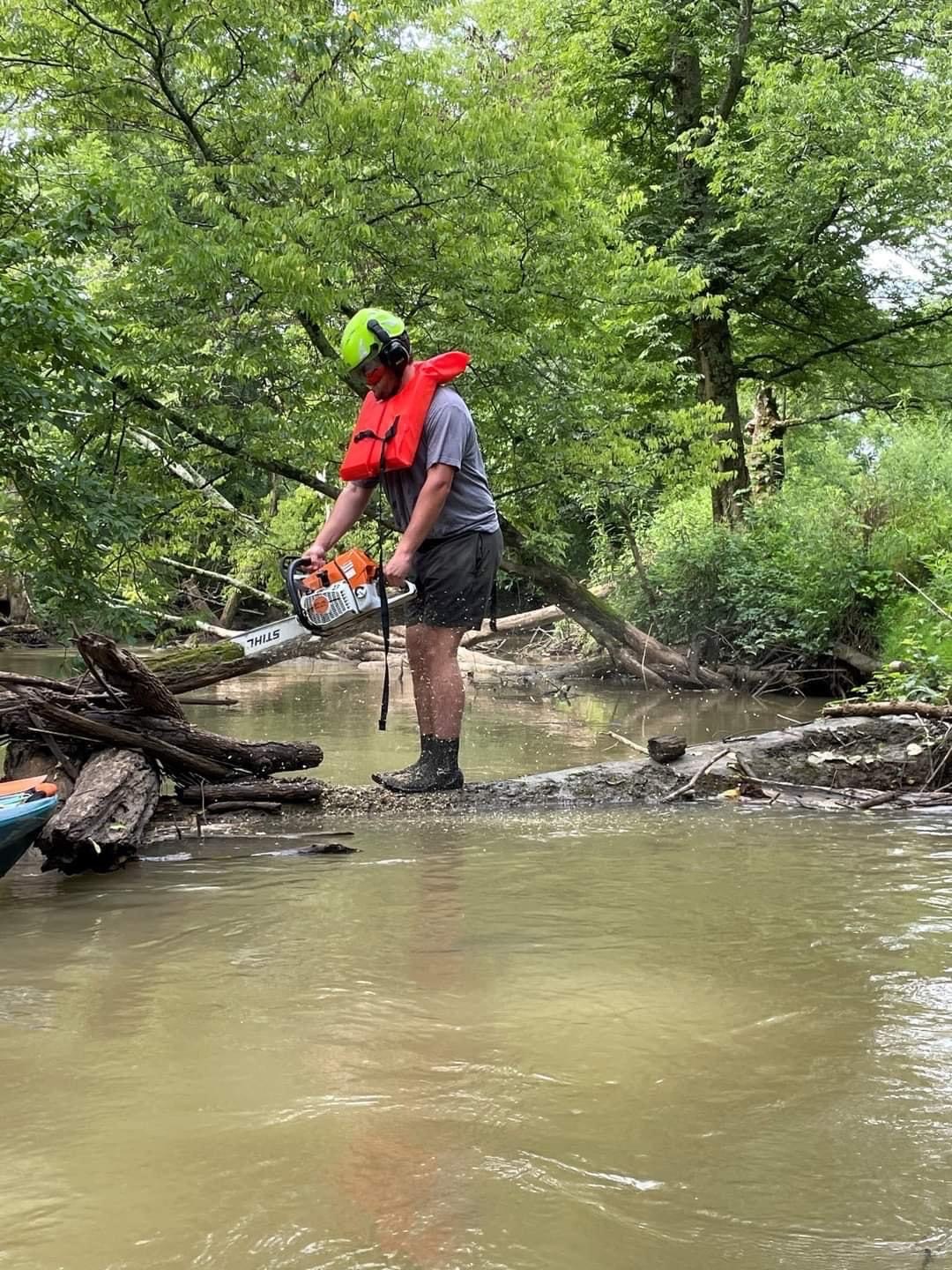
As the creek has been cleared and cleaned, the water quality has improved, the flooding decreased, and the stream is now open to the community for paddling and fishing. Knox County Stormwater hosted an information booth at the flotilla and provided education about their role in caring for the creek. Its mission of stormwater compliance is to enhance the quality of life for Knox County citizens through education, service, and management of water resources.
Kayaking and other paddlesports have proven to be beneficial to one’s mind, body, and spirit, and major factors in the dramatic increase in the number of people who now enjoy the sports. Saturday’s flotilla demonstrated an even greater, additional value, because it showed that building and investing in community resources will bring communities together—particularly communities that may not have been connected in the past.
The excitement about these communities investing in an accessible and inclusive BoardSafe Kayak Launch was present before the flotilla started.
Charlie Austin, club president, commented on the Beaver Creek Kayak Club’s Facebook page, “Y’all!!! I absolutely could not be any more excited! The new launch docks for the Landing in Powell and Roy Arthur Stormwater Park are heading to Knoxville! These docks are going to be a game-changer for total access to the stream! I feel like a kid that’s gotten the best gift ever! I’m so excited for the future of Beaver Creek!”
It's understandable why Charlie is president of the Beaver Creek Kayak Club—his enthusiasm and passion are contagious and you feel it from the moment you meet him.
Charlie wasn’t the only one excited about the launches being installed prior to the flotilla. Meredith Millhorn Boatman spotted BoardSafe’s tractor-trailer and stopped to post the following picture to BCKC’s Facebook page to share her enthusiasm about the accessible launch that was on its way. The club’s excitement was contagious as they waited for BoardSafe Docks to arrive.
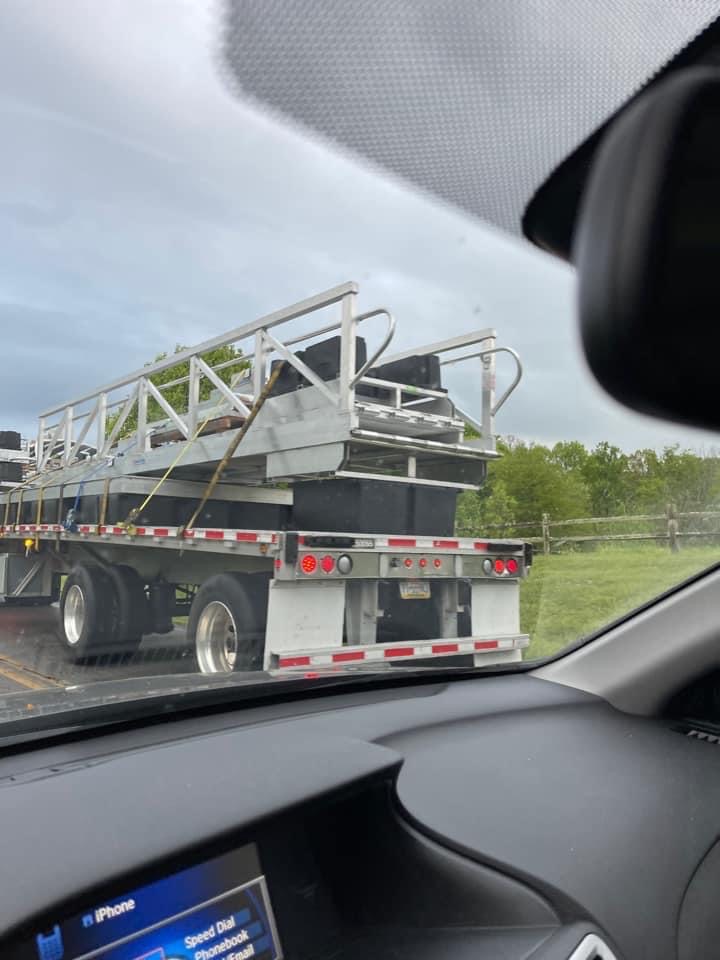
Facebook photo posted by Meredith Millhorn Boatman
The number of volunteers the kayak club rounded up was too many to count. Blue shirts were everywhere ensuring that everyone was being helped and kept happy. The day could not have been such a success without them.
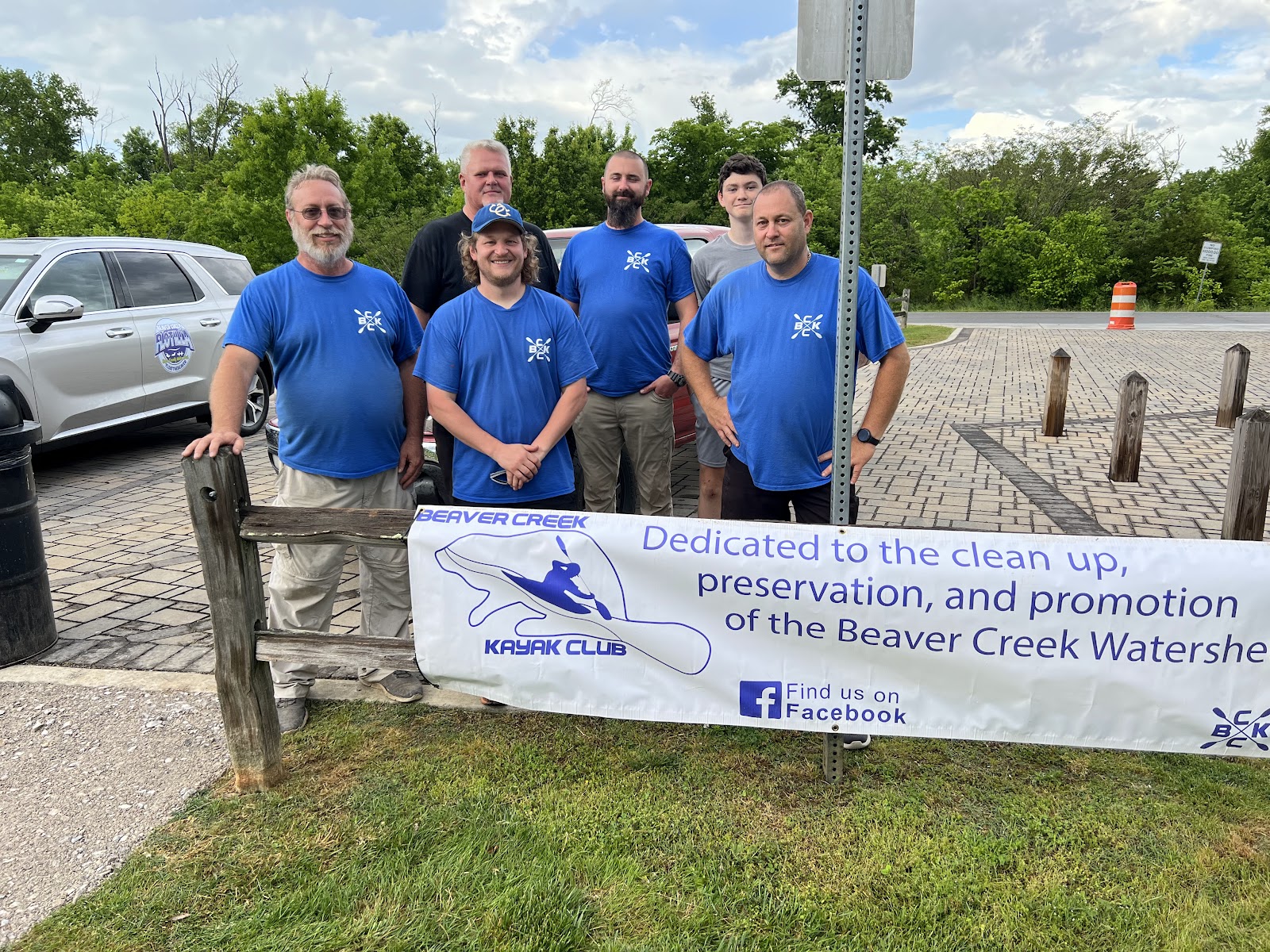
This 5 a.m. setup crew worked many long days leading up to the event.
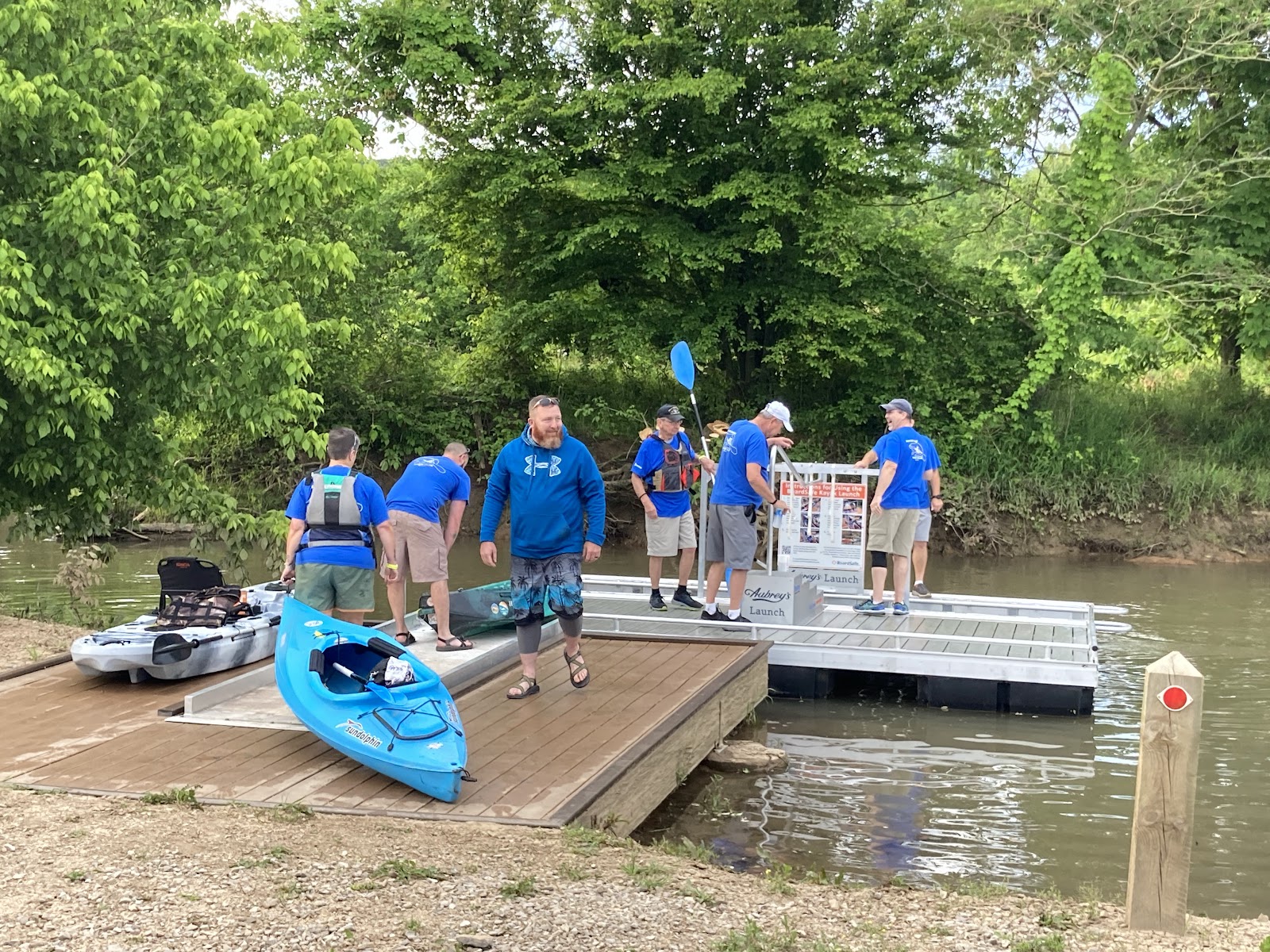
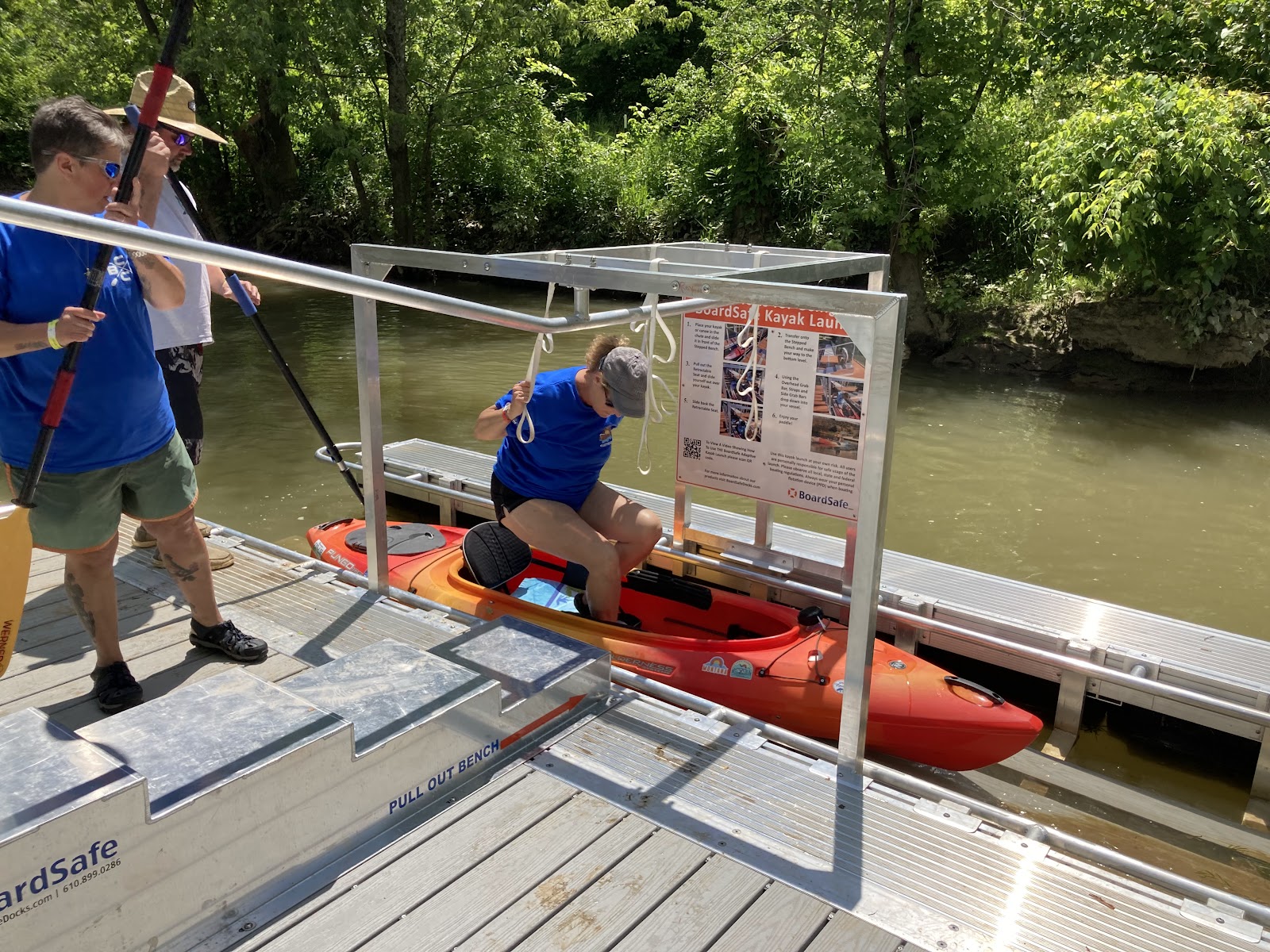
Volunteers assisting at Powell Launch (upper photo) Volunteers at Roy Arthur Park exit (lower photo)
The commitment from community stakeholders was also evident by both their time and donations. The local Napa Auto Parts donated water to each participant in the paddling event and Weigles’ convenience store donated snacks and refreshments at the first exit and tossed granola bars and treats to those who chose to complete the full 6-mile paddle.
Almost every segment of the community seems to have played a part in this grassroots effort started by the Beaver Creek Kayaking Club and Karns Community Club. Participants included local scouting groups and high school teams who volunteered their time. What a great example this community is modeling for their youth!
The long-range plan of the Beaver Creek Kayak Club is to work with community stakeholders to continue to "Clear, Clean, and Care for" the 44-mile stretch of Beaver Creek. After their extremely successful flotilla, their energy level remains high to continue on down the creek. Connecting communities and getting everyone on the water safely and easily will please the families who reside there, build value by connecting the communities, and make Beaver Creek accessible to everyone who wishes to enjoy its beauty.
Adaptive Paddler Reviews Accessible Kayak Launch After First Experience
If you are interested in learning more about the amazing efforts of the Beaver Creek Kayak Club, you can follow them on Facebook and view hundreds of pictures from this memorable day. To help support this amazing community with their continuing efforts, you may donate here: https://legacyparks.networkforgood.com/projects/161247-beaver-creek-water-trail.
BoardSafe Docks was pleased to play a part in the design and manufacture of adaptive kayak launches for both the Powell and Karns communities. These launches will allow safe and easy access to the water for many years to come. "It was an incredible experience and an honor to have played a part in the event,” said Scott Tihansky of BoardSafe Docks. The excitement and sense of community could be felt by everyone involved. Every paddler ended their day with a smile. “Incredible." "Amazing." "So easy." "This is so awesome!” These were comments heard from paddlers as they exited their kayaks after the 6-mile paddle to the Karns Community Launch.
Click on the following link to view more pictures from the Beaver Creek Kayak Club 2022 Flotilla:
https://www.icloud.com/sharedalbum/#B0l53qWtHZdfDR
BoardSafe Docks is a trusted designer, engineer, and manufacturer, of all types of aluminum floating docks and fishing pier systems. Their adaptive kayak launch and design knowledge about specific adaptive features necessary for paddlers in wheelchairs help make inclusive paddling happen for many cities, towns, lakes, and riverfront communities.
BoardSafe also specializes in designing and manufacturing rowing centers for national collegiate rowing teams all across the USA. You’ll find their gangways located all across the United States in places like the TD Garden in Boston and Battery Park in New York. They find solutions for many design questions that leave architects and engineers scratching their heads. BoardSafe is the go-to source for any project on the water. Their sales team is always available for questions, consultation, and to assist you in finding your optimal waterfront solution.
To learn more about our projects, please visit our website, BoardSafeDocks.com, or contact us at 610-899-0286.
Maintenance Costs Are at a Minimum with Your BoardSafe Adaptive Kayak Launch
We often receive questions about the long-term maintenance and durability of our accessible products, particularly the BoardSafe adaptive floating dock system. In many cases, BoardSafe’s floating dock systems are funded through grants and taxpayer-funded initiatives; therefore, customers tend to look for products with long-term durability and minimum upkeep.
With increasing material costs and economic indicators hinting that prices of goods and services will continue to rise in the near future, project funding and tight budgets don’t always include a budgetary line item for long-term maintenance costs.
It’s justified that cities, towns, parks, and recreation departments, are concerned about long-term planning and additional resources it may take to fund, build, and maintain their capital investments. With tight budgets and inflation on the rise, buyers are looking for quality and long-lasting products with minimal long-term maintenance costs.
The BoardSafe Adaptive Kayak Launch empowers adaptive athletes, making it easier to enter and exit their vessel. Their features promote independence, allow adaptive paddlers to experience the freedom of the water like everyone else, and make it safer for the volunteers and family members who are there to assist them.
Adaptive features specific to BoardSafe Kayak Launches
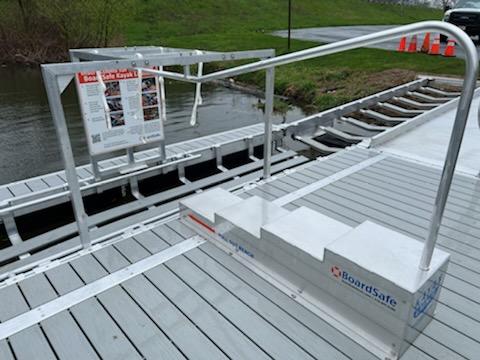
The adaptive features found only in a BoardSafe Adaptive Kayak Launch include a gangway with a 1/12 pitch or less. The boarding bench is the same height as a wheelchair, making it easy for kayakers to slide onto the bench. The bench offers a gradual step down to the vessel. The roll cage around the bench offers extra supportive features with the overhead grab bar and optional hand staps.
The paddler can slide down the bench from either side, depending on their preference. There is a stadium-style bleacher seat that pulls out over the kayak. With the paddler seated on the bleacher seat, the overhead grab straps afford adaptive athletes the ability to slide themselves slowly into their vessel.
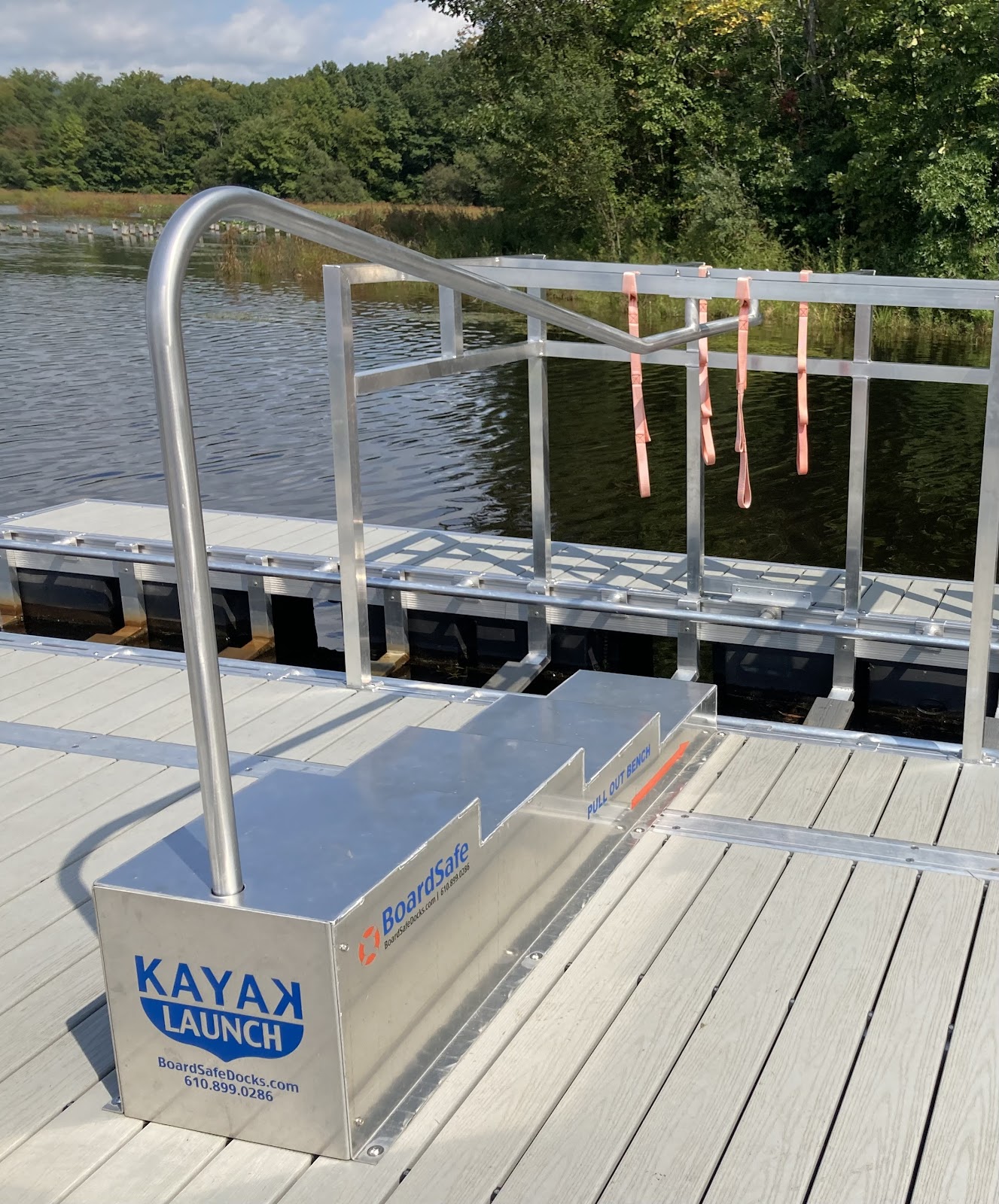
Boarding Bench Adaptive Features can be seen in this picture
Adding to the stability of the launch is a cradle that holds the kayak securely in place. The kayak fits snugly into the cradle so there is no worry about tipping or moving unexpectedly, which is the risk with roller-type launch systems. Adaptive paddlers have reported that the roller-type launch does not securely hold the kayak in place, and gravity can cause the vessel to shift upon entry, making the entrance less safe than a cradle launch.
Once the adaptive paddler is securely fitted into the vessel, there are appropriately-spaced grab bars on each side of the cradle they can use to pull themselves out onto the water. BoardSafe’s inclusive features are demonstrated to work (see video link below), and the value of these features to an adaptive paddler has no price. The true value is getting them out on the water with family and friends.
Structural features of BoardSafe Floating Docks
While the inclusive features are valued by adaptive paddlers, it’s the structural features that make BoardSafe Docks the premier floating dock option on today’s market. The structural integrity of BoardSafe products sets them apart from the rest of the competition. Anyone who has seen or experienced the launch firsthand can attest to the quality design of their docks, gangways, piers, and adaptive launches.
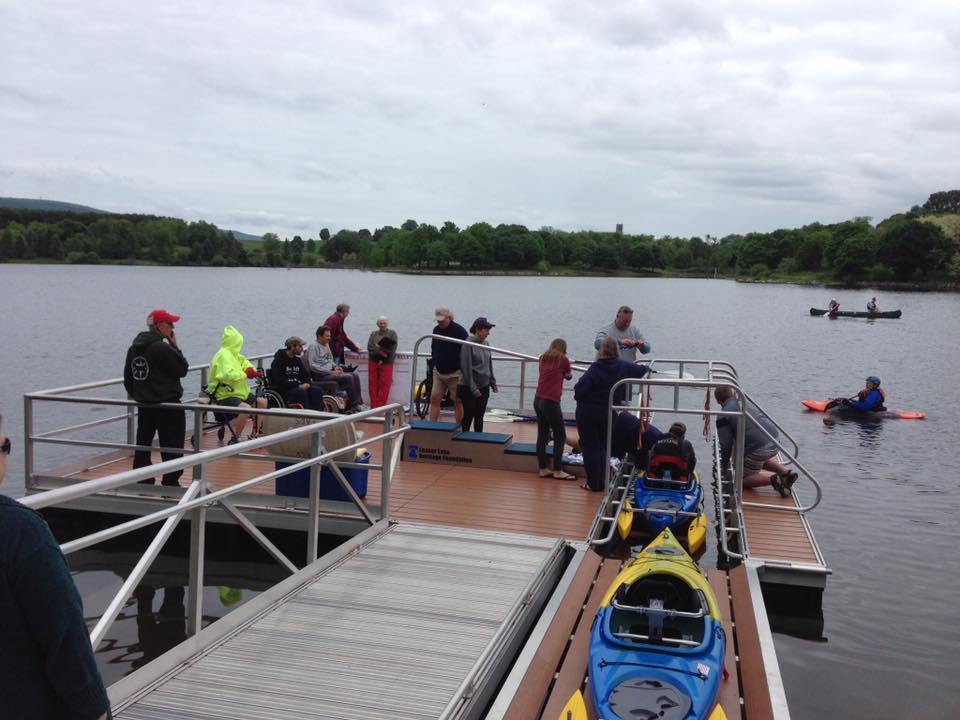
BoardSafe’s first adaptive kayak launch installed in 2015
In addition to the value of BoardSafe’s adaptive features, the floating dock system also offers value to those concerned about the dock’s long-term maintenance. Understanding the product components and the structural integrity of BoardSafe’s floating dock system helps keep concerns about long-term maintenance costs at bay.
BoardSafe Floating Launches are durable, versatile, and able to withstand the test of time and weather. Not all dock builders have this reputation. The aluminum welded frames, composite decking, and plastic encapsulated flotation, create a maintenance-free system.
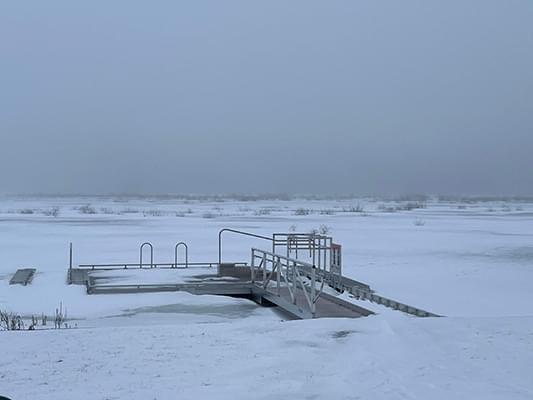
Launches may remain in water and can withstand a freeze and thaw, and snow, as long as there are no tidal changes or moving ice jams that may do damage to the launch.
More about Boardafe Dock’s structural components
There are three main components used in manufacturing a BoardSafe aluminum floating dock. The combination of these materials has proven to provide a structural, aesthetically pleasing floating dock system with a life span of 20 to 30 years. The system is intentionally designed for minimum maintenance and upkeep.
The BoardSafe Floating Dock System is manufactured using the following materials:
- Aluminum Frame
- Marine Grade 6061 or 6063
- Welded connections
- Stainless steel fasteners
- Composite Decking
- Rated for commercial use
- Rated for anti-slip in accordance with ADA requirements
- Plastic Encapsulated Flotation
- Foam-filled
- Plastic shell
Why do these durable materials make the system long-lasting and unique?
Welded connections, marine-grade aluminum, and stainless steel fasteners, withstand the test of time and weather and are maintenance-free materials. Aluminum and stainless steel will not corrode or rust. These components also stand up to the elements of weather and changes in tide and temperature, and are durable enough to withstand the test of time.
The composite decking used in BoardSafe’s systems helps make the decking system maintenance-free. The water-resistant, plastic deck boards used on BoardSafe docks have an anti-slip tread that meets ADA standards. Since BoardSafe kayak launches are designed to the highest standards of accessibility with the adaptive community in mind, the safety precautions they take are a standard and not an option.
The plastic-encapsulated floats provide stability by distributing weight more evenly and meet all marine industry standards. The floats will adjust to the water’s changing height and tidal changes and will keep the dock’s freeboard unchanged.
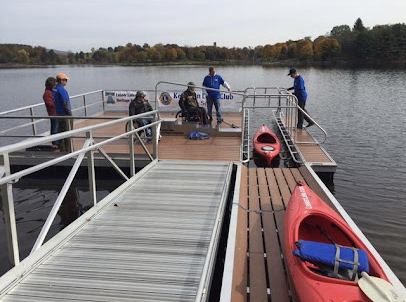
Pictures from the first BoardSafe Adaptive Kayak Launch at the ribbon-cutting ceremony on 10/24/2015
Leaser Lake is the location of the first adaptive kayak launch, which was installed in 2015. The following pictures show a frozen Leaser Lake in 2021 and a picture from the spring of 2022, seven years after its installation. Kayakers will be able to enjoy the launch for many years to come because of its structural integrity and durability.
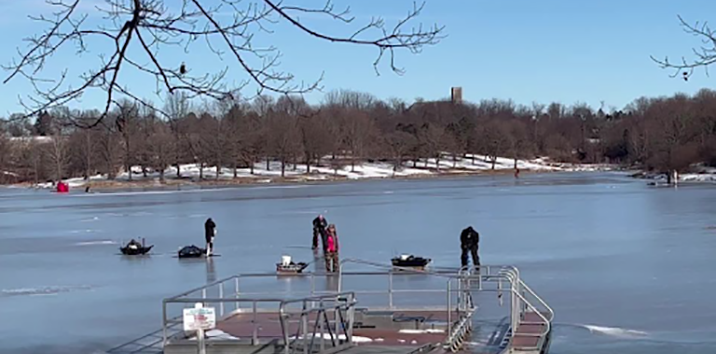
A frozen Leaser Lake in 2021
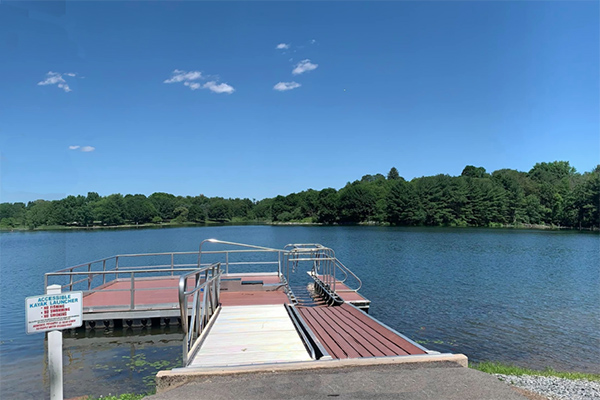
Leaser Lake Adaptive Kayak Launch in spring of 2022 (7 years later)
“BoardSafe has all the features to provide the most access to the greatest number of users’” said George White, Wetland Biologist and Team River Runner Chapter Coordinator for Lehigh County.
People who enjoy water sports are often subject to climates and locations that experience four seasons. For example, people in New England and the midwest face extremes of heatwaves and frigid blizzards. Many of BoardSafe’s clients in these areas are concerned about protecting their floating docks, fishing piers, gangways, and adaptive accessible kayak launches. Parks and outdoor spaces must winterize their areas by putting items into storage, placing covers over certain items, and spending time to protect objects against the harshness of the winter. Customers often ask if BoardSafe products need to be removed from the water and stored during the winter. The short answer is, “No, BoardSafe’s floating docks, fishing piers, gangways, and adaptive accessible kayak launches do not necessarily need to be removed for the winter.”
User groups in the northern United States and Canada will be happy to know that Board Safe’s docks and launches can remain in the water for the winter as long as there is no fluctuation in the body of water where the launch is located and there are no ice pack movements around the launch system. Unusual situations, like draining a lake or chunks of ice floating down a river, could damage the product. That said, a floating dock, fishing pier, or adaptive launch that has a steady level and flow of water around it will endure the winter and can be left in the water. However, this decision should not be made in isolation without having conversations about winter weather conditions with both park managers and BoardSafe Docks.
BoardSafe’s products use high-quality grades of stainless steel, synthetic lumber, fiberglass, hardware, and other materials that are selected for their durability and ability to withstand extreme elements. However, they cannot control acts of Mother Nature and consideration should always be given to preparation for the most extreme of all possible weather conditions.
Since every location and application is just a little bit different, BoardSafe Docks should always be consulted prior to allowing products to sit in the water throughout the winter. With hundreds of installations across numerous climates and environmental conditions, BoardSafe is an expert in location selection, site work, design, engineering, manufacturing, and installation of floating docks, piers, and adaptive launches. To discuss your project and learn more about BoardSafe Docks, their adaptive features, durable construction, and long-term maintenance suggestions, please call us at 610-899-0286 or contact us through our website at BoardSafeDocks.com.
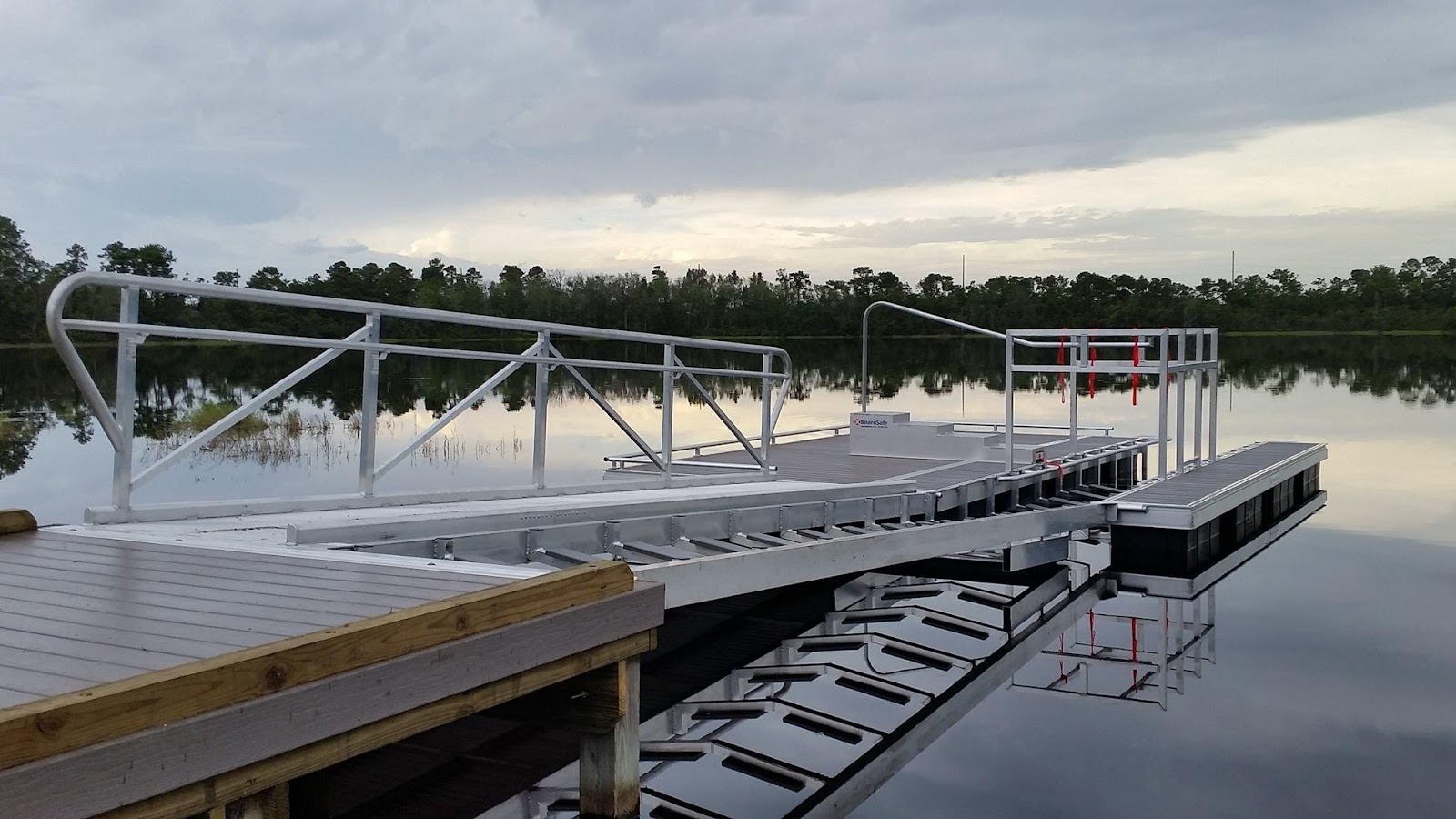
Adaptive Kayak Launch Installed at Rotary Park, Coldwater, MI
A new BoardSafe Docks adaptive kayak launch was just installed at Rotary Park in Coldwater, Michigan, sponsored by the Coldwater Township Sunrise Rotary and the Coldwater Rotary Club. It was funded through the Coldwater Rotary Club, the Coldwater Township Sunrise Rotary, and the Coldwater Solar Project.
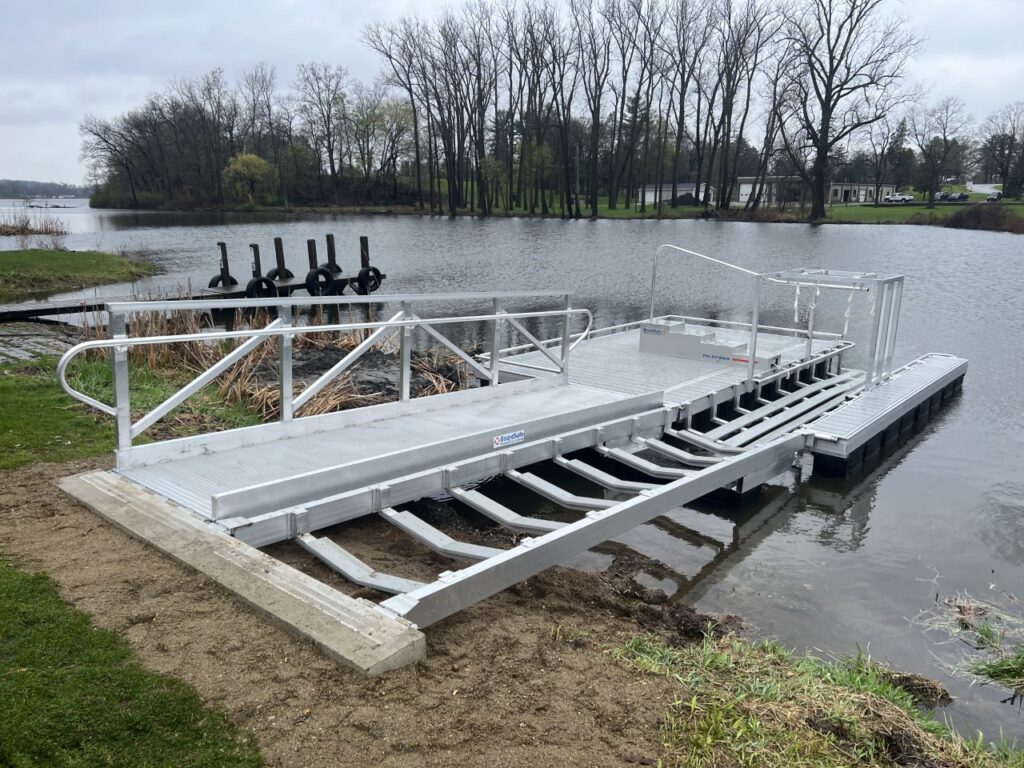
This BoardSafe Docks launch is the only adaptive kayak launch in the area. BoardSafe designed and fabricated the system, and provided onsite construction supervision, working alongside the city's employees to build the launch.
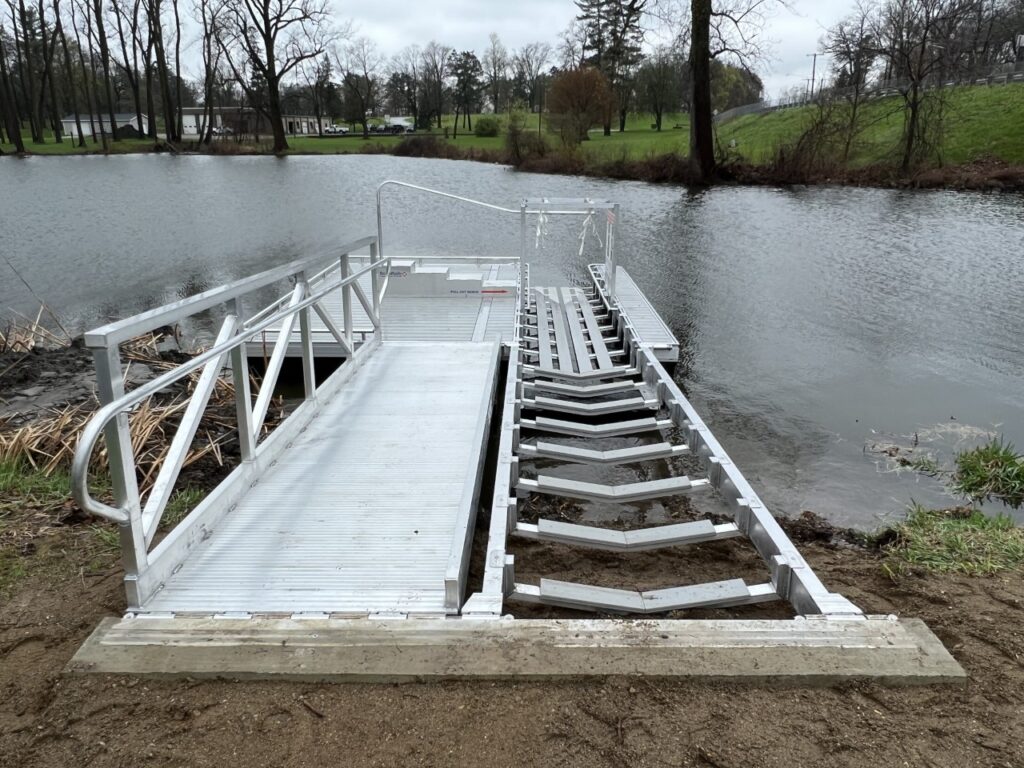
It will allow all kayakers, including those with special needs, to have easier access to the water.
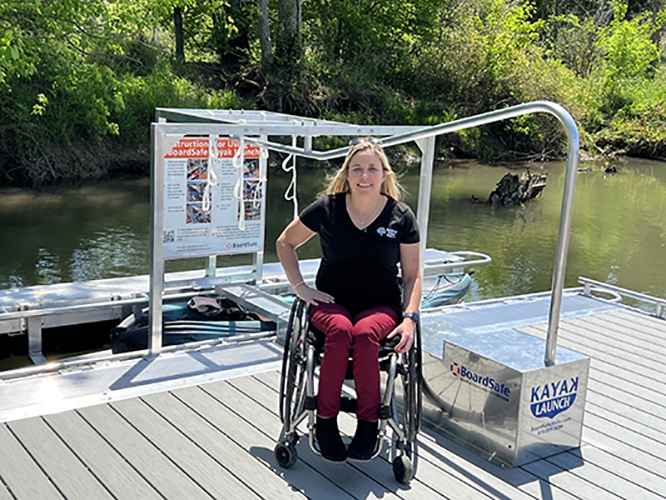
We Empower All Abilities. This Spring Will Be More Fun for Paddlers at the New Beaver Creek Launch in Powell, TN
Two new adaptive kayak launches have been installed on Beaver Creek! You will find them at Powell High Landing (Brickyard Road) and Roy Arthur Stormwater Park (Harrell Road).
Beaver Creek Water Trail spans the length of Knox County, Tennessee, a 44-mile stretch from Halls to Melton Hill in Hardin Valley, and is a popular spot for paddling; ADA boat dock with kayak put-in behind Powell High School; dock/put-in at Roy Arthur Stormwater Park features a popular route running from the Park to the Northwest Sports Complex with a mix of light rapids and peaceful, placid water.
Beaver Creek is an ideal learning site, especially the area from Halls to Powell or launching at the put-in behind Powell High School and floating to Clinton Highway. You can stand up and walk out of most places in the creek and the gentle current will carry you along.
Learn more about the Beaver Creek Water Trail and how BoardSafe Docks helped them meet their accessibility and deadline goals with these local pieces:
View this video on Facebook:
facebook.com/groups/1682230425349003/permalink/3166073996964631/
Offer ADA Inspired and Adaptive Accessibility at Your Marina
The Village of Fairport on the Erie Canal recently redesigned its waterfront to improve accessibility for its adaptive paddling community. The Erie Canal Boat Company is proudly equipped with a custom BoardSafe Adaptive Kayak Launch, part of a complete waterfront redesign at its Erie Canal entry point. GPI, the design engineer on the project, sought out BoardSafe Docks for their assistance in developing a design solution for the Fairport Village Boat Launch and Marina.
The initial plan was to provide universal access to the water. The community is proud to be working together to make inclusion happen. Our customer was looking for an adaptive kayak launch that would be placed in an area that rests next to their newly-designed boat ramp. BoardSafe was able to work with the design engineers on their initial concept and came up with a unique design solution.
The adaptive launch system was designed with a concrete trench at the top of the launch and included a bulkhead angle and a related hinge pin that attached to the floating dock system. The space allowed for the pin to be easily installed and removed if necessary and provided a secure attachment of the floating dock system to the concrete wall.

Bulkhead angle attached to launch
The scope of this customized project included an 8-foot-wide gangway that fit into the designated launch space. The kayak chute was designed to be 8 feet in length. The adaptive system included an 8-foot by 20-foot floating dock and Clip-a-Launch 20S (designed for entry from one end). The loading and unloading area was designed to accommodate multiple wheelchairs and is welcoming to adaptive paddling groups. The cost of this project was in the $50,000 range, and it was installed at the location of the Erie Boat Company, Inc., operated by Peter Abele.

8-foot-wide aluminum gangway
The beauty of a project like this is its ability to be used in almost any unused marina slip. BoardSafe Docks will work with its customers to design the floating dock system to any length and width to add these accessibility features to your existing marina. The desirable features of the BoardSafe inclusive launch system are that it offers boaters the ability to kayak, canoe, or SUP, safely and easily from the launch, and serves the widest range of users, from those who are able bodies to those who are in wheelchairs. It will allow your guests another option to see and explore the villages and towns surrounding your marina.
What draws boaters to this marina
The Erie Canal Boat Company is known for its kayak rentals and excursions along the Erie Canal. There are plentiful walking and bike trails along the canal to explore. The boat company offers accessible kayak, canoe, paddleboard, pontoon, and bicycle rentals to people of all abilities. The launch offers universal access for its residents and visitors, making it a popular tourist destination and a solid revenue stream for the town, marina, and businesses located along the canal.
Boaters may dock their boat in one of the marina’s boat slips and use all of the additional recreational opportunities available at the marina. The additional activities beyond boating take visitors to places they may not be able to get to with their boats, and allow visitors to enjoy the sites, both on and off the water.
The BoardSafe Adaptive Kayak Launch supported the Erie Canal Boat Company with its mission and has helped make Fairport an inclusive destination for boaters and paddlers of all abilities. Tourism is on the rise in Fairport, and it’s receiving many praises, being recognized for its ability to provide universal access.
Not far from Fairport, the Village of Brockport also installed a BoardSafe Adaptive Kayak Launch. The adaptive system is located in downtown Brockport along the Erie Canal, and the popularity of the launch has been good for the town as showcased in this link: http://ow.ly/rSEv50IRMIm.
You can learn more about BoardSafe's exclusive adaptive products here.

Take a video tour of the Fairport accessible kayak launch at the link below.
Village of Fairport, NY Accessible Kayak Launch with ADA Features
Contact BoardSafe Docks at 610-899-0286 if you're looking for ideas on making your marina more accessible to your users or for using an existing boat slip to offer an adaptive kayak launch.
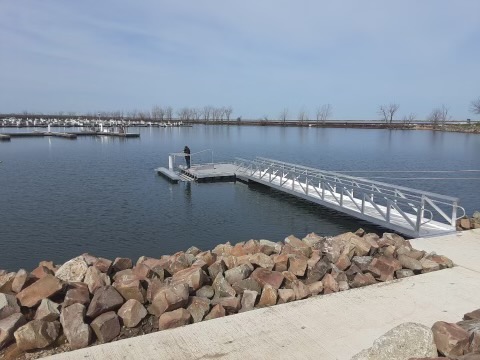
Cleveland Metroparks Adds Kayak Launch and Gangway
Established in 1917, Cleveland Metroparks spans more than 24,000 acres across Northeast Ohio including 18 reservations, more than 300 miles of trails, eight golf courses, eight lakefront parks, dining and retail venues, and nationally-acclaimed Cleveland Metroparks Zoo. The Park District offers thousands of education and recreation programs and events each year across the 49 communities it serves, helping to create connections to nature and promote conservation and sustainability. Cleveland Metroparks is the recipient of the 2021 National Gold Medal “Best in Nation” Award for Excellence in Parks and Recreation Management.
Cleveland Metroparks has been operating the East 55th Street Marina since 2013. Conveniently located off of I-90 on the shores of Lake Erie at a 1,200-foot fishing platform and one exit away from the popular E 72nd Fishing Area and Gordon Public Boat Ramps, they have everything you need for a successful day on the lake! Stop in by car or boat for bait, tackle, coffee, snacks, and beer to go. Full-service ship store covering all of your boating needs.
Visit their site at clevelandmetroparks.com/parks/visit/parks/lakefront-reservation/east-55th-street-marina.
BoardSafe Docks has recently engineered, built, and installed our unique ADA-inspired adaptive kayak launch to make boating accessible to adaptive paddlers. We also installed a 50-foot, heavy-duty aluminum gangway to provide access to the launch.
Click here to read more about BoardSafe's accessible kayak launch.
Click here to read more about BoardSafe's aluminum gangway.
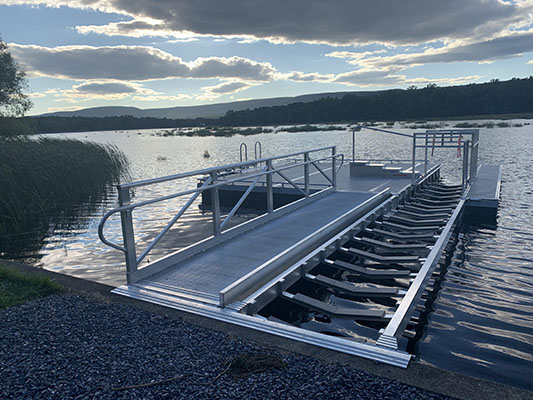
How Much Does a BoardSafe Adaptive Kayak Launch Cost?
One of the first questions our customers ask is, “How much does a BoardSafe Adaptive Kayak Launch cost?”
Let me explain some of our general pricing guidelines and the different components of our launch that directly affect pricing. The purchase of an adaptive kayak launch is much like the purchase of a vehicle or even a home — With so many options available, price ranges can vary depending on the options you select. Like a car, you’ll want to select the options that will make your excursions safe, comfortable, and easily accessible.
BoardSafe Docks manufactures a number of standard-size kayak launches, gangways, chutes, and floating docks. These components can be arranged in countless configurations to meet the site conditions and needs of our customers.
Click here to view the different kayak launch layouts that will affect your pricing.
There are 20 different configurations that BoardSafe Docks has put together to meet customers' unique needs and to ensure usability for adaptive paddlers. Our goal is to make sure our launch system provides the necessary features that accommodate the widest range of user abilities. We’ve evaluated hundreds of launch sites and have learned what’s needed to enable our customers to safely and easily access their vessels and get out onto the water.
BoardSafe’s sales team members are available to evaluate your waterfront and make recommendations about the launch system that will work best for your application and your intended users. After your site has been evaluated, our sales professionals will guide you on the layout that will be the best option for your users and your access point. They will also assist you with budgetary numbers for your site’s design.
Can I save money by purchasing a BoardSafe Kayak Launch system now and adding the adaptive kit when additional funds become available?
The BoardSafe Adaptive Kayak Launch has features that can be purchased separately or together. These features include the gangway and accompanying kayak chute, floating dock, adaptive kit (step-down bench, overhead roll cage with grab bars and straps, and signage), saddle launch or Clip-a-Launch. Each of these components can be personalized to your launch site with the features you find most important for the safety and accessibility of your identified users. The launch can be designed for the components in the adaptive kit to be added at a later time.
To keep the initial cost down, the kayak launch can be purchased with or without the Adaptive Boarding Kit (bench with pullout seat, overhead grab bar with hand straps, and instructional signage).
The length of the gangway and accompanying kayak chute is another feature that will affect pricing. Depending on the location and placement of the floating dock, the gangway and chute will be designed in varying lengths. The floating dock structure of an adaptive kayak launch needs a minimum water level of 18 inches in order for the encapsulated floats to remain floating in the water so the gangway, chute, and floating docks are not sitting in the mud.
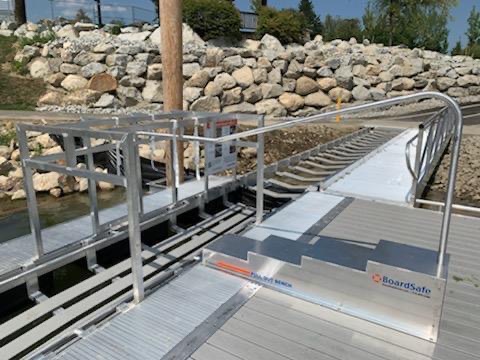
This is one of the reasons that BoardSafe Docks offers multiple solutions and layouts. Their design capabilities will assist you with choosing the best configuration.
How quality and longevity affect the cost of a BoardSafe Kayak Launch system
BoardSafe launches are manufactured using aluminum welded frames, composite deck lumber, encapsulated flotation, and proprietary extrusions that make their system durable and able to withstand the test of time. Our launches are also designed to be used with canoes and stand-up paddleboards, making their versatility very desirable for many user groups.
The approximate price range of these configurations is between $30,000 and $55,000, depending on the size and options you select.
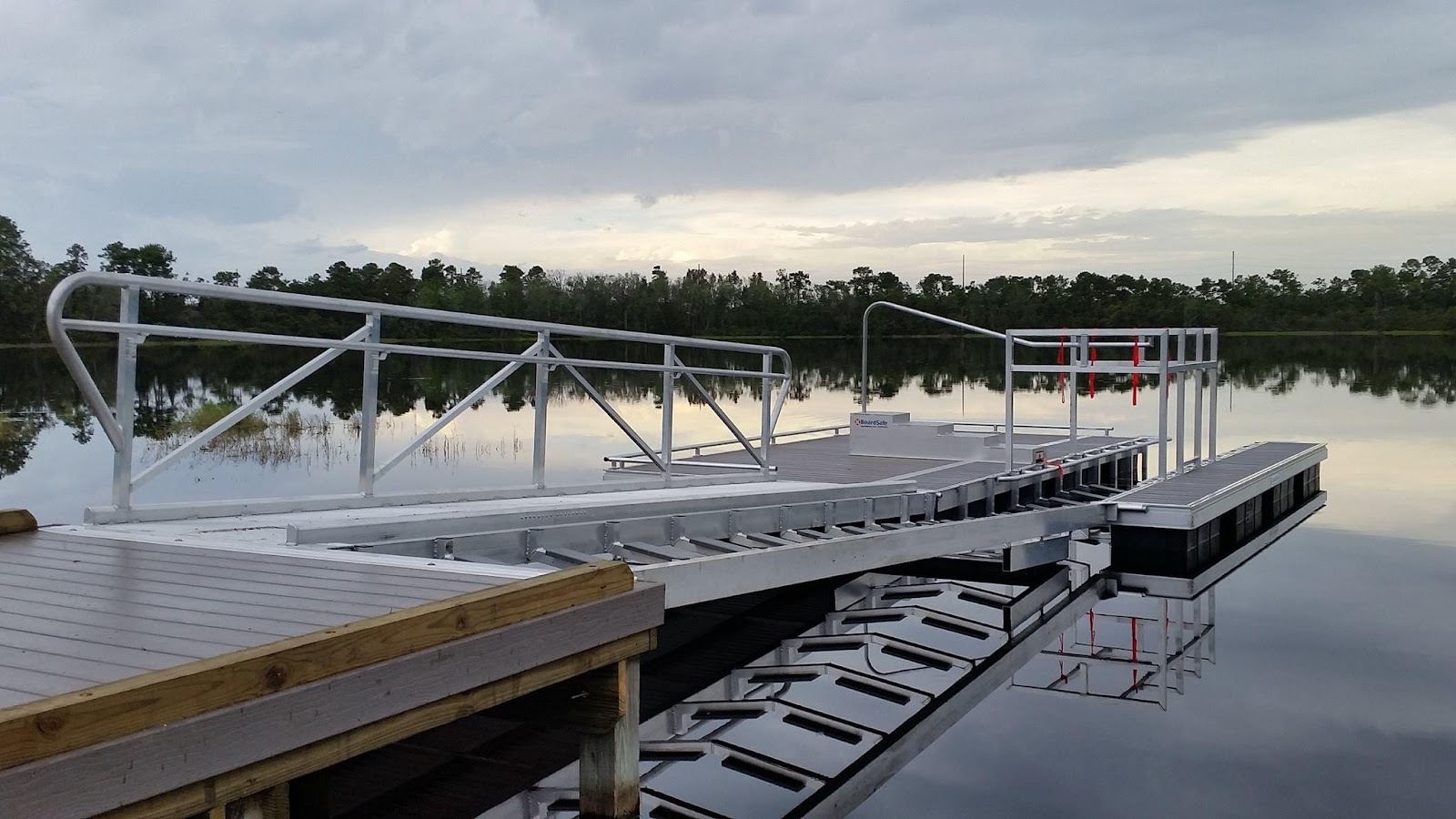
BoardSafe understands that you want your kayak launch to be around for a long time — longer than you might keep your car, and possibly as long as you plan to live in your home. Picking the right kayak launch with the right options and configuration the first time is critical to ensure maximum enjoyment with minimum maintenance. Because of this, most of our customers end up selecting the launch that will make them happiest in the long run.
Unfortunately, when customers only focus on the price of the kayak launch and are solely focused on finding the cheapest launch, they also sacrifice quality, warranty, low maintenance, and aesthetics. This can inevitably lead to regret — especially considering that, unlike a vehicle, a kayak launch cannot be traded in when someone is dissatisfied and disenchanted with their product or performance.
BoardSafe Docks is a trusted expert in the location, selection, site work, design, engineering, manufacturing, and installation of floating docks, fishing piers, gangways, pedestrian bridges, rowing centers, marinas, and the BoardSafe Adaptive Kayak Launch.
Our adaptive launch provides a truly accessible experience for the adaptive paddler as well as all able-bodied paddlers. To discuss your project, and for assistance with finding your optimal waterfront solution, please call 610-899-0286 or visit us at BoardSafeDocks.com.
How Much Does an Adaptive Accessible Kayak Launch Cost?
Across the nation, many people — from park rangers to city engineers — are seeking to improve access to their local community’s water and marine features. This is an extension and outgrowth of the Americans with Disabilities Act (ADA), with the objective to provide access for all abilities to all amenities. Access to nature for the disabled has been long overlooked, but now parks, towns, and clubs are clamoring for ADA-accessible picnic tables, bathrooms, and walking trails, as well as adaptive kayak launches.
With any new product, one of the first questions asked is, “How much does it cost?” The appropriate answer is almost always, “Well, that depends!” So, how much does an adaptive or accessible kayak launch cost? The answer is inevitably found within the range of quality, features, and durability. This can mean a few hundred bucks for an accessory to bolt onto an existing wood dock or tens of thousands of dollars for an elaborate commercial-grade adaptive floating kayak launch and dock system.
System vs. Accessory
A quick Google search finds accessibility accessories to attach to existing docks. The less expensive the item, the less utility it offers to those with a disability. Hanging a large hook from an algae-encrusted wooden dock to stabilize a kayak is not helpful to individuals who are unstable on their feet. It may be useful to hold the boat for Grandma or a daredevil teen, but it is not suitable for one with mobility challenges. As the price for those bolt-on accessories increases, so do the engineering and thought put into the design of the part to ensure safe and easy transition in and out of vessels.
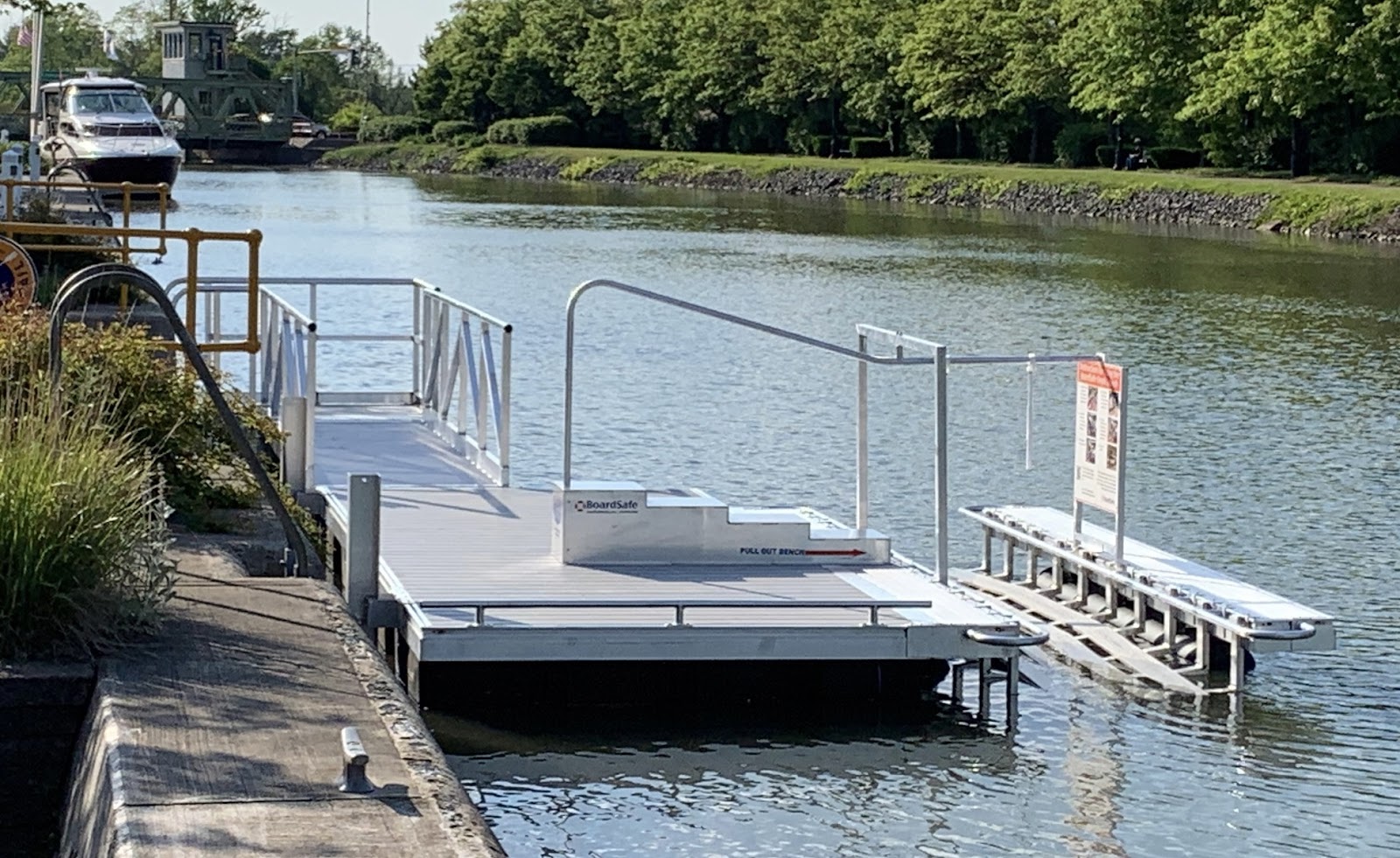
An accessory’s usefulness is contingent upon the quality and durability of the existing dock to which it is attached. For example, a BoardSafe Clip-a-Launch can be bolted onto the aluminum frame of an existing rigid or floating dock, and costs a few thousand dollars. Depending on the range of abilities of the users, a Clip-a-Launch alone may not suffice to assist paddlers in and out of boats. A person’s needs may require additional bars, straps, a transition bench, and other adaptive features to enable the paddler to easily enter and exit their craft. These features can be added to an existing dock, and are also sold as a package or full adaptive kayak launch system.
A fully-accessible or adaptive launch system is not an accessory that can be attached to an existing dock. The best option is, depending upon the need, a floating dock, gangway, and other accessories that facilitate water access.
Adaptive Kayak Launch System Features
The gangway must offer an adaptive paddler a way of moving the kayak from the land to the launch area and vice versa. The gangway should have a maximum pitch of 1/12 (meeting ADA slope requirements and features) and a parallel boat chute where the vessel is placed in alignment with the kayak launch.
The chute and launch area should be large enough to accommodate kayaks with outriggers. However, it shouldn’t be too wide or it will create too great a distance between the boarding bench and the cockpit of the vessel.
Ample space on a floating dock As the paddler rolls up to the bench to begin the transition from the chair into the cockpit, sufficient space is required to maneuver the wheelchair, especially if there is more than one adaptive paddler leaving their chairs on deck. The floating dock should also have a toe kick around the perimeter as an added safety feature. This prohibits a wheelchair from accidentally rolling off the dock into the water.
A tiered bench allows the user to easily transfer from the wheelchair. The top step of the bench must be equal to the height of a wheelchair in order for the user to transition from their wheelchair over to the bench. The steps should be minimal in height (approx. 3”) to allow the paddler a small shift from step to lower step.
The bench must be equipped with a pull-out seat that slides out over the kayak and directly above the vessel’s cockpit. This allows the adaptive paddler to slide down into the vessel with a limited drop and shimmy himself or herself into their kayak.
The roll cage must provide support for an overhead grab bar as well as optional hand straps. Adaptive paddlers have varied upper-body strengths and varied preferences as they enter and exit their vessel. Some paddlers prefer the grab bar while others prefer the hand straps. There should be no obstructions on either side of the step-down bench, allowing the paddler to choose the side they prefer and are most comfortable using to navigate down the bench.
The pull bars on either side of the launch must be at the right elevation and distance from the paddler, making it comfortable and easy for a disabled paddler to pull himself or herself down the chute and into the water.
Stabilization saddles and launch area Too often, the launch area is sloped and includes rollers. When a kayak, canoe, or SUP, is placed into the launch, gravity will dictate the action of the vessel. If a kayak is not level in the chute, it will roll into the water and will not remain securely in place for the disabled paddler to board or disembark from. Remember, the design needs to accommodate the return of paddlers as well, and rollers can actually make this condition worse because they prevent the vessel from sitting securely and remaining in place. The width of the launch area is also a factor — if it is too wide, it makes it more difficult for a paddler to make their way from the step-down bench in order to transfer into their vessel.
Quality and Durability
With most products, value is inevitably determined through quality products enduring the test of time. Most entry-level accessible kayak launches consist of molded plastic floating docks and accessories with some metal features. While they may not be as aesthetically pleasing or able to survive severe storms, they are an affordable way to test the waters (so to speak), launch a program, and engage new paddlers without a large investment. These launches require regular maintenance and have a short product life. For organizations that desire a high-quality adaptive kayak launch and have the budget to match, a BoardSafe kayak launch system should be considered.
BoardSafe’s entire system has been engineered for paddler performance and product durability. This includes commercial-grade aluminum, stainless steel, weather-resistant and slip-proof composite decking, encapsulated floats, and many other design features that facilitate safe transfer in and out of the water. These systems last for many years and are the preferred products of clients who don’t want to remove the docks in the winter or who have fluctuating water levels or who are susceptible to heavy storms.
Accessible vs. Adaptive
Although often used interchangeably, the terms “accessible” and “adaptive” are distinct and need to be properly understood. In the traditional sense, “accessible” denotes something that is easy to get to, where barriers such as steps have been removed. It can also include features stipulated by ADA guidelines, like a 1:12 gentle pitch, specific height handrails, and alternative handrails. Accessible launches are great for able-bodied kayakers, beginners, children, seniors, and people with minor limitations like joint issues, arthritis, and developmental delays. An accessible launch may even work for a small number of paddlers with moderate disabilities. However, for adaptive paddlers with greater mobility challenges, an accessible launch alone does not meet their full range of needs, and will not get them into the water safely or easily.
An “adaptive” launch is an enhanced accessible launch. Adaptive kayak launches are engineered and designed with features that accommodate paddlers of all abilities. The adaptive kayak launch designed by BoardSafe Docks was created based on the input of physical and occupational therapists and adaptive paddlers. Adaptive kayak launches are feature-rich to empower all users to overcome any mobility challenges.
Value
Many kayak launch buyers determine the value of a kayak launch relative to its ability to assist a number of paddlers over a period of time. Most people are aware that a product that outlasts a similarly-priced product offers greater value. In a similar way, but often overlooked, a product that accommodates a greater number of users will offer more benefit to more people, and therefore be more valuable. Feature-rich adaptive launches could help three or four times the number of users than a standard accessible launch. Each potential buyer needs to calculate this cost of ownership and return on investment. Many buyers go beyond the basic quantifiable measures of determining a kayak launch’s value, because helping those who live with the most severe handicaps is priceless. Some inferior accessible launches keep many with mobility issues from even considering their use, but allow an organization to check off the “ADA” box. On the other hand, those who desire to empower all users — especially those who typically do not enjoy life’s simple pleasure of roaming access — do not equate an adaptive launch’s value to the ROI because helping those in our communities with the greatest needs is, as they say, priceless.
To discuss your project and evaluate BoardSafe’s adaptive kayak launch options, contact us on our website or call 610-899-0286.