
Offer ADA Inspired and Adaptive Accessibility at Your Marina
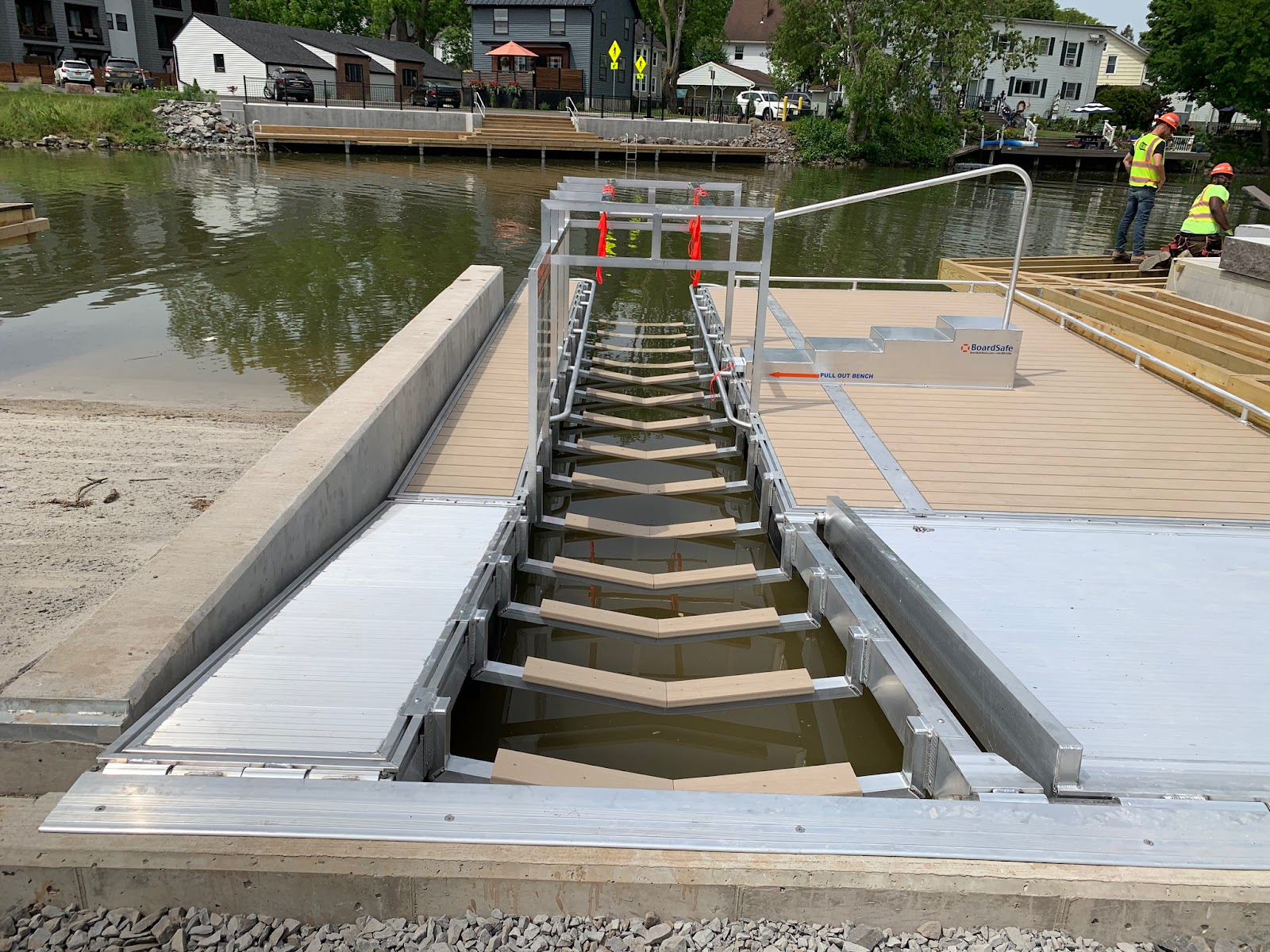
The Village of Fairport on the Erie Canal recently redesigned its waterfront to improve accessibility for its adaptive paddling community. The Erie Canal Boat Company is proudly equipped with a custom BoardSafe Adaptive Kayak Launch, part of a complete waterfront redesign at its Erie Canal entry point. GPI, the design engineer on the project, sought out BoardSafe Docks for their assistance in developing a design solution for the Fairport Village Boat Launch and Marina.
The initial plan was to provide universal access to the water. The community is proud to be working together to make inclusion happen. Our customer was looking for an adaptive kayak launch that would be placed in an area that rests next to their newly-designed boat ramp. BoardSafe was able to work with the design engineers on their initial concept and came up with a unique design solution.
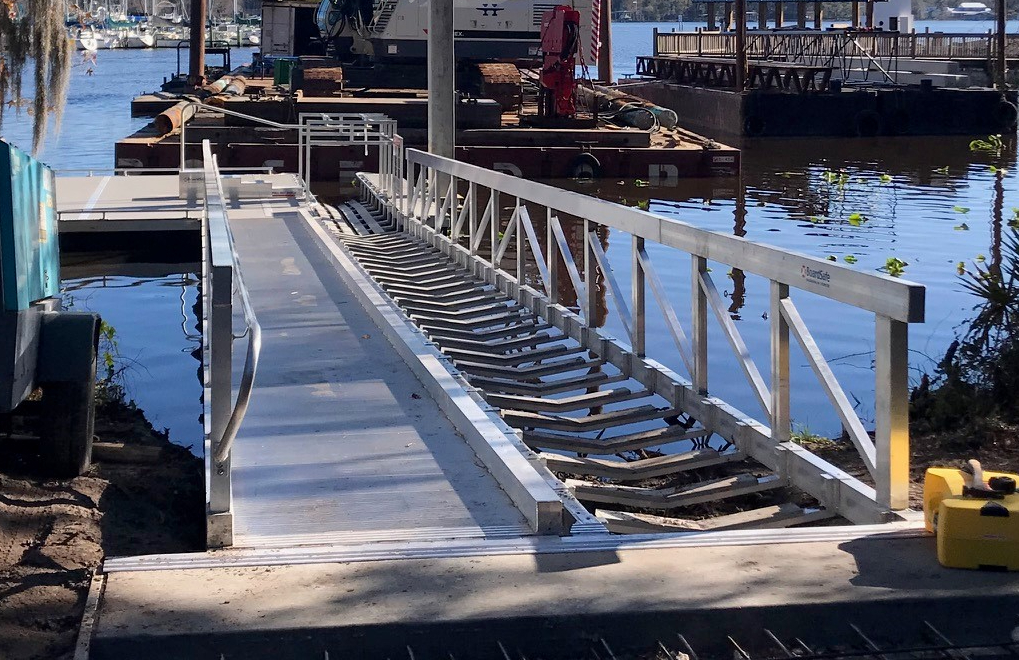
The adaptive launch system was designed with a concrete trench at the top of the launch and included a bulkhead angle and a related hinge pin that attached to the floating dock system. The space allowed for the pin to be easily installed and removed if necessary and provided a secure attachment of the floating dock system to the concrete wall.

Bulkhead angle attached to launch
The scope of this customized project included an 8-foot-wide gangway that fit into the designated launch space. The kayak chute was designed to be 8 feet in length. The adaptive system included an 8-foot by 20-foot floating dock and Clip-a-Launch 20S (designed for entry from one end). The loading and unloading area was designed to accommodate multiple wheelchairs and is welcoming to adaptive paddling groups. The cost of this project was in the $50,000 range, and it was installed at the location of the Erie Boat Company, Inc., operated by Peter Abele.

8-foot-wide aluminum gangway
The beauty of a project like this is its ability to be used in almost any unused marina slip. BoardSafe Docks will work with its customers to design the floating dock system to any length and width to add these accessibility features to your existing marina. The desirable features of the BoardSafe inclusive launch system are that it offers boaters the ability to kayak, canoe, or SUP, safely and easily from the launch, and serves the widest range of users, from those who are able bodies to those who are in wheelchairs. It will allow your guests another option to see and explore the villages and towns surrounding your marina.
What draws boaters to this marina
The Erie Canal Boat Company is known for its kayak rentals and excursions along the Erie Canal. There are plentiful walking and bike trails along the canal to explore. The boat company offers accessible kayak, canoe, paddleboard, pontoon, and bicycle rentals to people of all abilities. The launch offers universal access for its residents and visitors, making it a popular tourist destination and a solid revenue stream for the town, marina, and businesses located along the canal.
Boaters may dock their boat in one of the marina’s boat slips and use all of the additional recreational opportunities available at the marina. The additional activities beyond boating take visitors to places they may not be able to get to with their boats, and allow visitors to enjoy the sites, both on and off the water.
The BoardSafe Adaptive Kayak Launch supported the Erie Canal Boat Company with its mission and has helped make Fairport an inclusive destination for boaters and paddlers of all abilities. Tourism is on the rise in Fairport, and it’s receiving many praises, being recognized for its ability to provide universal access.
Not far from Fairport, the Village of Brockport also installed a BoardSafe Adaptive Kayak Launch. The adaptive system is located in downtown Brockport along the Erie Canal, and the popularity of the launch has been good for the town as showcased in this link: http://ow.ly/rSEv50IRMIm.
You can learn more about BoardSafe's exclusive adaptive products here.

Take a video tour of the Fairport accessible kayak launch at the link below.
Village of Fairport, NY Accessible Kayak Launch with ADA Features
Contact BoardSafe Docks at 610-899-0286 if you're looking for ideas on making your marina more accessible to your users or for using an existing boat slip to offer an adaptive kayak launch.
Cleveland Metroparks Adds Kayak Launch and Gangway
Established in 1917, Cleveland Metroparks spans more than 24,000 acres across Northeast Ohio including 18 reservations, more than 300 miles of trails, eight golf courses, eight lakefront parks, dining and retail venues, and nationally-acclaimed Cleveland Metroparks Zoo. The Park District offers thousands of education and recreation programs and events each year across the 49 communities it serves, helping to create connections to nature and promote conservation and sustainability. Cleveland Metroparks is the recipient of the 2021 National Gold Medal “Best in Nation” Award for Excellence in Parks and Recreation Management.
Cleveland Metroparks has been operating the East 55th Street Marina since 2013. Conveniently located off of I-90 on the shores of Lake Erie at a 1,200-foot fishing platform and one exit away from the popular E 72nd Fishing Area and Gordon Public Boat Ramps, they have everything you need for a successful day on the lake! Stop in by car or boat for bait, tackle, coffee, snacks, and beer to go. Full-service ship store covering all of your boating needs.
Visit their site at clevelandmetroparks.com/parks/visit/parks/lakefront-reservation/east-55th-street-marina.
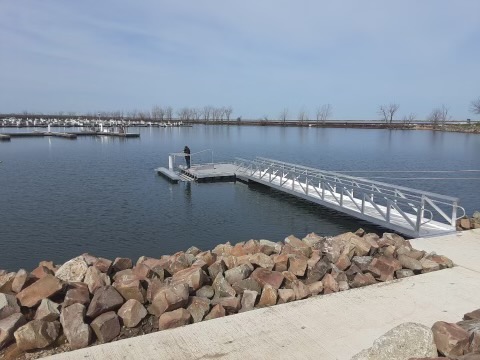
BoardSafe Docks has recently engineered, built, and installed our unique ADA-inspired adaptive kayak launch to make boating accessible to adaptive paddlers. We also installed a 50-foot, heavy-duty aluminum gangway to provide access to the launch.
Click here to read more about BoardSafe's accessible kayak launch.
Click here to read more about BoardSafe's aluminum gangway.
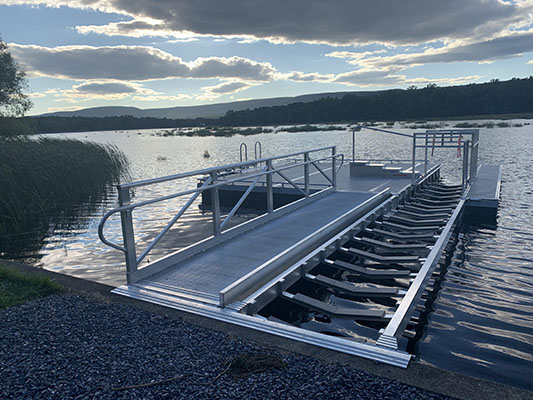
How Much Does a BoardSafe Adaptive Kayak Launch Cost?
One of the first questions our customers ask is, “How much does a BoardSafe Adaptive Kayak Launch cost?”
Let me explain some of our general pricing guidelines and the different components of our launch that directly affect pricing. The purchase of an adaptive kayak launch is much like the purchase of a vehicle or even a home — With so many options available, price ranges can vary depending on the options you select. Like a car, you’ll want to select the options that will make your excursions safe, comfortable, and easily accessible.
BoardSafe Docks manufactures a number of standard-size kayak launches, gangways, chutes, and floating docks. These components can be arranged in countless configurations to meet the site conditions and needs of our customers.
Click here to view the different kayak launch layouts that will affect your pricing.
There are 20 different configurations that BoardSafe Docks has put together to meet customers' unique needs and to ensure usability for adaptive paddlers. Our goal is to make sure our launch system provides the necessary features that accommodate the widest range of user abilities. We’ve evaluated hundreds of launch sites and have learned what’s needed to enable our customers to safely and easily access their vessels and get out onto the water.
BoardSafe’s sales team members are available to evaluate your waterfront and make recommendations about the launch system that will work best for your application and your intended users. After your site has been evaluated, our sales professionals will guide you on the layout that will be the best option for your users and your access point. They will also assist you with budgetary numbers for your site’s design.
Can I save money by purchasing a BoardSafe Kayak Launch system now and adding the adaptive kit when additional funds become available?
The BoardSafe Adaptive Kayak Launch has features that can be purchased separately or together. These features include the gangway and accompanying kayak chute, floating dock, adaptive kit (step-down bench, overhead roll cage with grab bars and straps, and signage), saddle launch or Clip-a-Launch. Each of these components can be personalized to your launch site with the features you find most important for the safety and accessibility of your identified users. The launch can be designed for the components in the adaptive kit to be added at a later time.
To keep the initial cost down, the kayak launch can be purchased with or without the Adaptive Boarding Kit (bench with pullout seat, overhead grab bar with hand straps, and instructional signage).
The length of the gangway and accompanying kayak chute is another feature that will affect pricing. Depending on the location and placement of the floating dock, the gangway and chute will be designed in varying lengths. The floating dock structure of an adaptive kayak launch needs a minimum water level of 18 inches in order for the encapsulated floats to remain floating in the water so the gangway, chute, and floating docks are not sitting in the mud.
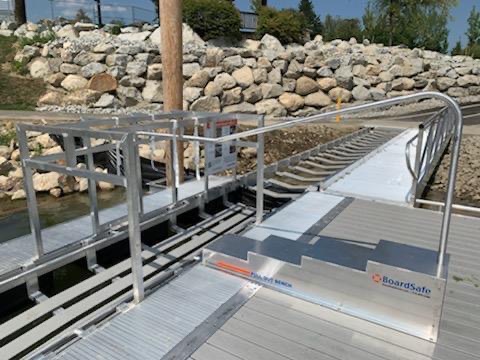
This is one of the reasons that BoardSafe Docks offers multiple solutions and layouts. Their design capabilities will assist you with choosing the best configuration.
How quality and longevity affect the cost of a BoardSafe Kayak Launch system
BoardSafe launches are manufactured using aluminum welded frames, composite deck lumber, encapsulated flotation, and proprietary extrusions that make their system durable and able to withstand the test of time. Our launches are also designed to be used with canoes and stand-up paddleboards, making their versatility very desirable for many user groups.
The approximate price range of these configurations is between $30,000 and $55,000, depending on the size and options you select.
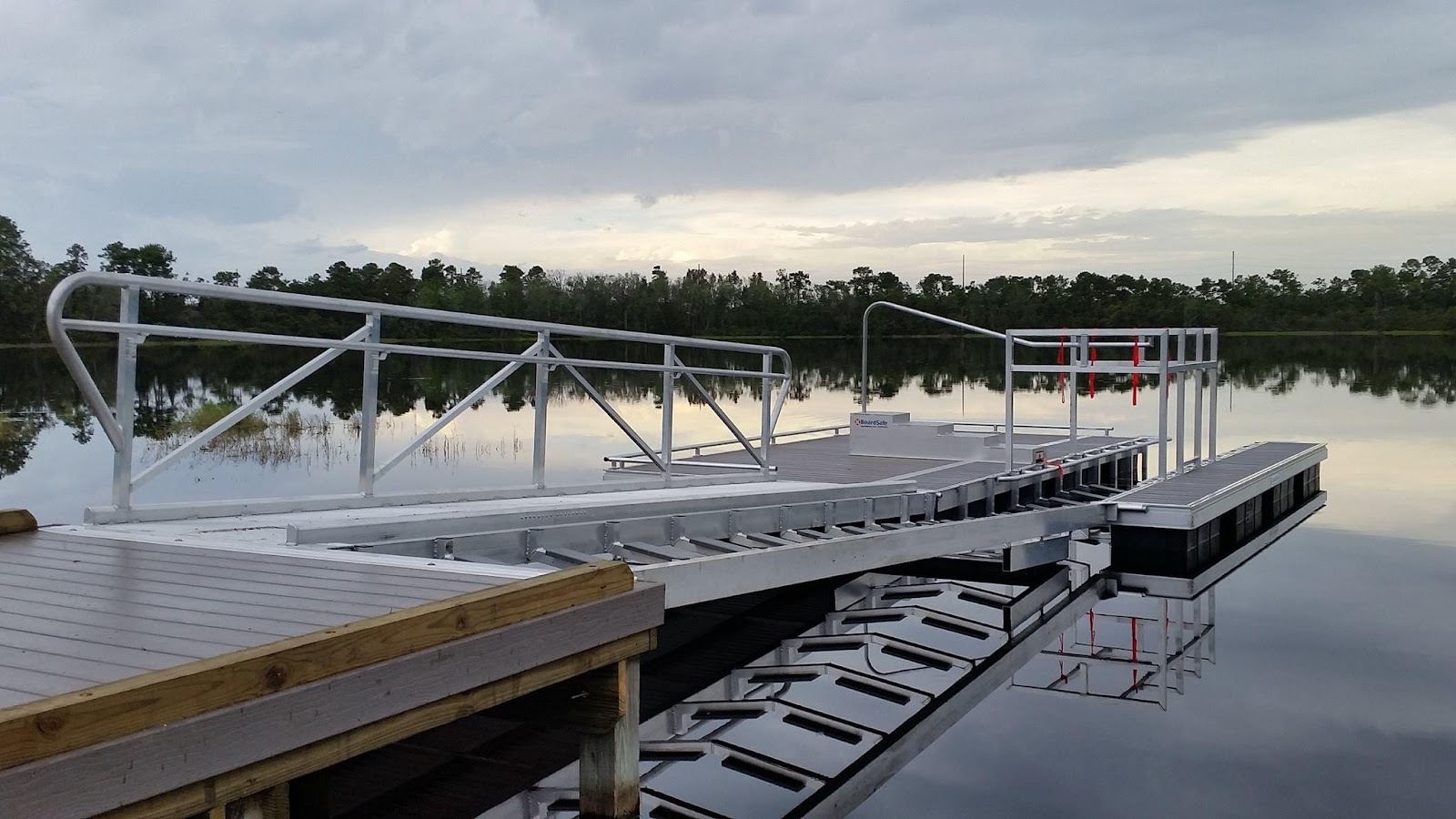
BoardSafe understands that you want your kayak launch to be around for a long time — longer than you might keep your car, and possibly as long as you plan to live in your home. Picking the right kayak launch with the right options and configuration the first time is critical to ensure maximum enjoyment with minimum maintenance. Because of this, most of our customers end up selecting the launch that will make them happiest in the long run.
Unfortunately, when customers only focus on the price of the kayak launch and are solely focused on finding the cheapest launch, they also sacrifice quality, warranty, low maintenance, and aesthetics. This can inevitably lead to regret — especially considering that, unlike a vehicle, a kayak launch cannot be traded in when someone is dissatisfied and disenchanted with their product or performance.
BoardSafe Docks is a trusted expert in the location, selection, site work, design, engineering, manufacturing, and installation of floating docks, fishing piers, gangways, pedestrian bridges, rowing centers, marinas, and the BoardSafe Adaptive Kayak Launch.
Our adaptive launch provides a truly accessible experience for the adaptive paddler as well as all able-bodied paddlers. To discuss your project, and for assistance with finding your optimal waterfront solution, please call 610-899-0286 or visit us at BoardSafeDocks.com.
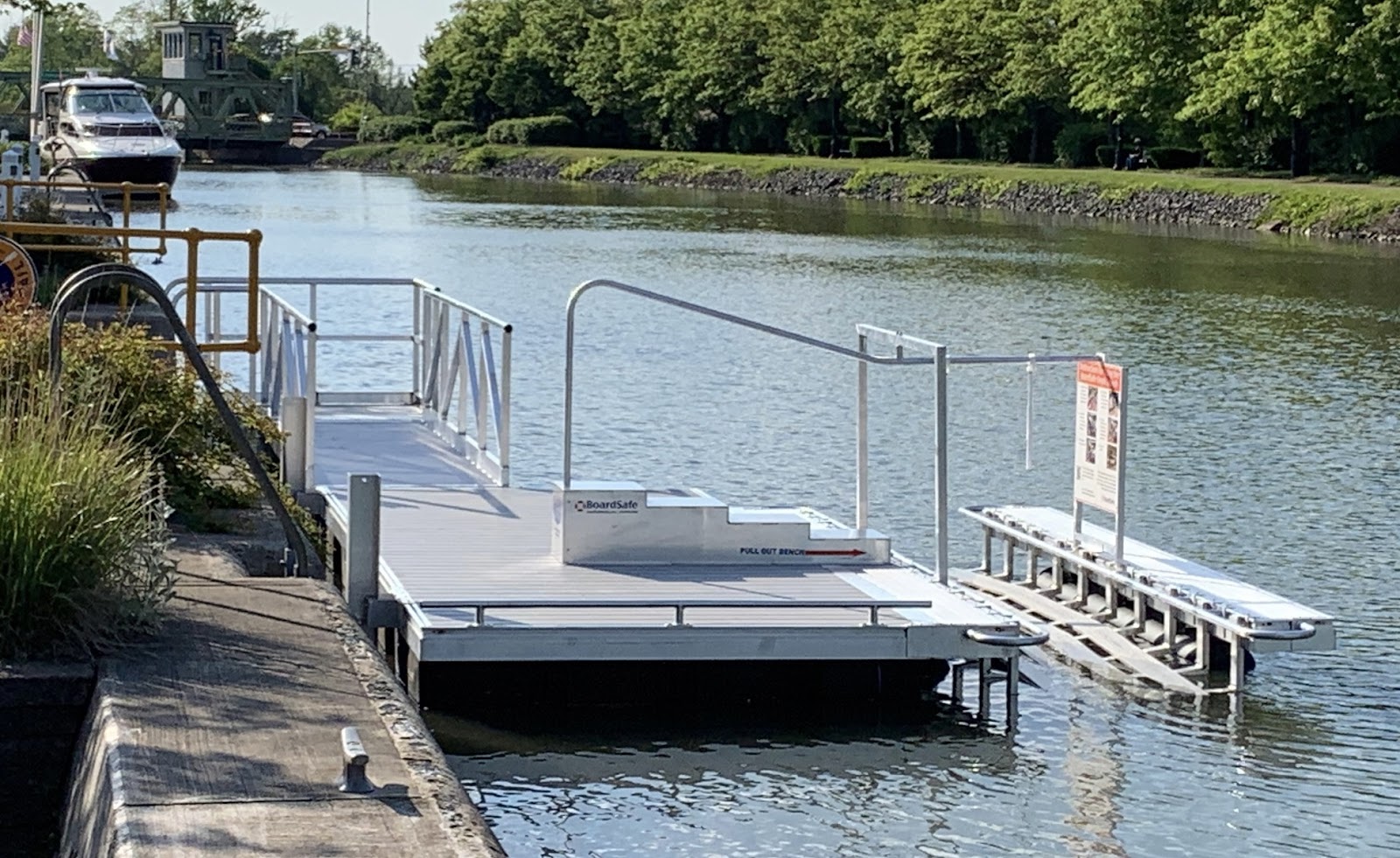
How Much Does an Adaptive Accessible Kayak Launch Cost?
Across the nation, many people — from park rangers to city engineers — are seeking to improve access to their local community’s water and marine features. This is an extension and outgrowth of the Americans with Disabilities Act (ADA), with the objective to provide access for all abilities to all amenities. Access to nature for the disabled has been long overlooked, but now parks, towns, and clubs are clamoring for ADA-accessible picnic tables, bathrooms, and walking trails, as well as adaptive kayak launches.
With any new product, one of the first questions asked is, “How much does it cost?” The appropriate answer is almost always, “Well, that depends!” So, how much does an adaptive or accessible kayak launch cost? The answer is inevitably found within the range of quality, features, and durability. This can mean a few hundred bucks for an accessory to bolt onto an existing wood dock or tens of thousands of dollars for an elaborate commercial-grade adaptive floating kayak launch and dock system.
System vs. Accessory
A quick Google search finds accessibility accessories to attach to existing docks. The less expensive the item, the less utility it offers to those with a disability. Hanging a large hook from an algae-encrusted wooden dock to stabilize a kayak is not helpful to individuals who are unstable on their feet. It may be useful to hold the boat for Grandma or a daredevil teen, but it is not suitable for one with mobility challenges. As the price for those bolt-on accessories increases, so do the engineering and thought put into the design of the part to ensure safe and easy transition in and out of vessels.
An accessory’s usefulness is contingent upon the quality and durability of the existing dock to which it is attached. For example, a BoardSafe Clip-a-Launch can be bolted onto the aluminum frame of an existing rigid or floating dock, and costs a few thousand dollars. Depending on the range of abilities of the users, a Clip-a-Launch alone may not suffice to assist paddlers in and out of boats. A person’s needs may require additional bars, straps, a transition bench, and other adaptive features to enable the paddler to easily enter and exit their craft. These features can be added to an existing dock, and are also sold as a package or full adaptive kayak launch system.
A fully-accessible or adaptive launch system is not an accessory that can be attached to an existing dock. The best option is, depending upon the need, a floating dock, gangway, and other accessories that facilitate water access.
Adaptive Kayak Launch System Features
The gangway must offer an adaptive paddler a way of moving the kayak from the land to the launch area and vice versa. The gangway should have a maximum pitch of 1/12 (meeting ADA slope requirements and features) and a parallel boat chute where the vessel is placed in alignment with the kayak launch.
The chute and launch area should be large enough to accommodate kayaks with outriggers. However, it shouldn’t be too wide or it will create too great a distance between the boarding bench and the cockpit of the vessel.
Ample space on a floating dock As the paddler rolls up to the bench to begin the transition from the chair into the cockpit, sufficient space is required to maneuver the wheelchair, especially if there is more than one adaptive paddler leaving their chairs on deck. The floating dock should also have a toe kick around the perimeter as an added safety feature. This prohibits a wheelchair from accidentally rolling off the dock into the water.
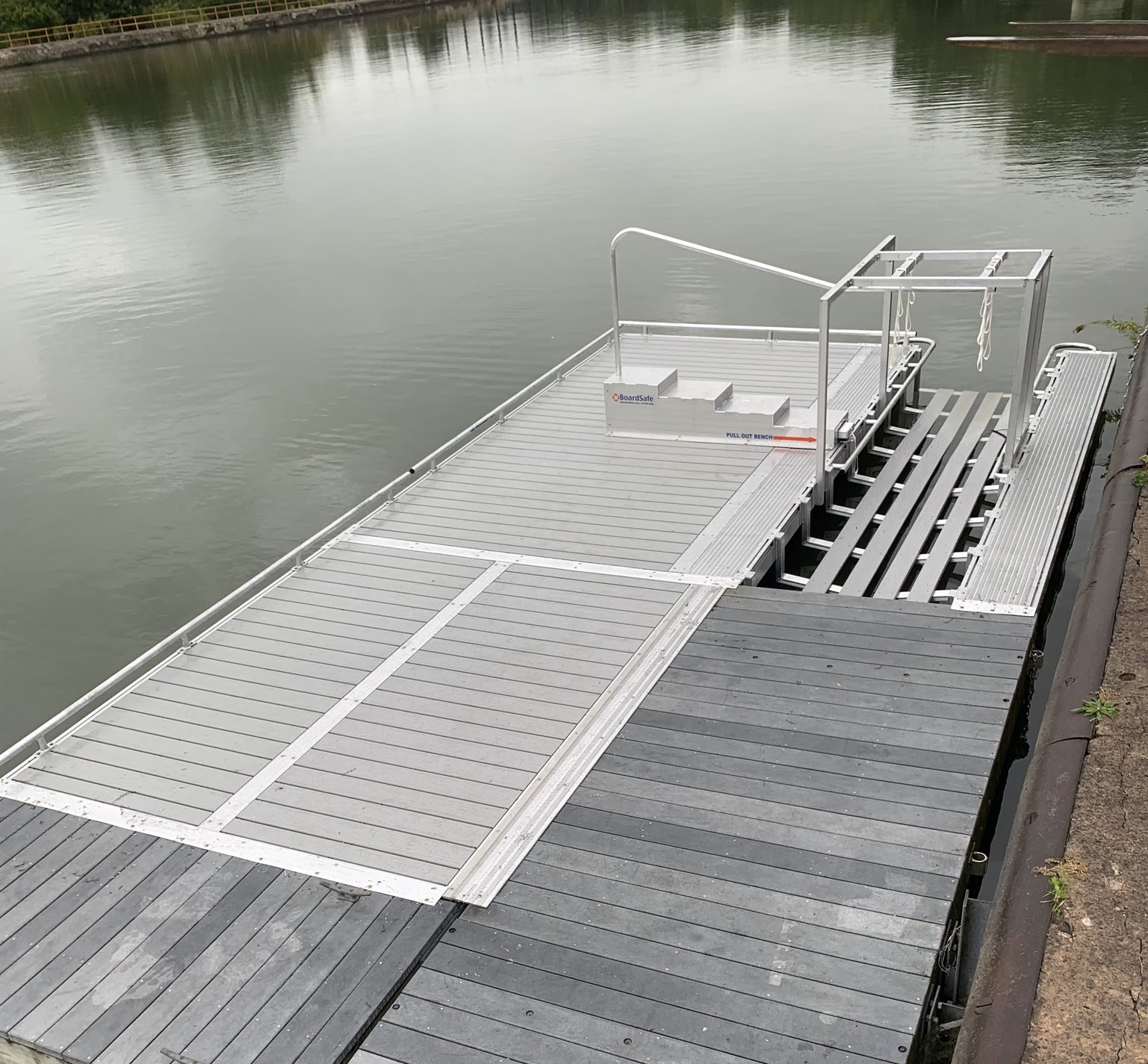
A tiered bench allows the user to easily transfer from the wheelchair. The top step of the bench must be equal to the height of a wheelchair in order for the user to transition from their wheelchair over to the bench. The steps should be minimal in height (approx. 3”) to allow the paddler a small shift from step to lower step.
The bench must be equipped with a pull-out seat that slides out over the kayak and directly above the vessel’s cockpit. This allows the adaptive paddler to slide down into the vessel with a limited drop and shimmy himself or herself into their kayak.
The roll cage must provide support for an overhead grab bar as well as optional hand straps. Adaptive paddlers have varied upper-body strengths and varied preferences as they enter and exit their vessel. Some paddlers prefer the grab bar while others prefer the hand straps. There should be no obstructions on either side of the step-down bench, allowing the paddler to choose the side they prefer and are most comfortable using to navigate down the bench.
The pull bars on either side of the launch must be at the right elevation and distance from the paddler, making it comfortable and easy for a disabled paddler to pull himself or herself down the chute and into the water.
Stabilization saddles and launch area Too often, the launch area is sloped and includes rollers. When a kayak, canoe, or SUP, is placed into the launch, gravity will dictate the action of the vessel. If a kayak is not level in the chute, it will roll into the water and will not remain securely in place for the disabled paddler to board or disembark from. Remember, the design needs to accommodate the return of paddlers as well, and rollers can actually make this condition worse because they prevent the vessel from sitting securely and remaining in place. The width of the launch area is also a factor — if it is too wide, it makes it more difficult for a paddler to make their way from the step-down bench in order to transfer into their vessel.
Quality and Durability
With most products, value is inevitably determined through quality products enduring the test of time. Most entry-level accessible kayak launches consist of molded plastic floating docks and accessories with some metal features. While they may not be as aesthetically pleasing or able to survive severe storms, they are an affordable way to test the waters (so to speak), launch a program, and engage new paddlers without a large investment. These launches require regular maintenance and have a short product life. For organizations that desire a high-quality adaptive kayak launch and have the budget to match, a BoardSafe kayak launch system should be considered.
BoardSafe’s entire system has been engineered for paddler performance and product durability. This includes commercial-grade aluminum, stainless steel, weather-resistant and slip-proof composite decking, encapsulated floats, and many other design features that facilitate safe transfer in and out of the water. These systems last for many years and are the preferred products of clients who don’t want to remove the docks in the winter or who have fluctuating water levels or who are susceptible to heavy storms.
Accessible vs. Adaptive
Although often used interchangeably, the terms “accessible” and “adaptive” are distinct and need to be properly understood. In the traditional sense, “accessible” denotes something that is easy to get to, where barriers such as steps have been removed. It can also include features stipulated by ADA guidelines, like a 1:12 gentle pitch, specific height handrails, and alternative handrails. Accessible launches are great for able-bodied kayakers, beginners, children, seniors, and people with minor limitations like joint issues, arthritis, and developmental delays. An accessible launch may even work for a small number of paddlers with moderate disabilities. However, for adaptive paddlers with greater mobility challenges, an accessible launch alone does not meet their full range of needs, and will not get them into the water safely or easily.
An “adaptive” launch is an enhanced accessible launch. Adaptive kayak launches are engineered and designed with features that accommodate paddlers of all abilities. The adaptive kayak launch designed by BoardSafe Docks was created based on the input of physical and occupational therapists and adaptive paddlers. Adaptive kayak launches are feature-rich to empower all users to overcome any mobility challenges.
Value
Many kayak launch buyers determine the value of a kayak launch relative to its ability to assist a number of paddlers over a period of time. Most people are aware that a product that outlasts a similarly-priced product offers greater value. In a similar way, but often overlooked, a product that accommodates a greater number of users will offer more benefit to more people, and therefore be more valuable. Feature-rich adaptive launches could help three or four times the number of users than a standard accessible launch. Each potential buyer needs to calculate this cost of ownership and return on investment. Many buyers go beyond the basic quantifiable measures of determining a kayak launch’s value, because helping those who live with the most severe handicaps is priceless. Some inferior accessible launches keep many with mobility issues from even considering their use, but allow an organization to check off the “ADA” box. On the other hand, those who desire to empower all users — especially those who typically do not enjoy life’s simple pleasure of roaming access — do not equate an adaptive launch’s value to the ROI because helping those in our communities with the greatest needs is, as they say, priceless.
To discuss your project and evaluate BoardSafe’s adaptive kayak launch options, contact us on our website or call 610-899-0286.
The Supply Chain Impact on Floating Docks and Kayak Launches
What This Could Mean for Your Project
The supply chain shortage has affected every business and consumer on the planet—and over the past year or so, we’ve all seen and experienced what happens when it breaks down.
You have probably walked through your local grocery store and seen the empty shelves. Whether it’s toilet paper, paper towels, foodstuffs, or toiletries, the supply chain shortage has also caused havoc with the materials used in manufacturing.
These days, you’re more likely to see shortages of parts, materials, and stuff that makes other stuff, like building materials and mechanical parts. For example, car lots are empty and both new and used car prices keep climbing higher. We’ve all heard about the chip shortage that every car manufacturer is experiencing. Demand has overrun supply, which is unprecedented in the auto industry. The chip shortage has limited the production of every make of automobile.
The marine and boating industry has been impacted by the same issues in massive ways as well. This is why BoardSafe Docks wants you to understand how the supply chain may affect the manufacturing and pricing of your kayak launch, marina, rowing center, gangway, or pedestrian bridge. A confluence of two major factors has created a situation for everyone where demand is greater than supply.
- The interest in kayaking, paddle sports, and adaptive recreation has seemed to reach an all-time high as a result of the COVID-19 pandemic. Paddlesports have proven to be a wonderful exercise for the mind, body, and spirit. Paddling is a way for people to be together yet remain safely distanced from each other. Its interest took off when the pandemic was shutting down our world.
- The entire country and every industry is now working through a serious supply chain shortage. Our most critical materials used in the manufacturing and fabrication of our aluminum floating docks, gangways, and bridges, are in high demand with low supply.
For more information and better understanding, keep on reading.
First, let's take a look at the major components of the parts and materials we use in the production of our floating dock systems.
- aluminum
- composite deck lumber
- concrete decking
- plastic encapsulated flotation
- our proprietary extrusions
- protective rub rail trim
- tools used in the fabrication and maintenance of these systems
- and much more
Material shortages have not only stretched out the timetables on many of our projects but they’ve also (unfortunately) made many elements of these projects cost more than originally anticipated. The increase in the cost of these materials has been passed on to us and also our customers.
We wrote this article to help you understand the specific reasons behind the longer timetables we’re experiencing as a manufacturer and to explain the higher costs you might be experiencing in 2022.
All dock manufacturers, including BoardSafe Docks, have been dealing with the same supply chain issues, which we’ll explain in the rest of this article.
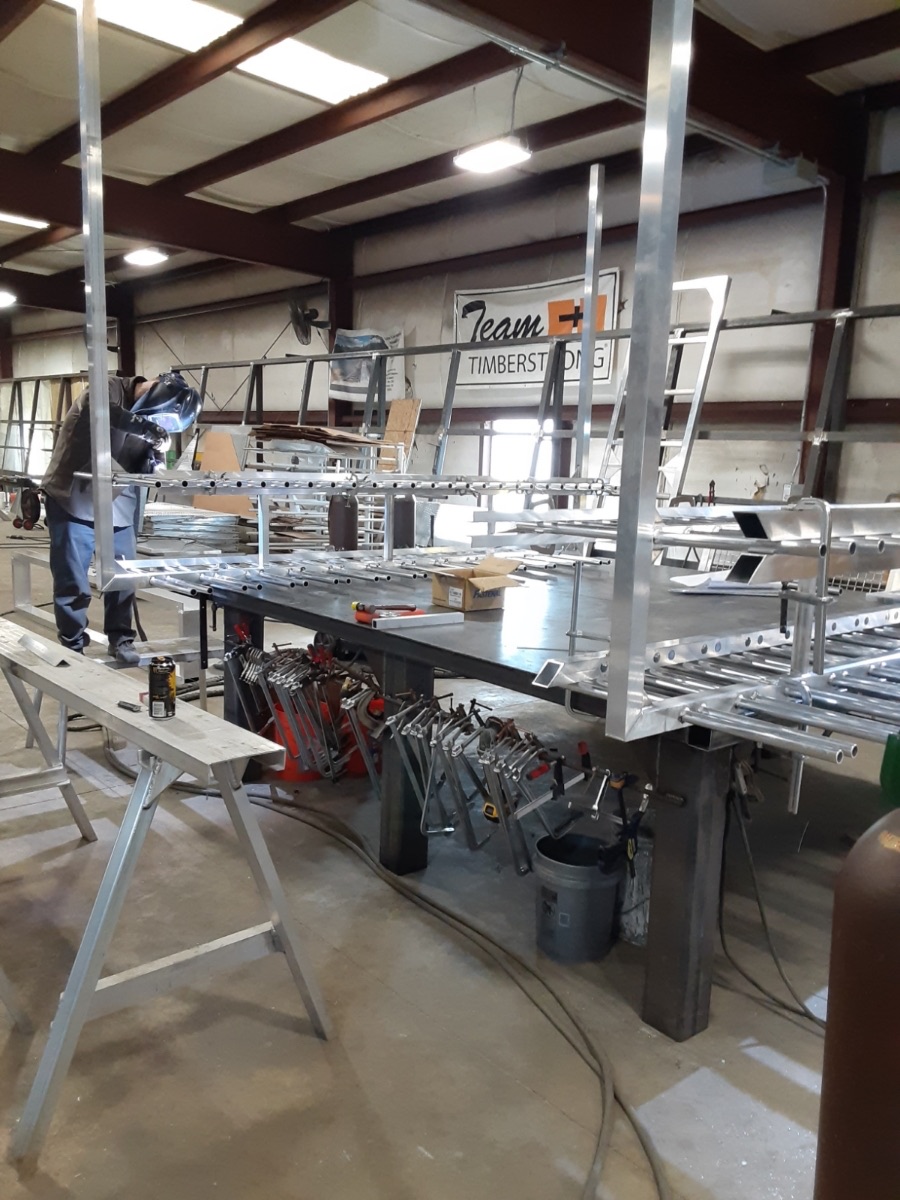
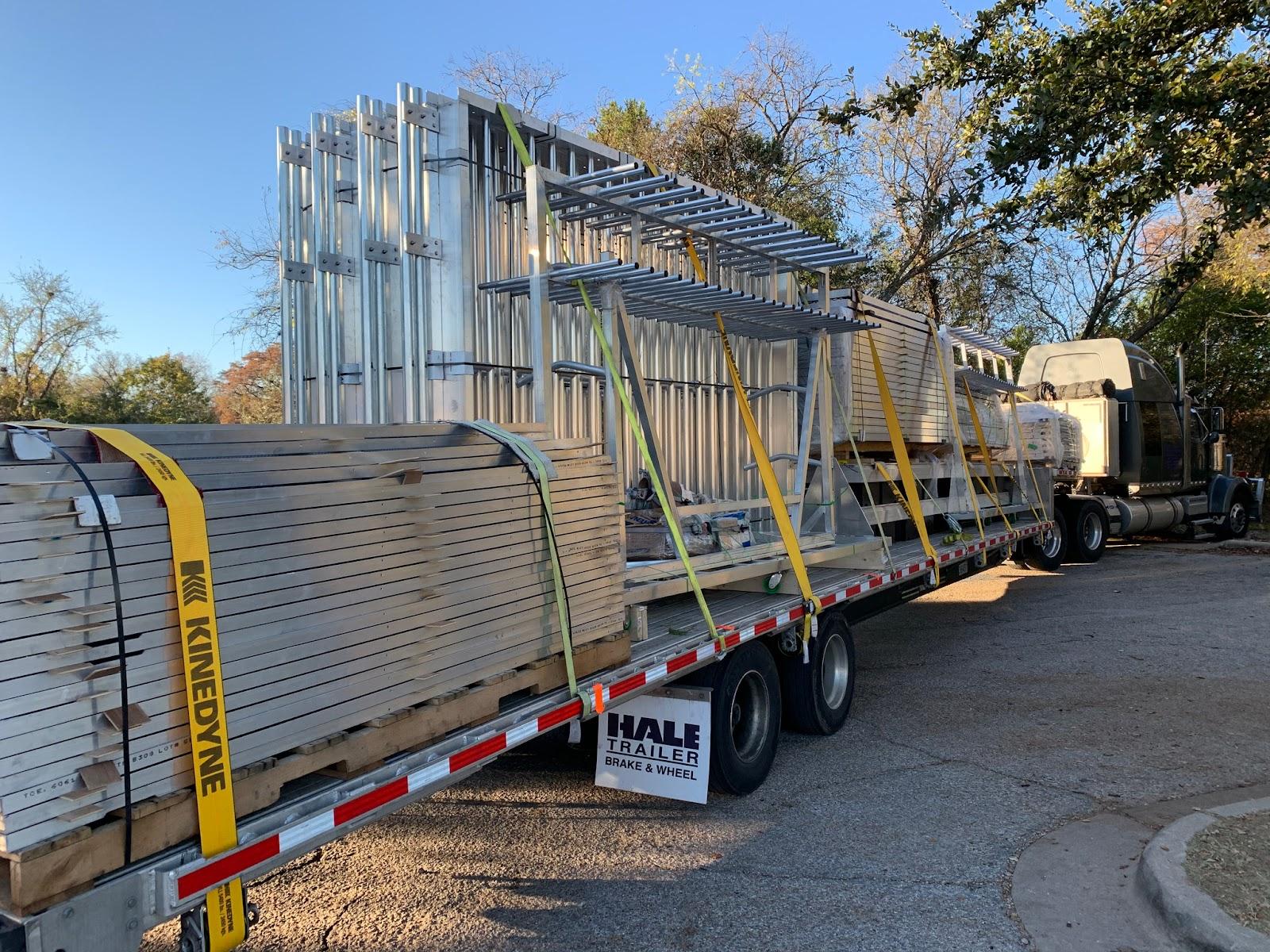
Material shortages and price increases exist in all facets of our production (aluminum, composite and concrete decking, flotation, extrusions, rub rail)
Aluminum, which is used to manufacture a wide range of durable waterfront products, suffered a severe production downturn when the initial lockdowns swept across the world about a year ago. Deliveries of raw aluminum are in short supply and prices for aluminum have been steadily increasing over the past year. To keep our pricing accurate, we’ve been tracking the steady increase in the price of aluminum starting back in 2021. Beginning in January 2021, and up through April 2022, we’ve seen the cost of aluminum increase 75 – 80% over last year’s prices. While inflation has caused prices to rise everywhere as we know them, an 80% increase is shocking to us all.
The reserve aluminum supplies across the USA are depleted. We used to be able to call our aluminum supplier and arrange for a next-day or 2-day delivery. Not anymore.
As a result of the pandemic and material shortages, product delivery of our custom extrusions orders can be as far as 8 months out. Our distributor’s products are stuck out at sea on shipping containers, waiting to be unloaded and delivered across the country. Before the pandemic, we all took the supply chain for granted; we didn’t even think about the logistics industry. The supply chain shortage has changed the way warehouses, manufacturers, trucking companies, and distribution centers, conduct their business. The Wall Street Journal recently noted that aluminum producers are now seeking new avenues to get their hands on scrap metal like old cans.
Composite decking prices have increased by about 25% since January 2021. However, we’ve been very fortunate in that our composite decking supplier has been able to meet our order requests in a timely manner. With decking, our only concern has been the increase in its pricing.
Plastic encapsulated flotations are the floats that are attached under our floating docks and gangways that keep them afloat. From the time of order, we’re now experiencing 8 – 12 weeks in lead time, about 3 months. Flotation has also experienced a 25% price increase since we began tracking these costs.
Rub rail is the rubberized trim attached to the perimeter of our dock systems that serves as the protective guard around our floating docks. Our supplier of this extruded product has informed us there’s about a 12-week (3-month) turnaround for them to get the rubber compounds they use to make the custom extrusions for our systems. The pricing for our rub rail insert has increased by 20% since 2021.
Unexpected disruptions
The COVID-19 lockdown felt like the mother of all supply chain disruptions when businesses were forced to shut down early in 2020. Only those deemed “essential” were allowed to remain open. We’re all paying the costs for it now. Everyone continues to experience the consequences of the pandemic with no real end in sight. Inflation is on the rise and we’ve seen increases in the price of homes, cars, gasoline, and food. Our products are not immune to these increases.
Severe weather, hurricanes, and employment shortages, add to the consequences of the pandemic. Since many of our producers of raw materials are overseas, the shipping standstill has deprived manufacturers of our most critical supplies.
Aluminum is in the middle of the greatest demand surge ever seen or experienced in its industry. This high demand is happening despite its 80% increase in cost. And prices continue to go up without lessening its demand.
What this means for manufacturers and their customers
In short, the market for kayak launches, marinas, gangways, and rowing centers, (with their main material being aluminum), has been hit by the perfect storm of perfect storms. However, we’ve survived the pandemic shutdowns, COVID, employee shortages, weather disruptions, supply chain shortages, and increased pricing for our main materials.
If you look at these events as a whole and look at the big picture, none of us ever imagined we’d experience events like these in our lifetime.
Like other dock builders and producers of goods and services, we’re working as hard as we can to design and manufacture each individualized project that we’ve planned with our customers. The simple reality is that we can’t work any faster if we want to maintain our industry-leading standards that BoardSafe is very proud of. Nor can we overcome supply chain issues and increased costs when they’re simply out of our control — regardless of our desire and efforts to prevent them.
One change we’ve been forced to make as a company regards the bidding and quotes of our marine products. We can no longer hold the price of our bids for longer than 30 days. In the past, when there weren’t drastic changes and increases in the cost of raw materials, our bid remained the bid. While we work hard to keep our prices fair, we must keep a close eye on what we’re paying for materials and their delivery fees.
Educating our customers and communicating these changes are important to us. If at any time you feel you need more information to make an informed decision about your product’s pricing, our sales team is always available to answer your questions.
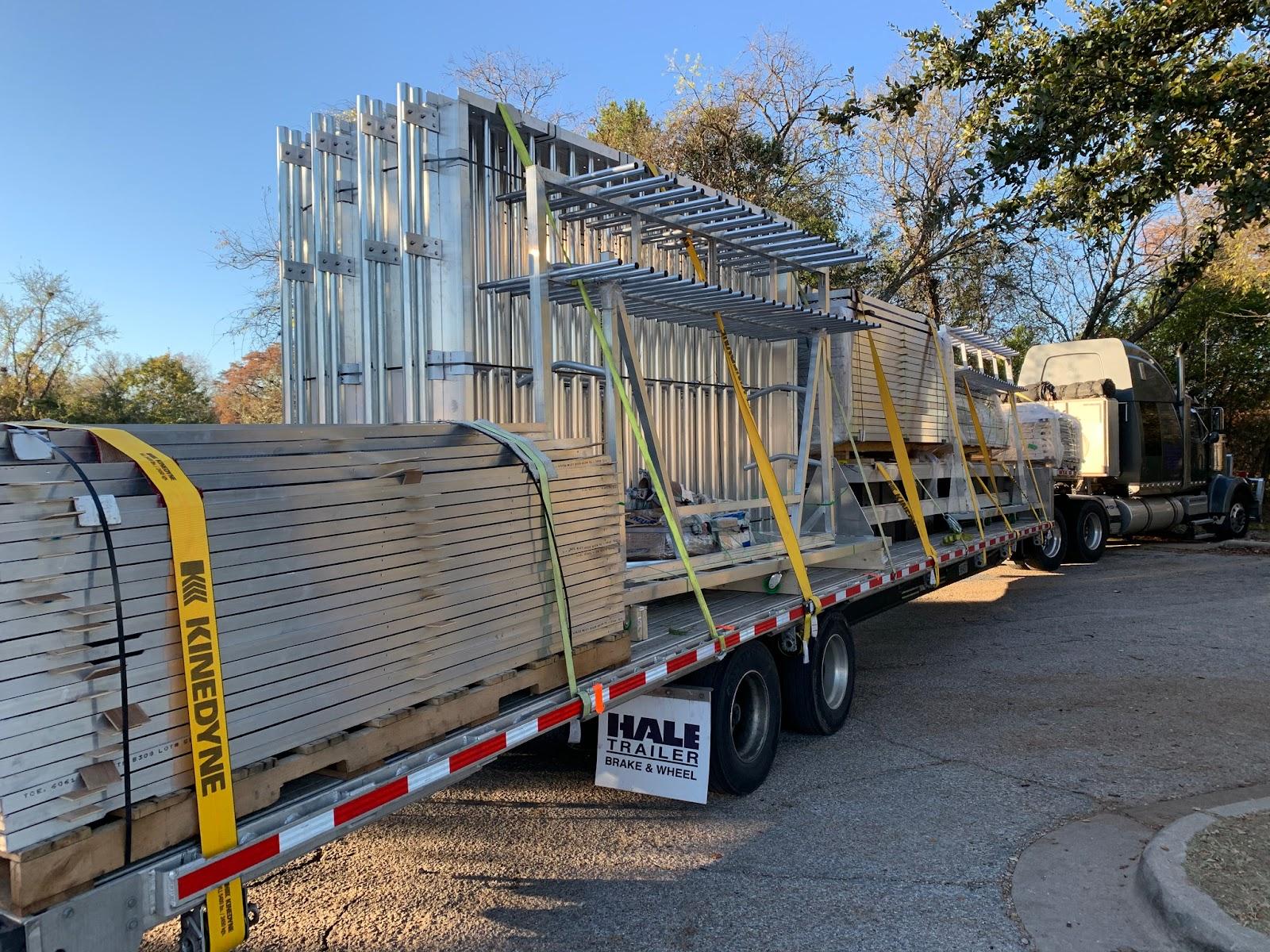
How customers can help keep our industry moving forward
If you're planning to do business with us, we've explained the length of time it’s taking to get our materials for production. The length of time is not something we or any other dock builder can control. Please don’t wait until the last minute to confirm your order with us. There’s a new game in town, and with demand being so much greater than supply, aluminum suppliers are requiring upfront payments for their orders, as well as a customer’s signed purchase order to show evidence that our order is designated to a specific job. You see, demand for aluminum is so high, suppliers do not want to see manufacturers stockpile aluminum like many people were doing with toilet paper, paper towels, and disinfecting wipes in 2020. The price increase of manufacturing materials has also caused material suppliers to proceed with caution to ensure they’re getting paid in a timely manner for the materials they sell.
Working together on payment terms
The deposits we need to pay to material suppliers guarantee our place in line for the raw materials we need to build your job. Our deposit helps keep our supplier’s cash flow flowing. And since we need to pay for your materials in advance of receiving them, a deposit from you on your project is a reasonable request in today’s market. We understand that this can sometimes create hardship for all parties involved. However, due to increased material costs, we want our customers to understand why a deposit and clear payment terms are necessary.
BoardSafe Docks has absorbed a massive increase in up-front costs for all of our jobs. Therefore, our ability to be flexible with our terms has been greatly reduced. Final payment for our projects is expected upon delivery and installation. Our employees need to be paid, our overhead costs need to be satisfied, and our trucking companies and installation teams expect the same courtesy from us. Therefore, we appreciate you working with us to support these terms and prompt payment for the quality products and services that BoardSafe stands behind.
We’ve already entered the spring season of 2022. Kayaking and rowing season is just a few weeks away. We know our customers want their launch, gangway, bridge, rowing center, or marina project, to be installed in a timely manner and ready to go for the approaching summer season.
Every dock builder and manufacturer is doing their best to meet customers' installation wishes. But the obstacles identified in this article will likely continue to affect our entire industry (and many others) for the foreseeable future.
So, whether you’re planning on getting your launch, gangway, pedestrian bridge, rowing center, or marina from BoardSafe Docks, we can only say this:
Let’s keep pushing through this together, with everyone doing what they’re responsible for to get the job completed in a timely manner. BoardSafe offers high-satisfaction products that can improve the quality of life for those who like to kayak, canoe, row, or SUP.
At BoardSafe Docks, we manufacture world-class aluminum-framed floating docks, adaptive kayak launches, rowing docks, marinas, gangways, and pedestrian bridges for our customers all across the USA. If you're shopping around for quality, feel free to take a look at, or request custom pricing through, our website: BoardSafe Docks.com.
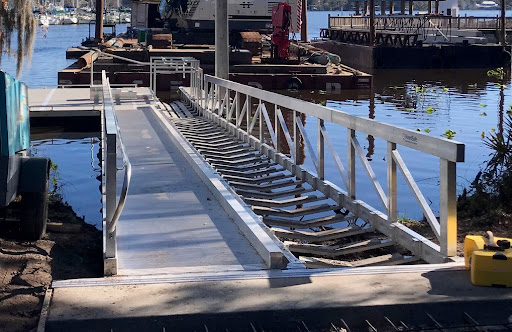
Mandarin Park Florida Adaptive Kayak Launch
The City of Jacksonville, Florida, recently installed its fourth BoardSafe Adaptive Kayak Launch at their Mandarin Park location in December 2021. The fully-accessible launch is located at 14780 Mandarin Road, Jacksonville, FL, 32223-2650.
Jacksonville is home to the largest urban park system in the nation, and is committed to making its park system an equitable and inclusive destination for its city’s residents and visitors. Enjoying the outdoors and taking advantage of the available activities offered through the city’s parks and recreation department have been a priority for the city’s administration.
Jacksonville is proud of its accomplishments in supporting adaptive recreation. Their rivers and waterways also support a wide variety of outdoor activities that include boating, fishing, bird and wildlife viewing, and a slew of special events that now can include and be attended by everyone. History and tourism also attract visitors to their city. Over the last several years, the Parks, Recreation, and Community Services Department has striven to improve its park facilities by making them equitable and inclusive destinations for people of all abilities. They’re hoping others will help spread the word about their adaptive facilities and recreation programs, including their adaptive kayak launch systems that can be found at the updated Mandarin Park facility and other parks around the city.
Last year was the 30th anniversary of the Americans with Disabilities Act, and Jacksonville was pleased to share where they stand in supporting people with disabilities. The city created a video highlighting its efforts and identified adaptive recreation as a major initiative as part of its mission to make Jacksonville an accessible city for everyone. Adaptive paddling with the BoardSafe Adaptive Kayak Launch is highlighted 5 minutes and 30 seconds into their showcase video (below). Jacksonville is a river city as well as a beachfront destination, and they continue to find creative ways to be at the forefront of providing access to their natural resources, rivers, and the ocean, for people with disabilities.
Americans With Disabilities Act 30th Anniversary celebrated in Jacksonville.
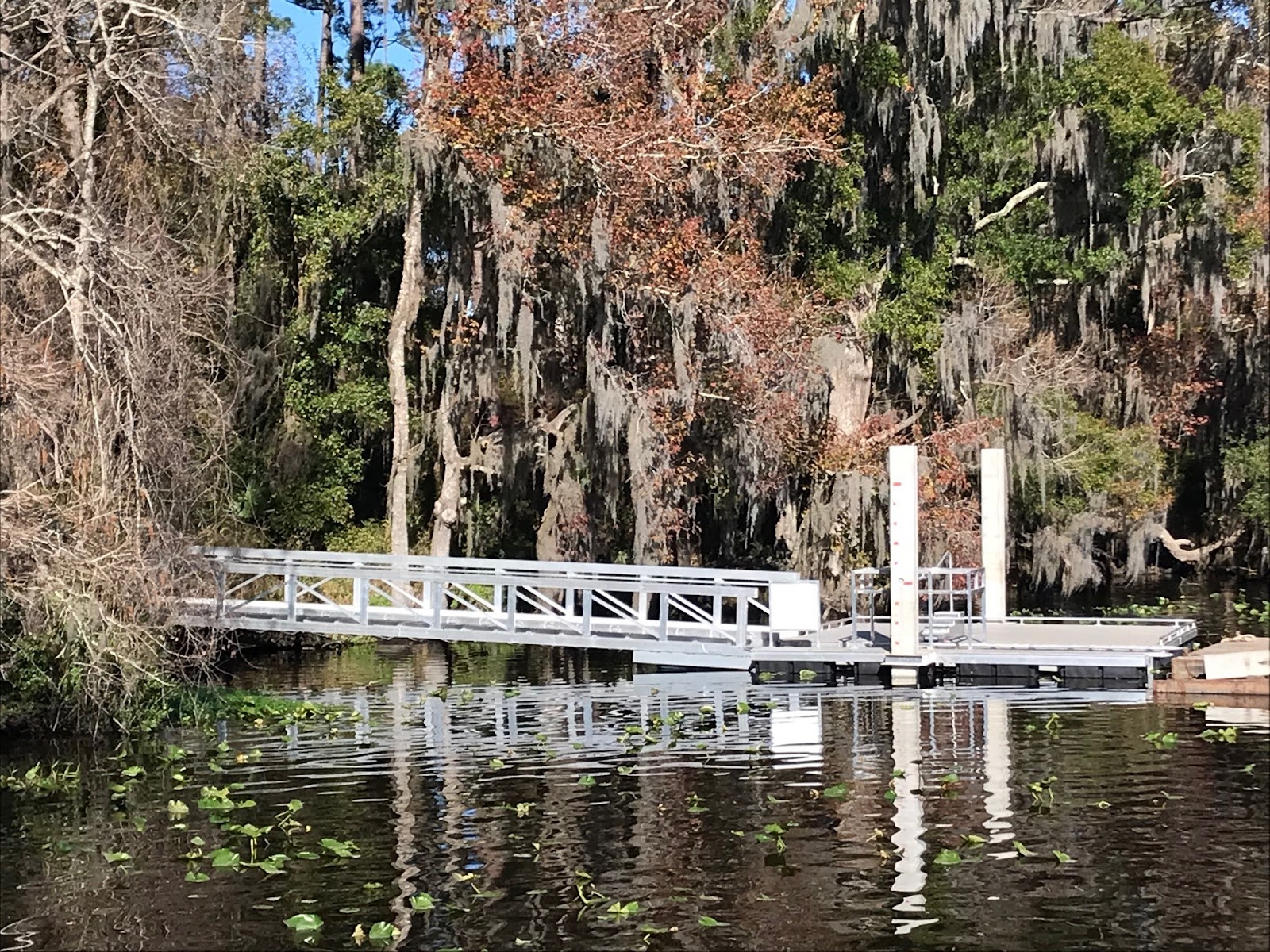
Mandarin Park is located in the southeast section of Jacksonville, adjacent to Julington Creek. In addition to an adaptive kayak launch, there are accessible picnic shelters, walking trails, and ADA-compliant playground equipment.
How BoardSafe Docks helped improve Jacksonville’s accessibility
The original Mandarin Park amenities included a boat ramp, floating docks, and a fixed fishing pier. However, prior to the existence of the ADA and Jacksonville’s accessible initiatives, its parks were not originally designed with inclusivity in mind. The Mandarin Park site contained a large amount of vegetation along the shoreline and was not conducive to safe or easy access to the water. While people were drawn to the beauty of the area and its waterfront destination, the pre-ADA facility made accessing the water very difficult and challenging. Access wasn’t safe for the adaptive paddler or their friends, family, and paddling groups who had to carry, lift, and maneuver an adaptive paddler into his or her kayak or canoe.
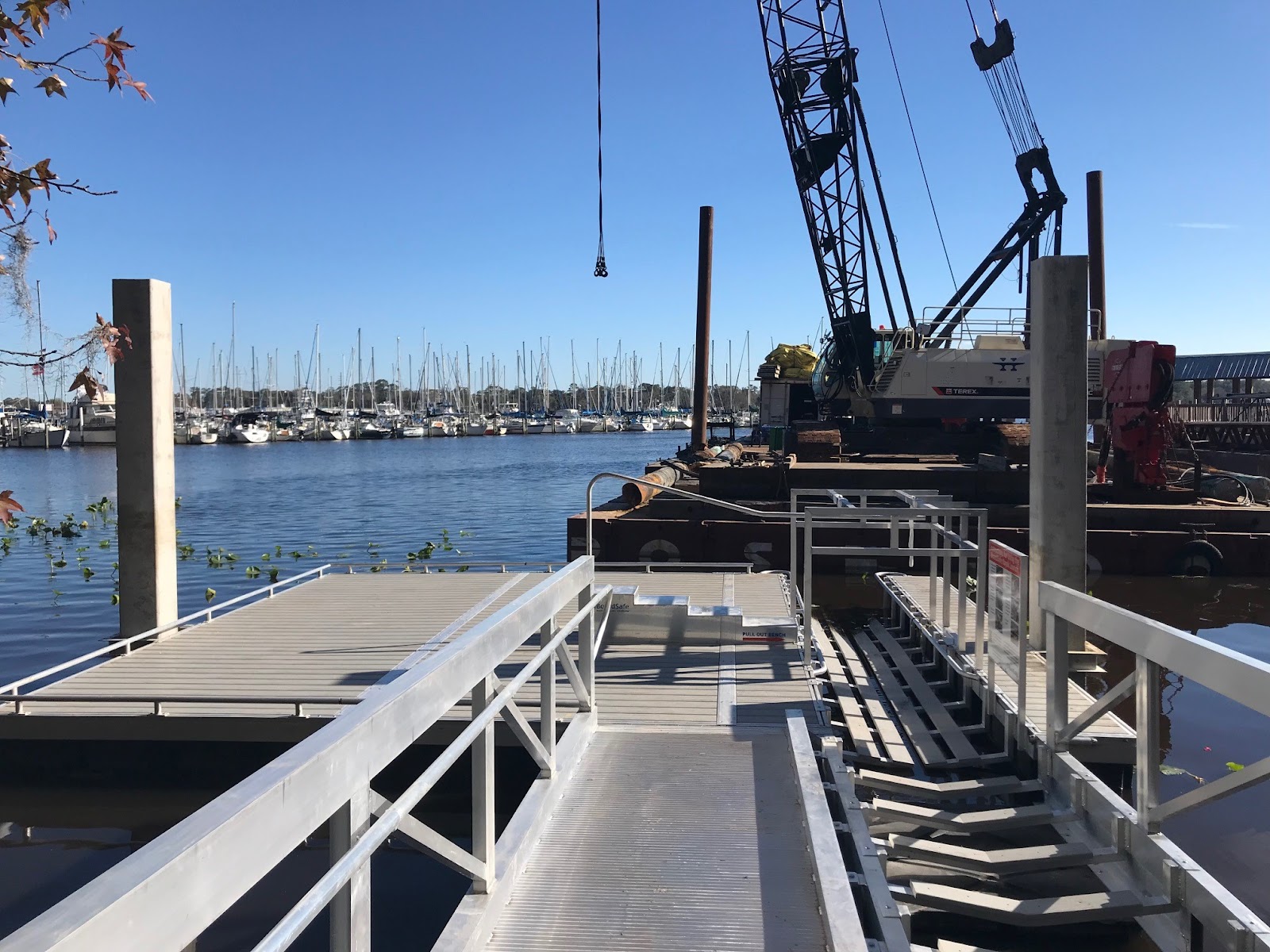
The upgrade to the Mandarin Park facility included increasing the number of aluminum floating docks in the boat ramp area and adding an accessible walkway along the shoreline that invites people in wheelchairs to a site they were previously restricted from using.
The BoardSafe Adaptive Kayak Launch allows paddlers a way to access their kayaking vessel and canoe both safely and easily. The facility update allows for people with disabilities to participate and enjoy the park, its facilities, pavilions, walking trails, and adaptive kayaking on the water along with their friends, family, and other user groups who may require specific adaptive features. It’s become a popular destination for locals and tourists alike.
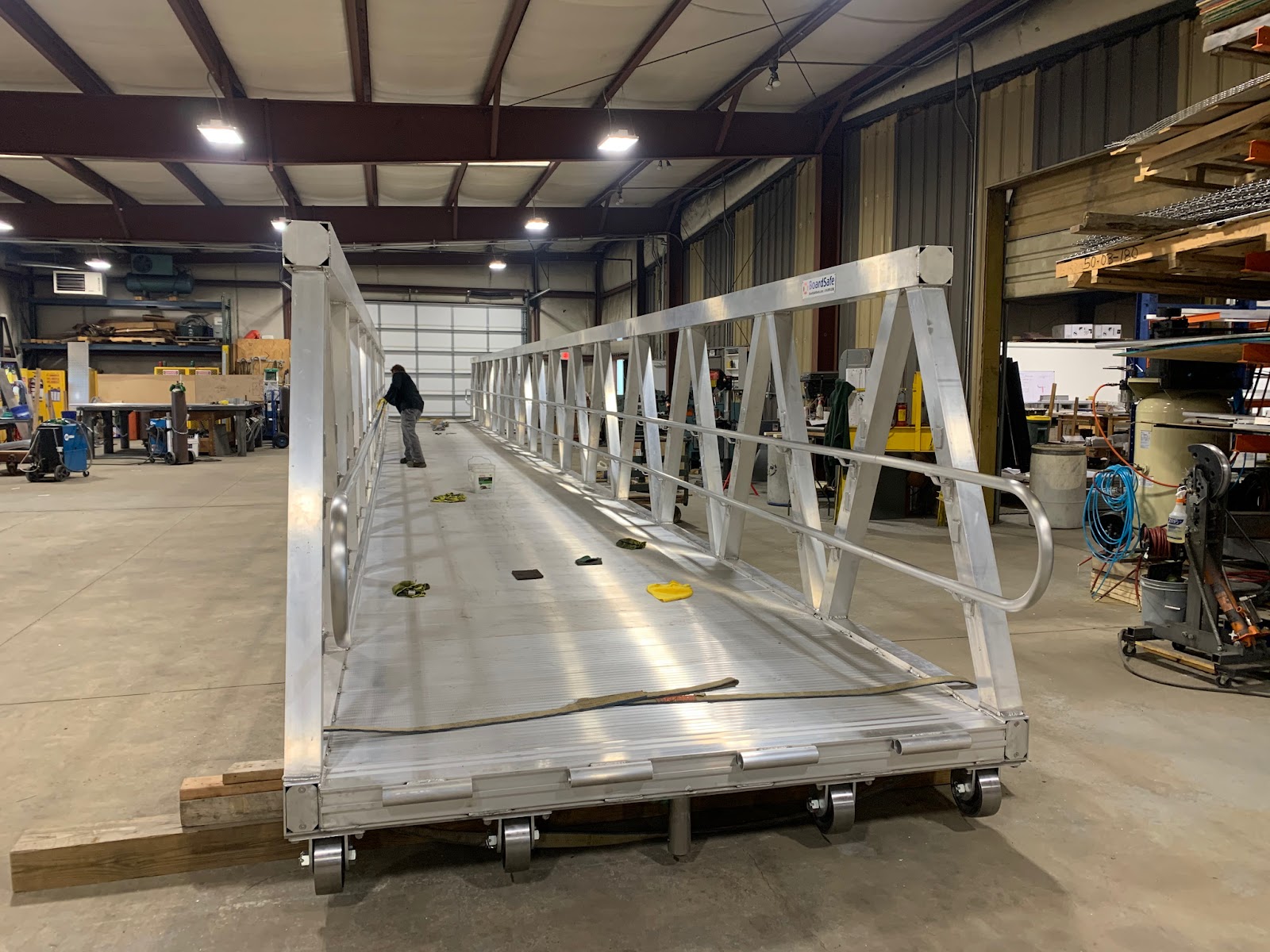
The height of the new walkway and mean low water elevations (that spanned 48 inches at its lowest and widest point) dictated that the length of the new gangway and chute be 53 feet long. Jacksonville mandates the slope of the gangways in their city to be no greater than a 1/20 pitch. Their required slope is actually more stringent than the 1/12 slope mandated by the Americans with Disabilities Act. Under ADA guidelines, the gangway would normally have been acceptable at 32 feet. However, Jacksonville’s more stringent requirements increased the gangway length to 53 feet, thereby ensuring accessibility. What most people fail to realize or understand is that ADA standards identify minimum guidelines and standards. When structures are only designed and built to those minimum standards, they often exclude people with the most severe limitations and do not offer access to everyone.
The length of the 53-foot gangway was necessary to accommodate the 48-inches of elevation difference from the top of the water to the top of the gangway’s connection point and allows for fluctuations in the rise and fall of the tide.
Where you can find other BoardSafe Adaptive Launch Systems in Jacksonville
The City of Jacksonville has contracted with BoardSafe Docks for four waterfront projects for their city. Brian Burket, Waterfront Project Manager for the City of Jacksonville, has headed up all four of these adaptive projects. Brian has recognized the high level of accessibility a BoardSafe Kayak Launch offers to the City of Jacksonville and its adaptive paddling community. Other BoardSafe Adaptive Launches installed by the city that align with their mission of making Jacksonville an inclusive and accessible city can be found at:
- Bethesda Park, 10790 Key Haven Blvd., Jacksonville, FL, 32218
- Kathryn Abbey Hanna Park, 500 Wonderwood Dr., Jacksonville, FL, 32233
- Southbank Riverwalk, 1001 Museum Circle, Jacksonville, FL, 32207
BoardSafe’s versatile launch system can also be used with canoes and standup paddleboards — there’s a center void down the middle of the launch saddle that will also accommodate an SUP’s rudder. The launches may be used by anyone but offer specific adaptive features so the launch can be used and enjoyed by everyone.
The cost for this inclusive and versatile launch system was approximately $85,000 and included an 8’ x 20’ aluminum floating dock, the adaptive kayak launch kit with multiple adaptive features, and a 53-foot gangway.
BoardSafe Docks is a trusted designer, engineer, and manufacturer, of all types of aluminum floating docks and fishing pier systems. Their adaptive kayak launch and design knowledge about specific adaptive features that are necessary for paddlers in wheelchairs help make inclusion happen for many cities, towns, lakes, and riverfront communities.
BoardSafe also specializes in designing and manufacturing rowing centers for national collegiate rowing teams all across the USA. You’ll find their gangways located all across the United States in places like the TD Garden in Boston and Battery Park in New York. They find solutions to design questions that can leave architects and engineers scratching their heads.
BoardSafe is the go-to source for any project on the water. Their sales team is always available for questions, consultation, and to assist you with finding your optimal waterfront solution.
The most accessible kayak launch
To learn more about our projects, please visit our website, BoardSafeDocks.com, or call us at 610-899-0286.
Are "Accessible" Kayak Launches All Truly "Adaptive"?
The radiant sun presided over the springtime rejuvenation and the songbirds cheered the eager kayakers as they slipped into their boats. It was harmonious: camaraderie on the Erie Canal and oneness with nature — at least for all but one paddler in the group.
Of the kayakers, Ken Ryno was the only adaptive paddler. A dirt bike accident at the age of 18 shattered his lower vertebrae, as well as his ability to enjoy the outdoors — or at least he thought. Medically classified as a C5-C6 Incomplete Quadriplegic, Ken pieced his life back together into a beautiful mosaic of perseverance and grit, living life to his fullest potential.
Ken is paralyzed from the chest down, but maintains the use of his upper body and arm strength. After hundreds of hours of rehab, in addition to dedication in the gym, Ken is an avid fisherman, wheelchair basketball player, and hunter. Ken is an inspiration to all who know him, but unfortunately, what most restricts him is not his own physical limitations, but rather a lack of accommodations available to him. In many cases, simple adjustments — like an additional handle on a product or increased open space around another — are the difference between participation and exclusion.
So, this is how he found himself on a spring day in Upstate New York: frustrated, embarrassed, and lamenting the lack of a few additional adaptive features — ironically, on the accessible kayak launch that stood between him and his favorite hobby.
In his love for kayaking, Ken is not alone. The nonprofit Outdoor Foundation tracks participation levels for outdoor activities and reported that paddlesports like kayaking, canoeing, and stand-up paddleboarding, have propelled forward over the past decade.

Not surprisingly, the COVID pandemic drove many people outside, seeking to distance themselves from others and commune with nature. This has allowed Americans to re-discover the great outdoors, the benefits of physical and mental health, and also feel the joy provided by reconnecting with nature.
While this is common knowledge, not all segments of society pursue paddlesports for a multitude of reasons. In an attempt to lower the barriers of participation, many organizations, like the American Canoe Association and ASLA (American Society of Landscape Architects), have created committees devoted to Diversity, Equity, and Inclusion. It is no wonder that many adaptive paddlers like Ken describe the freedom of leaving their wheelchair and transitioning into a kayak as “liberating.”
Specifically for those with disabilities, paddlesports offer a unique experience to holistically enrich individual lives in ways that other activities cannot. “For many, paddling is a new sport and frontier for people to enjoy, to encourage one another, and have fun,” says Joe Morini, president of Team River Runner (TRR), a national nonprofit whose purpose is to “provide all veterans and their families an opportunity to find health, healing, community purpose, and new challenges through adventure and adaptive paddle sports.” Since its inception in 2004, TRR’s growth to 75 chapters and tens of thousands of paddlers is evidence of paddling’s appeal.
Clinicians have also been drawn to paddling. Occupational Therapist Alice Krauss, Manager of the Adaptive Sports and Recreation of Brooks Rehabilitation in Jacksonville, a health network of 50 outpatient rehabilitation centers and a 160-bed inpatient rehabilitation unit, recognized a gap in the health care system. She wanted to create meaningful activities that promote better health, integrating mind, body, and spirit. She observed that insurers allowed patients less time in rehab services and that discharged patients were ill-prepared to maintain their gains. Patients found themselves socially isolated and with declining activity levels.
“We looked into sports and recreation programming to attract patients to activities, build social connections, and provide a sustainable community to empower participants.” Brooks’s Adaptive Sports Program was born in 2007, and the program has continued to grow over the last 15 years with the adaptive paddling sessions “selling out” each month.
“What I most love about kayaking is that when we are out on the water, we are all on the same level, looking eye-to-eye. I don’t need to look up at my friends, nor do they look down on me,” says Ken, speaking in both literal and figurative terms. While there has been a steady increase in ADA accessibility at public parks and recreational facilities, the number of ADA access points needs to be increased.
Equally and arguably more important than the quantity of access points — and the central thesis of this article — is the quality of each installation. “Many times, even if a location is deemed ‘handicapped accessible,’ many who live with physical disabilities like myself still cannot use it,” explained Ken, in reference to a variety of public spaces from restaurants and hotels to retail stores.
Ironically, most accessible products and applications designed for those with handicaps are created by able-bodied people. Despite these good intentions, if gaps in equity, inclusion, and diversity are to be bridged, then the best solutions should come from those who experience the challenges.
“Accessible” and “Adaptive” are not synonymous
Although mistakenly used interchangeably, the terms “accessible” and “adaptive” are distinct and need to be properly understood. In the traditional sense, “accessible” denotes something that is easy to get to, where barriers such as steps have been removed. It can also include features stipulated by ADA guidelines, like a 1:12 gentle pitch, specific height handrails, and alternative handrails.
Accessible launches are great for able-bodied kayakers, beginners, children, seniors, and people with minor limitations like joint issues, arthritis, and developmental delays. An accessible launch may even work for a small number of paddlers with moderate disabilities. However, for adaptive paddlers like Ken, members of Team River Runner chapters, and disabled veteran and wounded warrior groups, an accessible launch alone does not meet their full range of needs, and will not get them into the water safely or easily.
An “adaptive” launch, in turn, is an enhanced accessible launch. Adaptive kayak launches are engineered and designed with features to accommodate paddlers of all abilities, whom Ken Ryno would characterize as “differently-abled” paddlers. The adaptive kayak launch designed by BoardSafe Docks was created based on the input of Ken and several of his paddling peers.
Lead designer of the adaptive kayak launch was BoardSafe president Scott Tihansky, who was astonished by the group’s feedback. “As able-bodied people, we overlook numerous and seemingly trivial aspects of getting in and out of a boat and fail to understand how they may pose challenges to adaptive paddlers. Hearing the group’s feedback was eye-opening, and we are able to solve the issues with design changes.”
Based on the group’s feedback, an adaptive kayak launch that will serve the widest range of paddlers should include the following features:
In order to access the adaptive launch, an egress that allows for wheelchair travel must exist from the parking lot to the kayak launch site.
The gangway must offer an adaptive paddler a way of moving the kayak from the land to the launch area and vice versa. The gangway should have a maximum pitch of 1/12 (meeting ADA slope requirements and features) and a parallel boat chute where the vessel is placed in alignment with the kayak launch.
The chute and launch area should be large enough to accommodate kayaks with outriggers. However, it shouldn’t be too wide or it will create too great a distance between the boarding bench and the cockpit of the vessel. If a launch is too wide, it will decrease the stability needed for a disabled paddler to get into their vessel.
Ample space on a floating dock. As the paddler rolls up to the bench to begin the transition from the chair into the cockpit, sufficient space is required to maneuver the wheelchair, especially if there are more than one adaptive paddler leaving their chairs on the deck. The floating dock should also have a toe kick around the perimeter as an added safety feature. This prohibits a wheelchair from accidentally rolling off the dock into the water.
A tiered bench to allow the user to easily transfer from the wheelchair. The top step of the bench must be equal to the height of a wheelchair in order for the user to transition from their wheelchair over to the bench. The steps should be minimal in height (approx. 3”) to allow the paddler a small shift from step to lower step.
The bench must be equipped with a pull-out seat that slides out over the kayak and directly above the vessel’s cockpit. This allows the adaptive paddler to slide down into the vessel with a limited drop and shimmy himself or herself into their kayak.
The roll cage must provide support for an overhead grab bar as well as optional hand straps. Adaptive paddlers have varied upper-body strength and varied preferences as they enter and exit their vessel. Some paddlers prefer the grab bar while others prefer the hand straps. There should be no obstructions on either side of the step-down bench, allowing the paddler to choose the side they prefer and are most comfortable using to navigate down the bench.
The pull bars on either side of the launch must be at the right elevation and distance from the paddler, making it comfortable and easy for a disabled paddler to pull himself or herself down the chute and into the water.
Stabilization saddles and launch area. Too often, the launch area is sloped and includes rollers. When a kayak, canoe, or SUP, is placed into the launch, gravity will dictate the action of the vessel. If a kayak is not level in the chute, it will roll into the water and will not remain securely in place for the disabled paddler to board or disembark from. Remember, the design needs to accommodate the return of paddlers as well, and rollers can actually make this condition worse because they prevent the vessel from sitting securely and remaining in place. The width of the launch area is also a factor, if it is too wide it makes it more difficult for a paddler to make their way from the step-down bench in order to transfer into their vessel.
Often, kayak launches are touted as “ADA launches” or “ADA compliant,” but current ADA guidelines do not apply to marina applications like kayak launches. What is correct is that kayak launches have design features that are borrowed from ADA guidelines as they apply in terrestrial applications. This makes the launches friendlier to use, but it reveals a lack of standardization, opening the door for the subjective interpretation of a kayak launch to be adaptive or accessible.
Regardless, it is agreed that adaptive paddlers should be given every opportunity, and feature to safely and easily enjoy paddlesports. “We’ve seen what has been touted as an ‘ADA accessible’ dock and it is the furthest thing from it -- what a joke,” says Kimery Duda, Founder and Director of The Expedition School in Austin, TX.
The Expedition School seeks to give students and adults outdoor experiences that transform their lives. Currently, Kimery is designing a world-class adaptive dock and launch system for their location. Her approach and advice to others seeking to build accommodating facilities is, “It is vital to consult with all disabled communities, including amputees, wheelchair users, the blind, those with cognitive impairments, quadriplegics — all those in the disability community and their families because all have different challenges and needs to address.”
So, how did Ken end up paddling with his group on that particular day? Because the accessible launch lacked four of the above-identified features, he found it easier to bypass the bench and chute and crawl from his wheelchair across the dock and into his kayak with the assistance of two people. (It should be noted that Ken typically can get from his van and into the water in less than 10 minutes, by himself, at the adaptive kayak launch close to his home.)
Fortunately, Ken’s passion for paddling was stronger than the humiliation he felt. Additionally, he was there to participate in an adaptive paddling workshop for local, state, and federal officials, in addition to other champions for adaptive paddling. Ken’s humiliation paled in comparison to the embarrassment felt by the committee who selected that accessible launch to elevate adaptive paddlers — but in fact witnessed the unintentional degradation of a paddler.
While it is encouraging to see so many leaders across many industries in the private and public sectors strive to create a more inclusive society, it is paramount that the adaptive products selected and employed benefit the greatest number of users possible. Landscape architects play an important and responsible role in shaping the future of the country’s outdoor spaces, inclusive lifestyles, and quality of life, in order to improve the greatest number of lives possible — and not just check off an “ADA Accessible” box.
Continue here to read more about BoardSafe's exclusive adaptive products.
New Truly Adaptive Launch at Medina on the Erie Canal
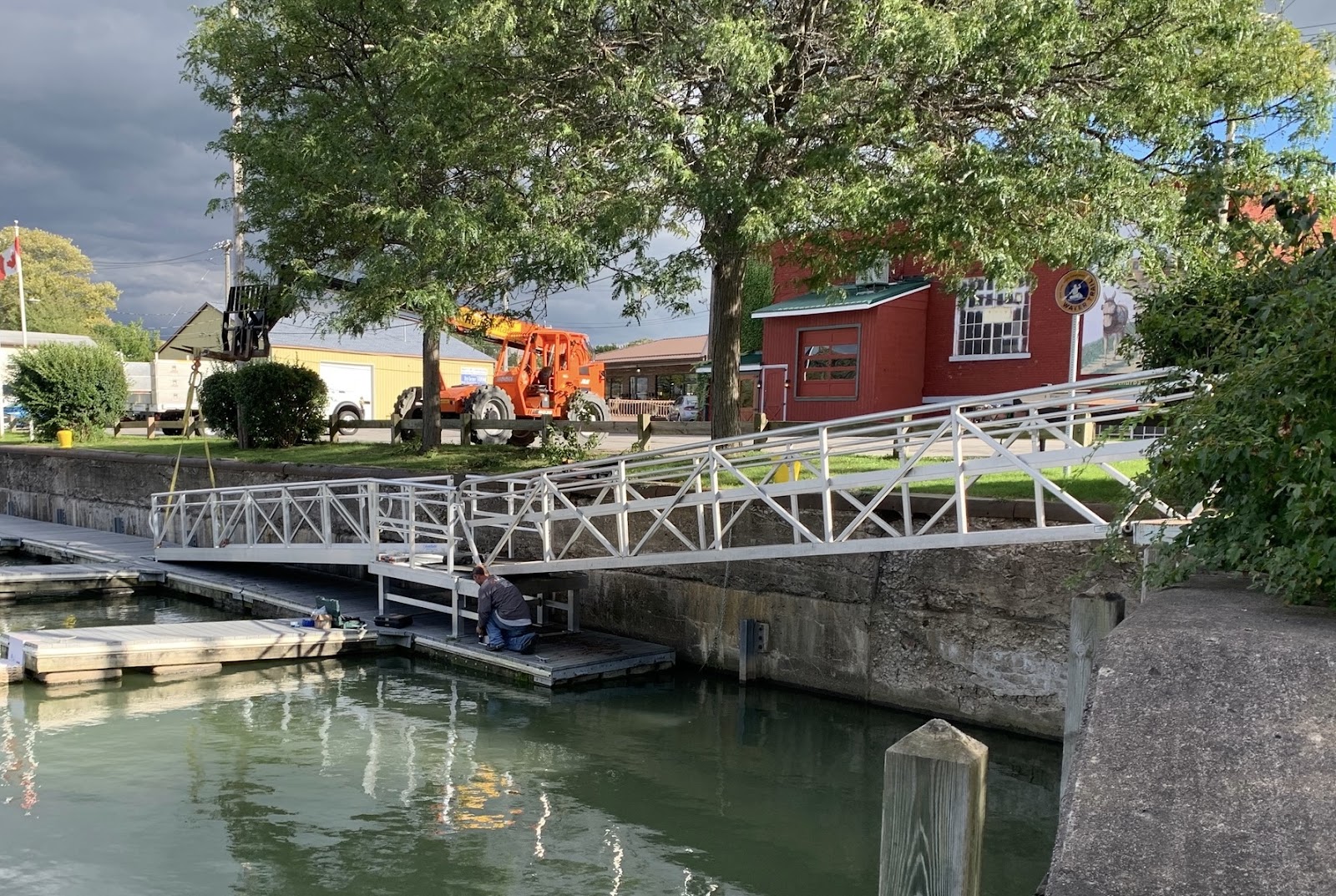
The first challenge identified by BoardSafe Docks was that the existing gangway didn't conform to ADA guidelines and was greater than a 1/12 slope. To correct this issue, a landing was constructed for the existing gangway to rest on and a second gangway added to connect from that platform to the floating dock.
This concept was a cost savings for Mayor Mike Sidari in the Village of Medina because BoardSafe recognized they were able to use their existing gangway and not replace it with a more costly gangway. A replacement gangway would have been nearly 70-feet long.
The adaptive kayak launch in Medina was designed to attach to the customer’s existing floating marina. The marina’s freeboard was 16 inches, and the same height as a standard BoardSafe Dock. BoardSafe was able to size the docks and configure the launch to fit onto the downriver side of their dock system.
The components of this project included a customized landing platform for their existing gangway, a new 30-foot aluminum welded gangway, two 5' x 10' floating docks, one 8' x 20' floating dock, and one Clip-a-Launch 20S with a single side entry.
The cost of this project was approximately $65,000.
The BoardSafe Adaptive Kayak Launch appeals to adaptive paddlers and will help the village of Medina continue to grow as a tourist destination because of its accessibility to the water, downtown historic district, and painted murals project located behind their historic downtown buildings.
Read more about BoardSafe's exclusive adaptive products here.
Fairport on the Erie Canal Welcomes Adaptive Paddlers
The Village of Fairport is proudly equipped with a custom BoardSafe Adaptive Kayak Launch, part of a complete waterfront redesign at its Erie Canal’s entry point. GPI, the design engineer on the project, sought out BoardSafe Docks for their assistance in developing a design solution that would fit the adaptive launch into a designated space that rests next to their newly-designed boat ramp.
The launch system was designed with a concrete trench at the top of the launch that allowed for the installation of the bulkhead angle and related hinge pin. This space allowed the pin to be removed for an easy installation.
The customized scope of this project included an 8-foot-wide gangway that fit into the designated launch space. The chute was also designed to be 8 feet. The launch included an 8-foot by 20-foot floating dock and Clip-A-Launch 20S (designed for entry from one end). The cost of this project was $50,000 and was installed at the location of the Erie Boat Company, Inc., operated by Peter Abele.
The Erie Canal Boat Company offers kayak rentals and excursions on the Erie Canal and also has associated walking and bike trails along the canal. Their accessible boat company offers kayak, canoe, paddle board, pontoon, and bicycle rentals to people of all abilities.
The Erie Canal Boat Company is a recognized supporter of, and partner with, Rochester Accessible Adventures and the Adaptive Paddling And Cycling Centers (APACC) in the Upstate New York Regions. Together they host accessible paddle days, offer training, equipment, and inclusive programming to transform the Erie Canalway.
Anita O’Brien, Executive Director of RAA, has a mission to ensure that people with disabilities who live or travel in the region have access to equipment and have the ability to enter the water as safely and easily as they deserve. She wants everyone to experience the greatness of the Erie Canalway alongside their family and friends. Anita O’Brien is currently working with BoardSafe to get more of their adaptive launches installed along the canal.
The BoardSafe Adaptive Kayak Launch supported the Erie Canal Boat Company in their mission and has helped make Fairport an inclusive destination for paddlers of all abilities. Tourism is on the rise in Fairport, which is becoming recognized as an inclusive destination. Read more about BoardSafe's exclusive adaptive products here.
Take a video tour of the Fairport accessible kayak launch below.
Brockport's Paddling on the Erie Canal Is Truly Inclusive
The Village of Brockport installed its BoardSafe Adaptive Kayak Launch in June 2021 to accommodate truly inclusive paddling. The adaptive system is located in downtown Brockport along the Erie Canal. One of the challenges for this project was a nearly 20-foot-high concrete wall along the entire area, meaning the gangway for this project needed to be engineered from the walkway along the wall and down to the dock.
There has been a tremendous increase in kayaking, canoeing, and paddle boarding over the last several years. COVID has added to paddlesports’ popularity. Visitor research completed for the Erie Canalway National Corridor in 2017 reported that 42% of visitors would like to canoe or kayak on the canal. You can see the presentation below:
Erie_Canalway-Visitor_Research.pdf
In the years since that research study has been completed, it’s very likely the percentage of visitors interested in paddling the canal has increased. However, most small towns have not improved their canal access points or made provisions to include the disabled community. Launches that have not been improved and launches that have been built in accordance with minimum ADA standards still exclude a large group of adaptive paddlers. Adaptive paddlers require a launch with specific adaptive features. Adaptive athletes find great joy in getting into their vessel and out onto the water with their family and friends.
Read more about BoardSafe's exclusive adaptive products here.
Since the canal is considered a "navigable waterway,” the Erie Canal Corporation stipulated the entire dock system could only project a minimal distance into the canal. BoardSafe Docks identified a design solution that included a cantilevered walkway with support arms attached to the concrete wall. The walkway provided the solution as well as the necessary attachment point for the gangway that ran parallel to the concrete wall and attached to the floating dock. The adaptive launch was attached to the opposite end, allowing for safer and easier access for persons in wheelchairs.
A second challenge at this site was keeping the dock system in place. BoardSafe analyzed the options and recommended that two vertical I-Beam pilings be bolted to the concrete wall and piling guides be attached to the floating dock. This solution allowed the dock system to move up and down as the water level fluctuated, keeping the dock in the same position in relation to the concrete wall.
This custom project included a 5' x 6' landing, a 4' x 16' gangway, one 8' x 20’ floating dock, one Clip-a-Launch 16Dual that allows entry from both sides, and two custom I-Beam pilings and piling guides.
The total cost of this project was about $45,000.
Brockport is on the National Register of Historic Places and is known for its Victorian downtown district. The College at Brockport, State University of NY, is also located here and is recognized for offering the first Adaptive Physical Education Program in the country. It’s fitting that the Village of Brockport understands the need for equity and inclusion in providing an accessible waterfront and saw value in the BoardSafe Adaptive kayak launch with specific adaptive features, ensuring that paddlers of all abilities can experience the joys of paddling the Erie Canal.
Read a local article about the installation here.