


BoardSafe Docks Honors Our Veterans
As Veterans Day approaches, BoardSafe Docks would like to recognize our veterans for their sacrifice and service to our country. It’s crucial to support the military and our veterans wherever and whenever they need us. Veterans Day ensures they know their service is important to us, recognized, and valued.
On Veterans Day and every day, BoardSafe Docks ensures that disabled veterans have proper access to kayaking, canoeing, and fishing, and have the ability to access and enter the water as safely and easily as they deserve.
History of BoardSafe’s Adaptive Kayak Launch and its features
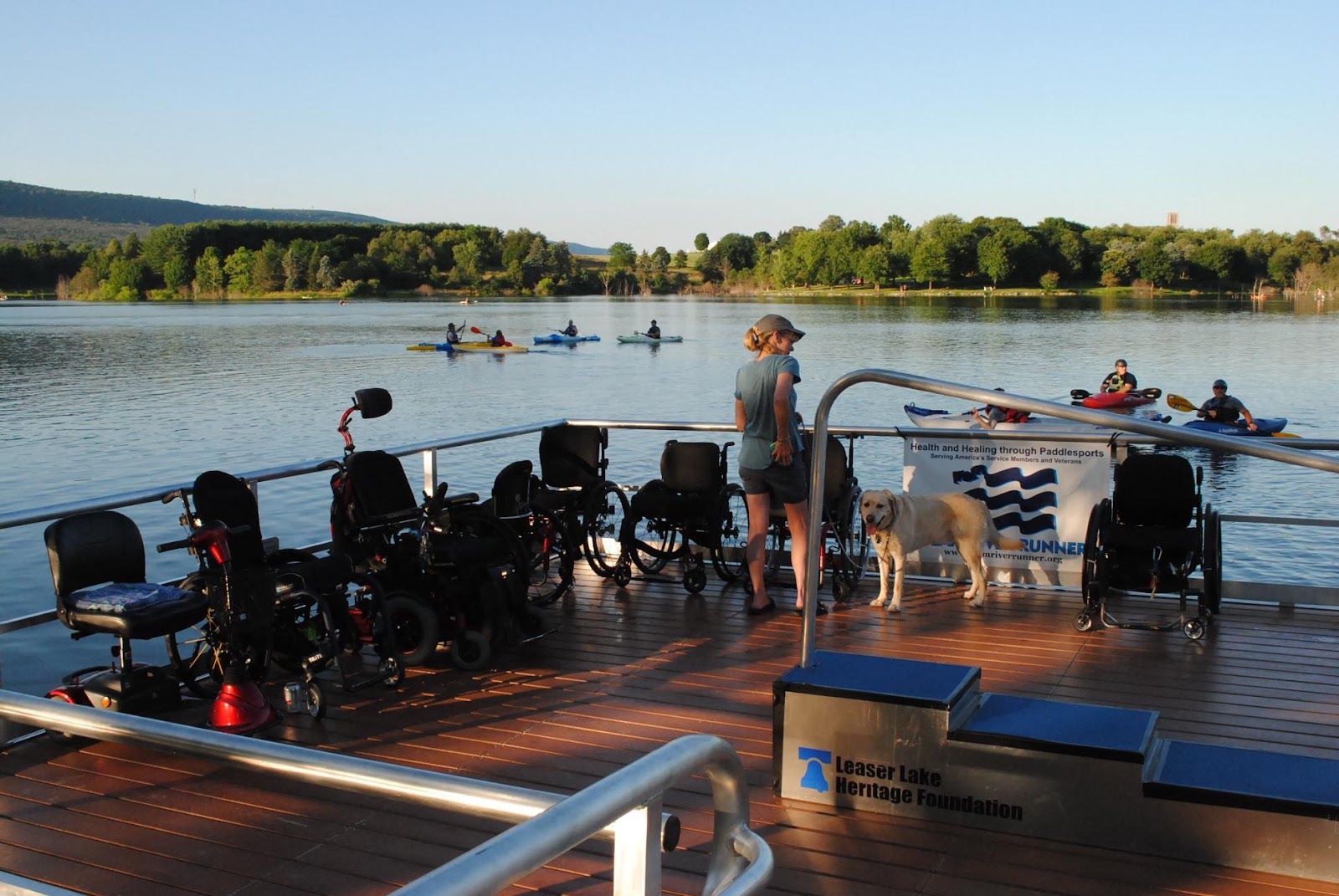
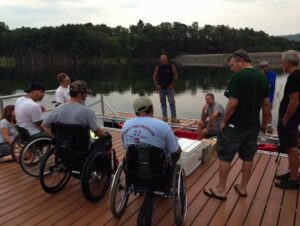
BoardSafeDocks developed its Adaptive Kayak Launch after being approached by the Leaser Lake Heritage Foundation, the Kempton Area Lions Club, and a group of adaptive paddlers who were using their lake for adaptive paddling events. They were looking to make the lake more accessible for paddlers in wheelchairs who presented themselves with varied needs and paddling abilities. The adaptive paddlers and the volunteer group that supported them reported that more often than not, they struggled to get their paddlers in and out of their kayaks and safely out onto the water.
Working in collaboration with the adaptive paddling group, BoardSafe Docks identified the barriers they were facing and created solutions to help them gain access to the water using adaptive features that would support their safety and independence.
With their help and input, BoardSafe Docks was able to design and manufacture an adaptive kayak launch that offers paddlers and veterans with disabilities the ability to get out on the water with everyone else.
The paddlers who offered feedback were affiliated with many adaptive paddling groups, and paddle along with Team River Runner, Wounded Warriors, Veteran Non-Profit | Paddle for Heroes, and Disabled Kayaking Enthusiasts groups. All too often they would arrive at paddle sites that were deemed to be accessible but were unable to enter their vessels or launch their kayaks. Barriers were not removed and features were not developed to the extent necessary for them to paddle along with family and friends.
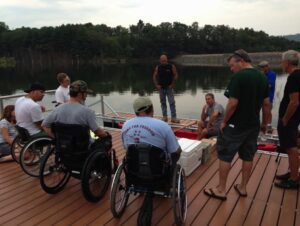
During collaborative sessions, BoardSafe Docks learned that true accessibility starts at the parking lot with
- parking spaces identified for individuals with disabilities.
- paved egress to the paddle launch.
- an ADA gangway and chute.
- a floating dock large enough for wheelchairs to maneuver.
- a step-down boarding bench.
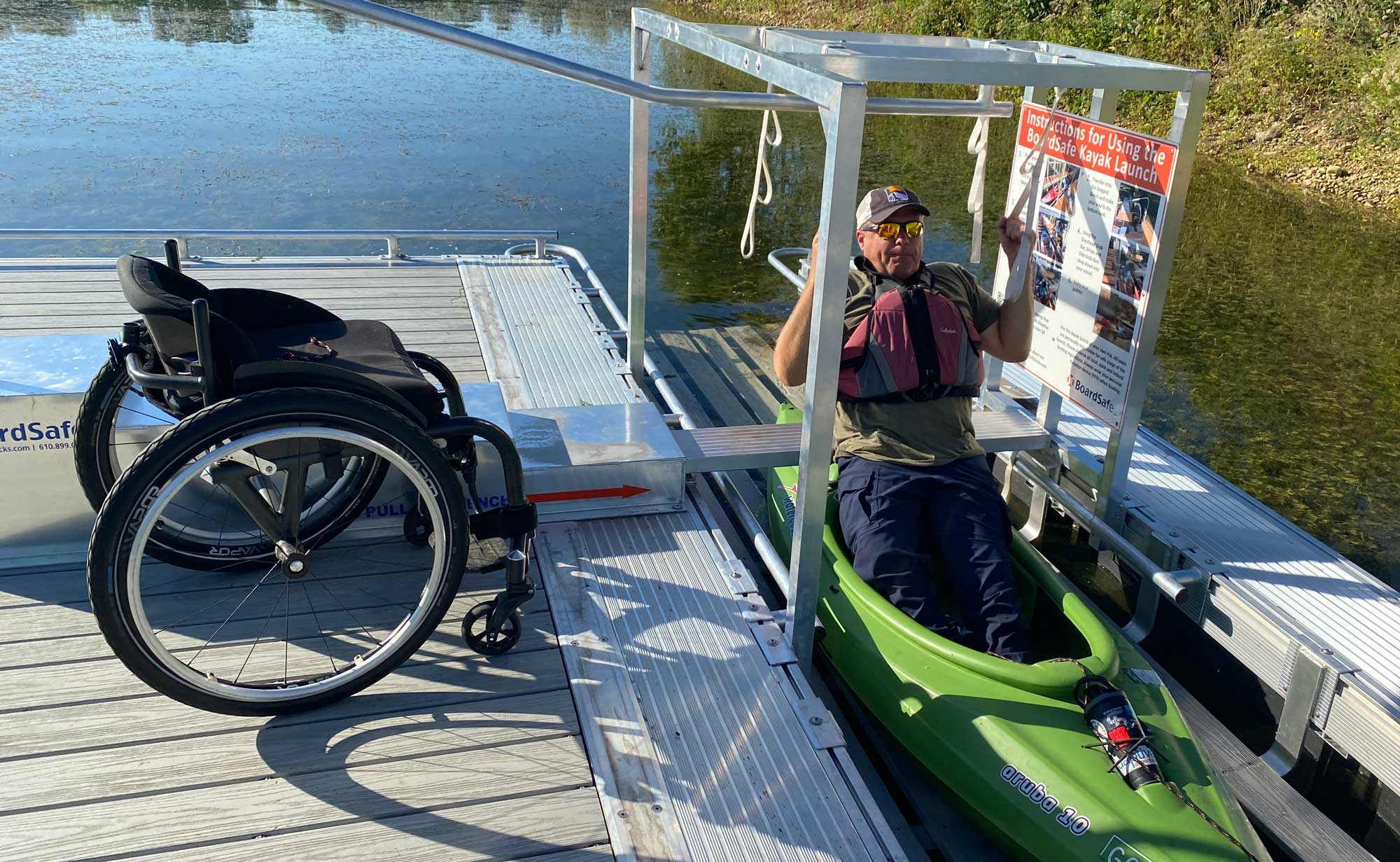
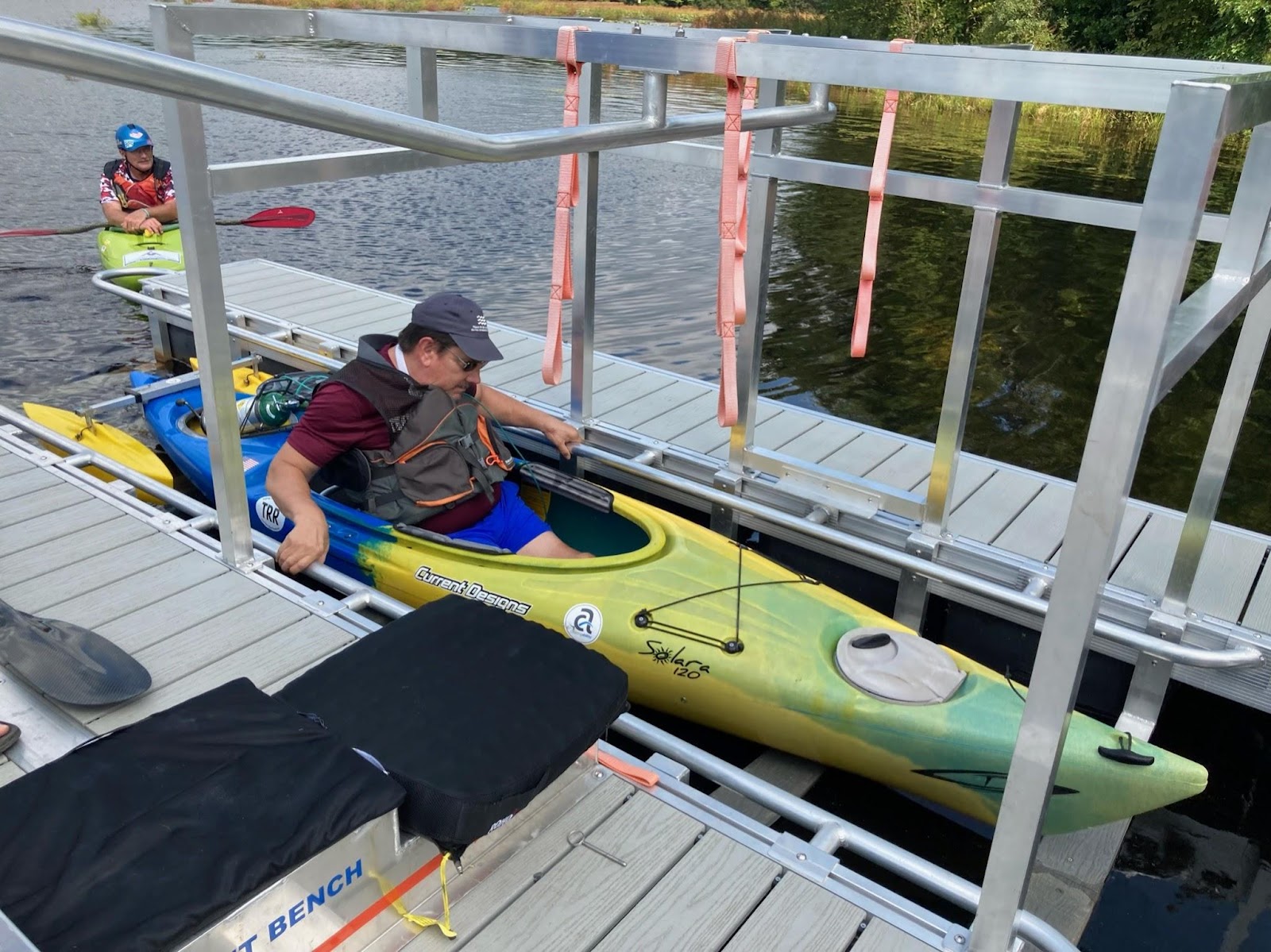
- a roll cage that includes overhead grab bars, grab straps, and pull bars.
- a secure launching cradle that provides stability for the kayak during both entry and exit.
Adaptive paddlers and disabled veterans often find new freedom in being able to propel around the water in a way they can’t on land. Working together with them, BoardSafe was able to identify and remove barriers while adding additional features to their launch system that offer these paddlers the freedom that many thought they lost.
Adaptive paddling is not a one-size-fits-all sport
Not all kayak launches are the same, and not all kayak launches work for all paddlers. BoardSafe has learned that other launches are often designed incorrectly, contain barriers that have not been removed, or lack features adaptive paddlers need to access their kayaks and the water. Most importantly, accessible and adaptive launches must be tested by adaptive paddlers to ensure they will work for paddlers in wheelchairs.
A kayak launch is a big investment; therefore, customers must educate themselves and be aware of the specific support needed by the paddlers who will be using their launch. Customers should also be aware of the features and options offered by the launch system they are investigating, as well as the limitations of the launch they are considering.
BoardSafe Docks takes pride in ensuring our system provides accessibility for the widest range of paddlers, making theirs the most accessible kayak launch on today’s market. Those investing in a kayak launch should know BoardSafe’s launch may not be the right fit if the paddlers using the launch require a Hoyer lift or lack at least some upper body strength. BoardSafe’s Adaptive Kayak Launch is a good fit for amputees, paddlers with lower-body paralysis, joint replacement, arthritis, and a wide range of lower-body physical impairments or mobility limitations. Almost everyone can use it!
The benefits of a BoardSafe Adaptive Kayak Launch
Accessibility Docks equipped with ramps, handrails, and slip-resistant surfaces ensure that veterans with mobility challenges can easily access and launch kayaks. This accessibility feature can make the experience more inclusive and enjoyable.
Safety Sturdy docks with proper railings and non-slip surfaces enhance safety, allowing veterans to embark and disembark from kayaks with confidence. Safety is paramount, especially for individuals with varying physical abilities.
Convenience Well-designed docks can streamline the process of getting in and out of kayaks. Veterans may have specific needs due to injuries or disabilities, and having a dock that caters to these needs can significantly improve their overall experience.
Supportive community Docks that are designed with inclusivity in mind can foster a sense of community among kayakers, including veterans. This supportive environment can encourage veterans to engage in kayaking as a social activity, promoting mental and emotional well-being.
Training and assistance Docks that cater to veterans may offer specialized training sessions or assistance programs. This support can be crucial for those who are new to kayaking or need extra help due to physical limitations.
When kayaking equipment requires modifications
When the kayak itself requires adaptations or modifications, BoardSafe Docks works with the design experts from Creating Ability. Their focus is on seating systems, outfitted kayaks, outriggers, transfer benches, seating systems, and hand, wrist, and paddle adaptations.
Beginning in 2004, Creating Ability’s mission has been to make paddling accessible for all. This project produced the Universal Paddling Seat. Since then, Creating Ability has developed and provided fully-outfitted kayaks and adaptations to enable people of all abilities to participate in the sport of adaptive kayaking.
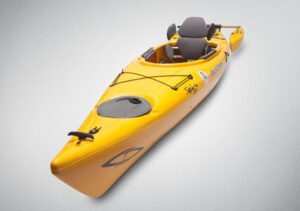
Creating Ability travels thousands of miles annually and volunteers at various events to support persons with disabilities and their families. They provide on-site support, education, and outfitting to enhance the lives of adaptive paddlers and disabled veterans. Their goal continues to be to enhance the experience and provide the freedom and independence the world of paddlesports can bring.
Video: Getting boat from vehicle to water: Adaptive kayak launch makes it easy
The value of paddling for veterans
Kayaking can be fulfilling and life-changing for veterans with disabilities, especially those who may have been paralyzed, have lost limbs, or have experienced mobility challenges as a result of serving their country. The benefits of kayaking are listed below.
Empowerment Kayaking provides veterans with disabilities a sense of empowerment and independence. Being able to navigate the water and control the kayak on their own can boost their confidence and self-esteem.
Physical exercise Kayaking offers a low-impact cardiovascular workout that can improve overall fitness, strength, and flexibility. Engaging in regular physical activity is crucial for everyone, especially veterans with disabilities, because it promotes better health and well-being.
Mental and emotional well-being Spending time in nature and engaging in recreational activities like kayaking can have positive effects on mental and emotional well-being. It reduces stress, anxiety, and depression, while promoting relaxation and a sense of peace.
Community and social connection Participating in adaptive kayaking programs allows veterans with disabilities to connect with others who share similar challenges. This sense of community and social connection can combat feelings of isolation and provide a supportive network.
Challenging limits Kayaking challenges individuals to push their limits and overcome obstacles. For someone with a disability, mastering the skills needed for kayaking can be a powerful reminder of their abilities, helping them focus on what they can do rather than what they can't.
Therapeutic benefits The rhythmic motion of paddling can have therapeutic effects, promoting relaxation and reducing muscle spasms. Additionally, the water's buoyancy can alleviate pressure on joints and provide a soothing experience.
Sense of adventure Kayaking offers a sense of adventure and exploration. Disabled paddlers can venture into natural environments that might otherwise be inaccessible, providing them with unique experiences and a deeper connection to nature.
Adaptive equipment Specially-designed adaptive kayak launches, adaptive kayaks, and equipment, make it possible for veterans with disabilities to participate in kayaking. These adaptations, such as adaptive kayak and canoe launches, modified seating, stabilizing outriggers, and hand-controlled paddles, ensure a safe and enjoyable experience tailored to their needs.
Overall, kayaking provides a holistic experience that addresses physical, mental, and social aspects of well-being, making it a fulfilling and life-changing activity for paralyzed paddlers, amputees, and veteran paddlers with mobility limitations.
Ways to show appreciation to our veterans
With Veterans Day around the corner, there are many ways to show appreciation to our veterans. To let them know they are valued and appreciated:
- Ask questions about their service. Let them tell their own story. If the veteran is open to talking about military experiences, don’t just say thank you and walk away.
- Have a conversation about what’s going on in the military today—many different websites provide good information.
- Donate to veteran-focused charities.
- Fly the United States flag.
- Send a card or letter to a veteran, an organization, or a VA hospital.
- Visit a VA hospital and get involved. Visit where veterans frequent: the VFW, local Vet Center, American Legion, or local not-for-profit. Veterans organizations are always looking for volunteers. Ask them what they need the most and help meet that demand. Make it so veterans can thank you for your service. That would help all of us be more worthy of their sacrifice.
- Get outdoors with a veteran and join them on a paddle. You’ll be happy you did!
- War is filled with unimaginable atrocities and casualties. It's equally important to acknowledge the incredible strength and resilience it takes to carry on in the midst of crisis and chaos, and the courage it takes to talk about deep pain and emotional turmoil—even 20, 40, or 60+ years later.
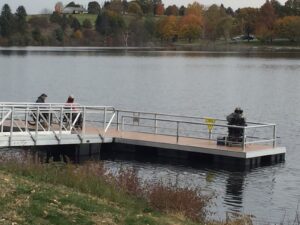
BoardSafe Docks understands the life-changing impact getting out on the water has made for the adaptive paddling community. It offers rehabilitation, exercise, and socialization, and provides healthy benefits to one’s mind, body, and spirit. Most importantly, kayaking gives adaptive paddlers an opportunity to be out on the water like everyone else. They describe the freedom of leaving their wheelchairs and transitioning into a kayak as “liberating.”
Contact BoardSafe Docks at 610-899-0286 for more information on the impact you can make on your water access points with a BoardSafe Adaptive Kayak Launch or BoardSafe Adaptive Fishing Pier and make a difference in your community and the life of a veteran!
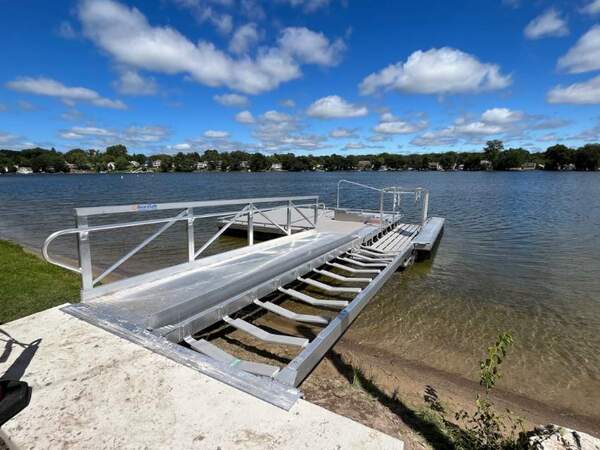
Accessible, Adaptive Kayaking Is Now Available at Scofield Park, MI
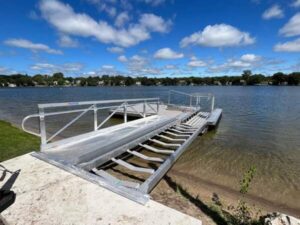
The City of Howell, Michigan, is the newest recipient of a BoardSafe Docks Adaptive Kayak Launch. Thompson Lake, located within Scofield Park, is pleased to promote itself as a kayaking destination accessible to enthusiasts of all abilities. The accessible and adaptive launch offers universal access to all and is now open for public use.
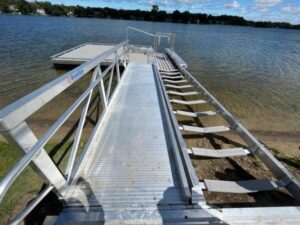
The City of Howell went out for public bid for the launch in early March 2023 and was passed by a City Council’s vote in late March. BoardSafe Docks was identified as the lowest bidder and offers a high-quality, aluminum-welded, adaptive kayak launch that is accessible to all. The launch was delivered to the City of Howell in May and was installed by their maintenance crew in mid-August.
Meeting the needs of people with disabilities was a priority in determining which projects they should fund. The new kayak launch uses a series of ramps, handrails, and platforms to assist those having varying mobility needs with launching canoes, kayaks, and other non-motorized watercraft into Thompson Lake. A gently-sloped ramp provides a sturdy avenue for people who use wheelchairs, walkers, and other mobility devices to access the floating dock. Once on the dock, individuals can place their boat in an underwater saddle that securely holds the watercraft in place while the boater uses overhead support to lower themselves safely into their vessel.
The BoardSafe Adaptive Launch Project included a:
- 20-ft gangway and aluminum kayak chute.
- (2) 8x16 floating docks.
- (1) kayak launch with the Adaptive Boarding Kit that consists of:
- tiered, step-down bench with pull-out seat.
- overhead grab bar with grab straps.
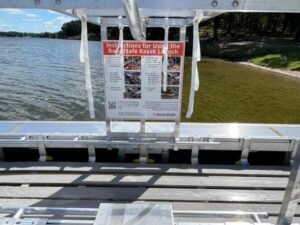
- instructional sign for proper usage.
A link to the city’s Scofield Park and its amenities is available here: Scofield - Explore Brighton Howell Area.
The new, much-anticipated kayak launch with universal access has been installed near the beach area at Thompson Lake.
The new launch will allow people of all abilities to launch their kayaks and bring them back to shore safely and easily. It’s something the community expressed a desire for, that will improve all users’ paddling experience.
In addition to the new launch, other improvements are planned at the park, including new accessible ADA-compliant restrooms and concession facilities. Both bathrooms were ordered in April of this year, with an anticipated delivery date of next April.
Communities who are looking to increase accessibility for all paddlers and considering adding an adaptive kayak and canoe launch to their local lake or stream should click the following link for more information:
Find the Best Adaptive Kayak Launch Site—BoardSafe Docks
Because every site location and application is different, BoardSafe Docks has become the industry expert in location selection, site work, design, engineering, manufacturing, and installation of floating docks, piers, and adaptive kayak and canoe launches.
To discuss your project and learn more about BoardSafe Docks, our specific adaptive features that work for the widest range of users, our durable and long-lasting construction, and long-term maintenance suggestions, please call us at 610-899-0286 or contact us at BoardSafeDocks.com.
BoardSafe Docks—Meet Us Today at the Ohio River Way Summit!
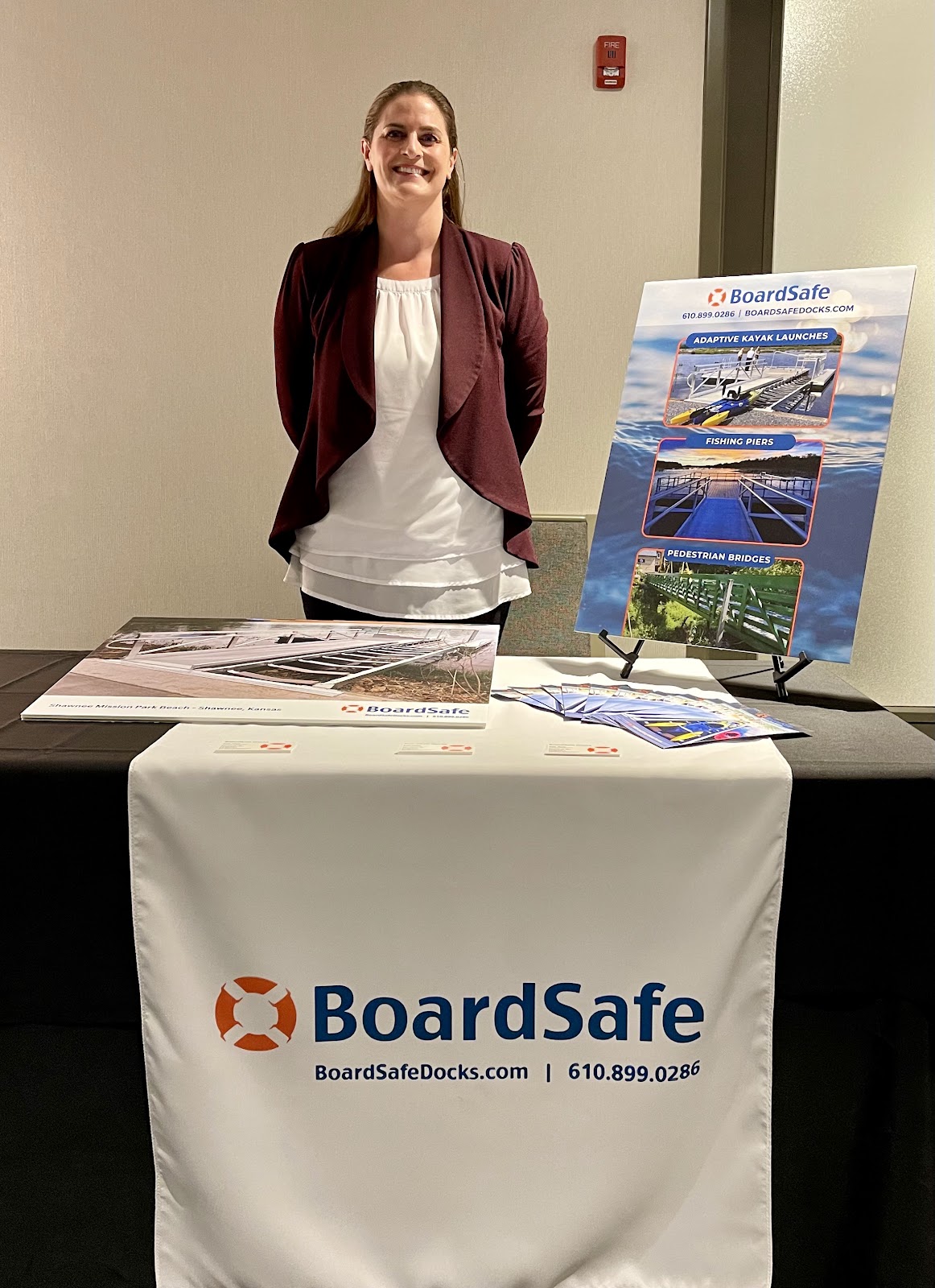
BoardSafe Docks is in Madison, Indiana today, 10/26, at the Ohio River Way Summit. The Summit is happening directly on the river at the Fairfield Inn & Suites by Marriott, 108 St. Michaels Avenue, Madison, IN 47250.
We’re proud to be one of the sponsors of the Ohio River Way Summit where we’ll be joining a diverse coalition of communities and organizations to discuss how river communities can grow around outdoor recreation.
Stop by our table today and say hello to Kelly Beals from BoardSafe Docks. Kelly will be able to share the benefits to paddlers, along with economic and ecological benefits to communities who invest in a BoardSafe Adaptive Kayak Launch and our other water access products.
BoardSafe Docks recognizes outdoor recreation has not always been inclusive. Our team is committed to offering a wide range of water accessibility products. We understand our products’ impact on communities and have witnessed how our accessibility products improve lifestyles for the adaptive and recreation-loving communities they serve. Come see us and learn how we can be part of your water access solution!
You can register for the summit here: https://www.ohioriverway.org/orw-summit
BoardSafe Docks looks forward to meeting you today in Madison!
BoardSafe Docks Provides an Adaptive Kayak Launch to Cayuga Lake
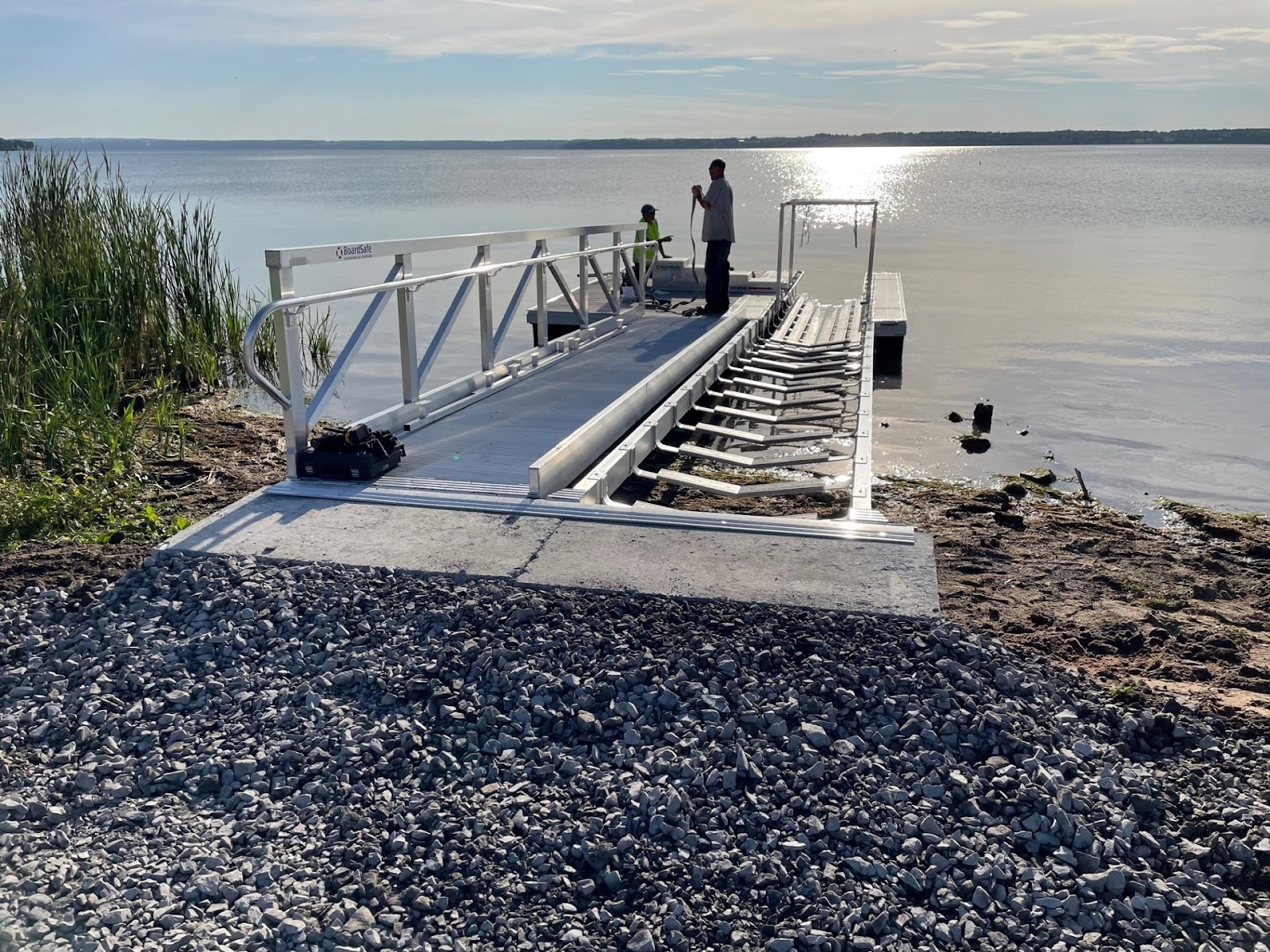
The Village of Unions Springs, located along the east side of Cayuga Lake, installed its first Adaptive Kayak Launch for its Blueway Trail. The public water trail connects non-motorized paddle vessels, like kayaks, standup paddleboards, and canoes, to treasured natural resources on beautiful Cayuga Lake, NY.
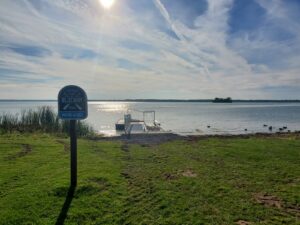
Cayuga Lake is one of eleven glacially-formed lakes, located in Cayuga County, NY. Located at Frontenac Park in Union Springs, BoardSafe’s Adaptive Kayak Launch connects paddlers to the 40-mile lake ,offering them the opportunity to connect with friends and family and enjoy the beauty of the environment around the lake.
Traveling the Blueway Trail allows paddlers to access local businesses and recreation areas on the lake. It’s also a great way to enjoy the beauty of this glacially-formed freshwater lake from an on-the-water perspective, very different from the views on land. The Blueway Trail includes publicly-accessible launch sites that are spread out along the entire shoreline of Cayuga Lake. A significant portion of the Cayuga Lake shoreline is privately owned and developed. However, the trail guides paddlers to enter and exit the lake at numerous convenient public locations. These launch sites create opportunities for both short and long Blueway Trail trips. A pocket guide to the trail is available at the Visitor Center at the Taughannock Falls State Park Overlook and from Cayuga Lake’s Online Store.
Cayuga Lake Blueway Trail created a vision for memorable paddling trips for both novices and experts. The trail highlights rich historic landmarks and natural features found around Cayuga Lake. More information about the Blueway Trail and highlights from individual user experiences can be found on their Facebook, Twitter, and Instagram pages.
The Village of Unions Springs is located along the east side of Cayuga Lake. They were thrilled about adding their first BoardSafe Adaptive Kayak Launch to their Blueway Trail. The Adaptive Launch offers universal access to their lake and provides adaptive features for paddlers who have limited mobility or require specialized support to make entering and exiting their kayak safe and easy. The new launch provides accessibility for all and the village acknowledged it’s a beauty!
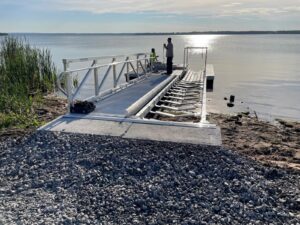
Scope of work BoardSafe Docks designed, fabricated, and built the new kayak launch and its easy-to-install foundation system. The system is fabricated from a 24-ft long aluminum gangway and chute to provide access to the water. A two-part pre-cast concrete block system was used as the foundation bulkhead. This solution eliminated the need to pour concrete in place and significantly reduced the soil disruption on the shore. BoardSafe worked alongside members of the Highway Department from the village of Union Springs to install the foundation.
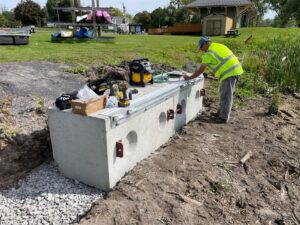
Below is a video highlighting the installation of the mounting angle to the concrete bulkhead during the installation of a BoardSafe Adaptive Kayak Launch.
Installing an Adaptive Kayak Launch: Mounting Angle on Concrete Bulkhead
A benefit for all paddlers using this new launch system is that the new kayak launch re-directs paddlers and kayak fishermen away from the existing motorized boat ramp to reduce congestion at this very popular fishing destination. This improves the safety of paddlers looking to get out onto the lake and keeps them safely away from boat traffic launching at the same time. Fishing, boating, and kayak fishing are all very popular activities on Cayuga Lake. The lake currently holds the state’s record for the largest smallmouth bass, which was caught on Cayuga Lake this year.
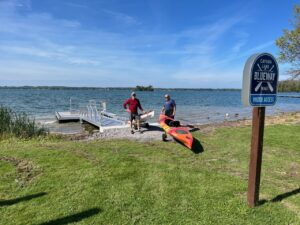
The community is so happy with the feedback about its trail system and the benefits it provides for the community for public recreation. Their new water trail draws family and friends to the lake and helps support the business owners around the lake. They hope to add more sites to the trail in the future in partnership with private landowners and business owners, while promoting good stewardship of their natural resources for generations to use and enjoy in the years to come.
BoardSafe Docks understands the value an accessible launch brings to communities.
An accessible kayak launch with adaptive features benefits a significant portion of the population, including people with mobility impairments, older adults, and people with temporary injuries or permanent conditions. Ask any adaptive kayaker about their feelings of enjoyment, liberation, and empowerment after they complete a paddle. Many will tell you they cannot wait to get back out on the water!
Kayaking promotes healthy living, connects friends and families with each other and with nature, and encourages paddlers to be good stewards in caring for our natural resources.
BoardSafe prides itself on developing a trusting and respectful relationship with its clients throughout the design and manufacturing process. Their team understands their products’ impact on communities and has witnessed their product designs improve lifestyles for the adaptive and recreation-loving communities they serve. They are proud of the partnerships they develop with their customers and appreciate the opportunity to develop their customers’ visions and turn them into legacies of waterfront inclusivity for generations to come. For more information, contact us at 610-899-0286 or through our website at BoardSafeDocks.com.
Have You Visited BoardSafe’s Kayak Launch at Bowman’s Beach, Sanibel?
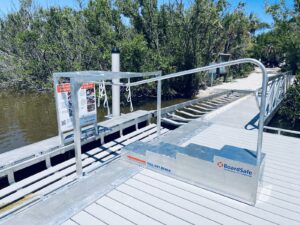
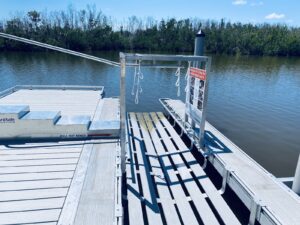
Photo credit Lisa Stout
As of this writing, it’s been a little more than a year since Hurricane Ian ravaged all of southwest Florida.
Ft. Myers Beach, Sanibel and Captiva, and Pine Island, suffered the hardest, leaving entire neighborhoods reduced to rubble. Coverage by ABC News shared images depicting the level of damage some of the hardest-hit areas experienced from Hurricane Ian before and after. As a result of the Category 4 winds and menacing storm surge on Sept. 28, 2022, many areas were left unrecognizable in the wake of the storm.
The popularity of Sanibel Island
Sanibel Island is a tourist’s dream. It’s roughly 15 miles long and 5 miles across at its widest. Its small size holds a rich and intriguing history, abundant flora and fauna, and stretches of white, sandy beaches known for shelling. Sanibel Island is home to the world-famous J.N. "Ding" Darling National Wildlife Refuge, with over 6,000 acres of mangrove jungles and wetlands encompassing a large portion of the island, just perfect for kayaking. The refuge is home to dozens of endangered species, allowing visitors to see manatees, alligators, raccoons, tropical birds, and foliage by biking, paddleboarding, and kayaking through its trails. Sanibel Island was a vacationer’s paradise pre-hurricane, and through the efforts of many, will be shining again soon.
Sanibel Island boasts an east-west orientation and is the perfect locale to experience breathtaking sunrises, sunsets, and Gulf Coast tides that bring in over 250 types of shells to its beaches. The beautiful blue-green waters that surround the island offer some of the finest fishing in the world.
Sanibel Island one year after Hurricane Ian
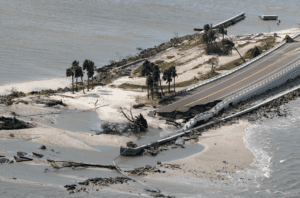
The recovery process has been a struggle for many locals but Southwest Florida continues to rally. Sanibel’s economy, which focuses mainly on tourism, was brought to a screeching halt after the hurricane. Its lush environment was decimated. Many of its hotels and resorts were destroyed and its beaches were almost unrecognizable. In fact, the causeway that connects the island to the mainland was completely cut off after the storm.
Sanibel’s recovery
Sanibel is home to about 6,300 residents and the causeway is their lifeline. The Florida governor reported that 100 crews worked around the clock to repair the causeway, which includes three separate bridges. Its workers used 8,200 loads of fill, 2,400 loads of rock, and 4,000 tons of asphalt to build a temporary roadway to access the island.
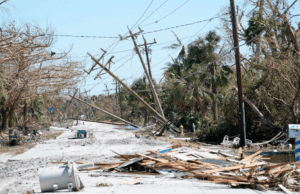
Thousands of structures in the community were reduced to rubble, trees and vegetation were wiped out, and power lines were downed. Much of the furniture and appliances in homes were destroyed and unusable, creating piles of trash on the roads to be taken to landfills.
Looking forward to the future is what’s keeping the people of Sanibel, their city, and its businesses going. While the aftermath of the hurricane was devastating, the City of Sanibel will fully reopen and be better and stronger than before. People are committed.
WGCU television took a unique look at how Sanibel Island fared during and after Hurricane Ian. Its hosts, Sandra Viktorova and Bryant Monteilh, along with the entire WGCU news team, prepared an anniversary special showcasing efforts to build a stronger and more spirited Southwest Florida and Sanibel Island. You can watch it here:
After Ian: WGCU Hurricane Ian Anniversary Special | WGCU News
Florida 24 Network investigative reporter Katie Lagrone and photojournalist Matthew Apthorp also took to the streets and returned to Sanibel Island for the first time since their eye-opening visit one year ago. They received a firsthand view of the pain that remains—and the progress that’s slowly offering hope to its people. Their island tour can be viewed here: Sanibel Island: One Year after Hurricane Ian
Bowman’s Beach recovery
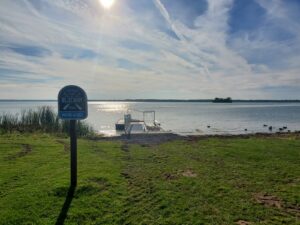
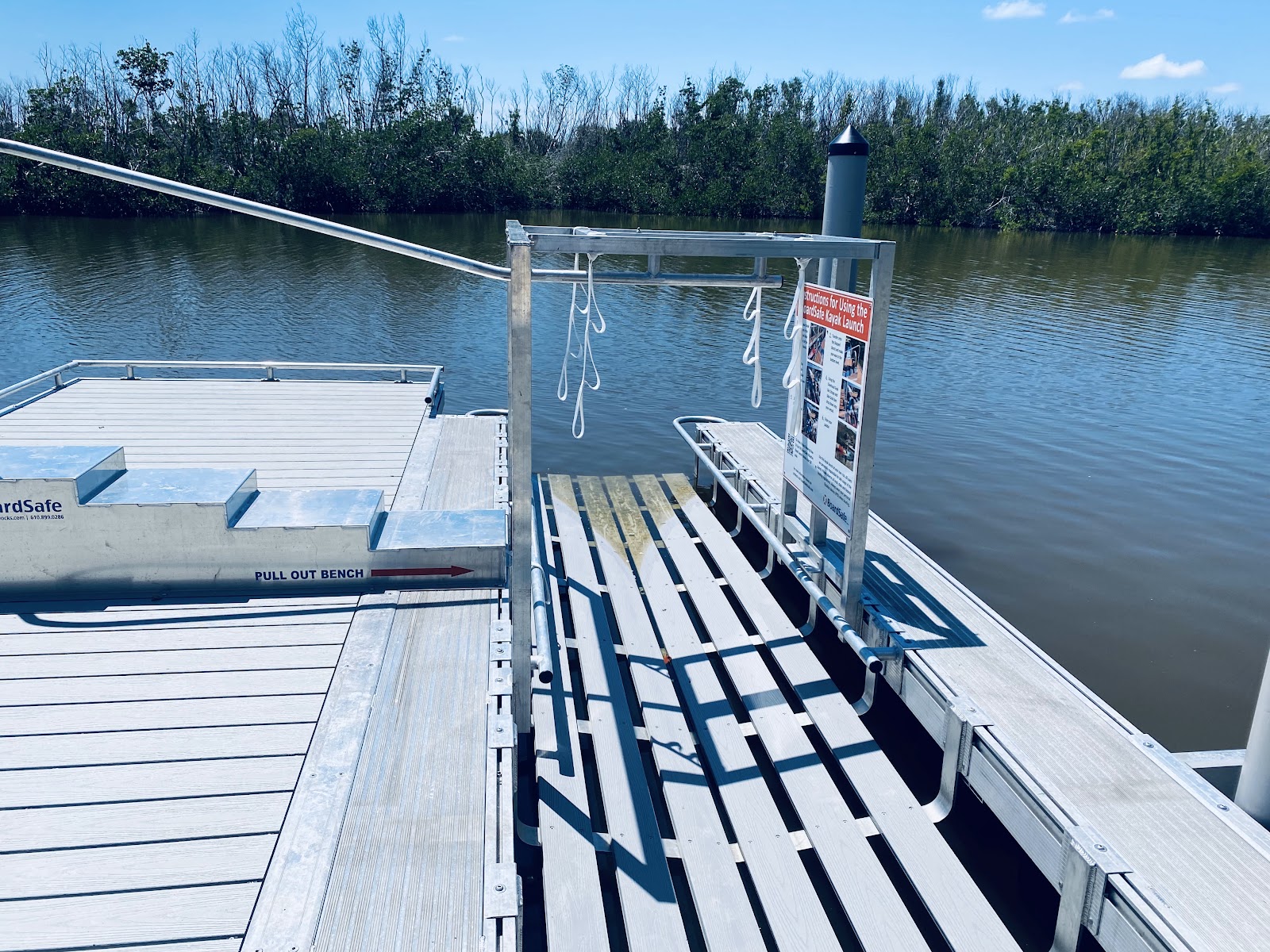
Part of Sanibel’s recovery is to continue with its initial plan to offer inclusive paddling opportunities to its visitors at Bowman’s Beach. Prior to the hurricane, the city had planned to install a BoardSafe Adaptive Kayak Launch at Bowman’s Beach Park through their Kayak Launch Replacement Project. The project was put on hold after the storm but their vision was quickly brought back to life as part of Sanibel’s recovery. The beach, located at 1700 Bowman’s Beach Road, was closed to kayakers on June 19, 2023, while the beach park and restroom facilities remained open to swimmers and shellers. It now hosts an all-inclusive kayak launch providing accessibility for all.
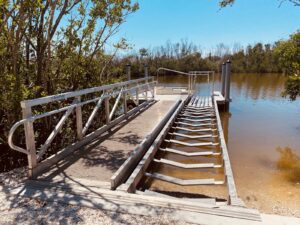
Photo credit Lisa Stout
The City of Sanibel contracted with Infinite Construction, LLC, to put in the infrastructure for the launch site. Their plan was to replace the existing structure with a new aluminum floating dock system and kayak launch designed, engineered, and manufactured by BoardSafe Docks of Fleetwood, PA. Its ADA-compliant gangway and kayak launch with adaptive features was funded by the Lee County Tourist Development Council and The City of Sanibel. The beach and public facility, which are owned by Lee County, have been maintained and operated for a long time by Lee County Parks & Recreation, even though they’re located within the city limits of Sanibel. Several years ago, city and county leaders approved an inter-local agreement turning the operation and maintenance over to the city; however, the county still maintains ownership of the property.
Bowman’s Beach Park is isolated and picturesque and probably one of the most popular beaches on Sanibel Island. Great shelling and amenities make it worth the five-minute hike from the parking area to the beach. Adventurous beachcombers are able to walk for several miles on unobstructed white sand beaches covered in shells.
What you should know about Bowman’s Beach Park
The amenities at the beach park include beach access, charcoal grills, fishing, fitness stations, hiking trails, paddlecraft landing and launch, a pavilion, a playground, restrooms, and showers. There is a parking fee of $5 per hour.
Bowman’s Beach is one of the best locations for kayaking on Sanibel Island. The recently installed BoardSafe Adaptive Kayak Launch makes getting in and out of kayaks and onto the water easily accessible for everyone. You can actually access the gulf from this launch site or stay in the calm bays and mangrove areas for a scenic paddle.
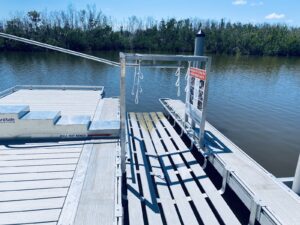
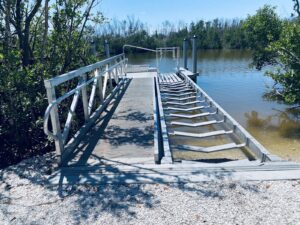
Photo credit Lisa Stout
With tourism, ecology, and the lush environment the main draws to Sanibel, the industry is finding ways to draw its visitors back to the island. Lighthouse Beach Park, which is the home of the historic and famous Sanibel Lighthouse, provides a guiding light on the island and is a symbol of lasting stability. It shows hope and security, letting crews know a safe place is nearby. As a result of storm damage, the Lighthouse remained unlit for the first 5 months after the storm. Lighthouse Beach Park was the last of the island's public beaches to reopen; its restoration gave people hope for what was to come for the rest of the island. Is it perfect? No, but it’s still paradise and ready for its tourists, beach lovers, shell hunters, and kayakers to return!
The famous Sanibel Island Inn has worked hard to restore its terrific beachfront property from the ravages of Hurricane Ian. They are part of a rebounding community of businesses, all working together to bring Sanibel Island back to its former glory. To find out what businesses are open, you can contact them directly or click on this link because new businesses are reopening to their guests every day.
What businesses are open on Sanibel Island?
So, if you enjoy kayaking, and are looking for a way to support Sanibel in their rebirth, we welcome you to check out the new BoardSafe Adaptive Kayak Launch on Sanibel Island at Bowman's Beach.
BoardSafe Docks understands the benefits and impact their floating dock systems offer to communities and park systems. They understand that accessibility is not one-size-fits-all. Their inclusive launch is fitted for kayaks and canoes and gets everyone in the water safely and easily. They understand paddlers want close-to-home recreation; safe, easy, and inclusive access to the water; and the ability to connect with surrounding nature.
To discuss your project and create a water entry site that offers safe and easy access with inclusive and adaptive features, contact us at 610-899-0286 or through our website at BoardSafeDocks.com.
Accessibility Is Not One-Size-Fits-All—Lake Chaminwood’s Story
The BoardSafe kayak launch at Lake Chaminwood opened this fall 2023. Matt Novander, the Forest Preserve's chief landscape architect, oversaw the project. He mentioned that the launch's design caters to different abilities. The Forest Preserve may use the same design for future launches. Novander says, "We had lake access but needed access for people with disabilities. We reached out to some companies, researched ways to get people to the water, & called BoardSafe and selected their products."
Lake Chaminwood is situated on Shepley Road, west of Interstate 55. The preserve is open from 6 a.m. to sunset until October, and from 8 a.m. to sunset from November to March. The new launch is anticipated to improve the experience of paddlers visiting the preserve, especially those with mobility issues.
Lake Chaminwood Preserve in Channahon recently unveiled an accessible kayak and canoe launch this fall. The launch is part of a larger improvement project for the preserve, which includes an expanded parking area and a new entrance completed earlier this summer. The launch is equipped with features to assist paddlers with mobility issues.
The project received partial funding from an $80,000 Illinois Department of Natural Resources Boat Access Grant. Novander emphasized the importance of such grants in supporting the project's completion.
BoardSafe Improves Economic Benefits for Communities in East Tennessee
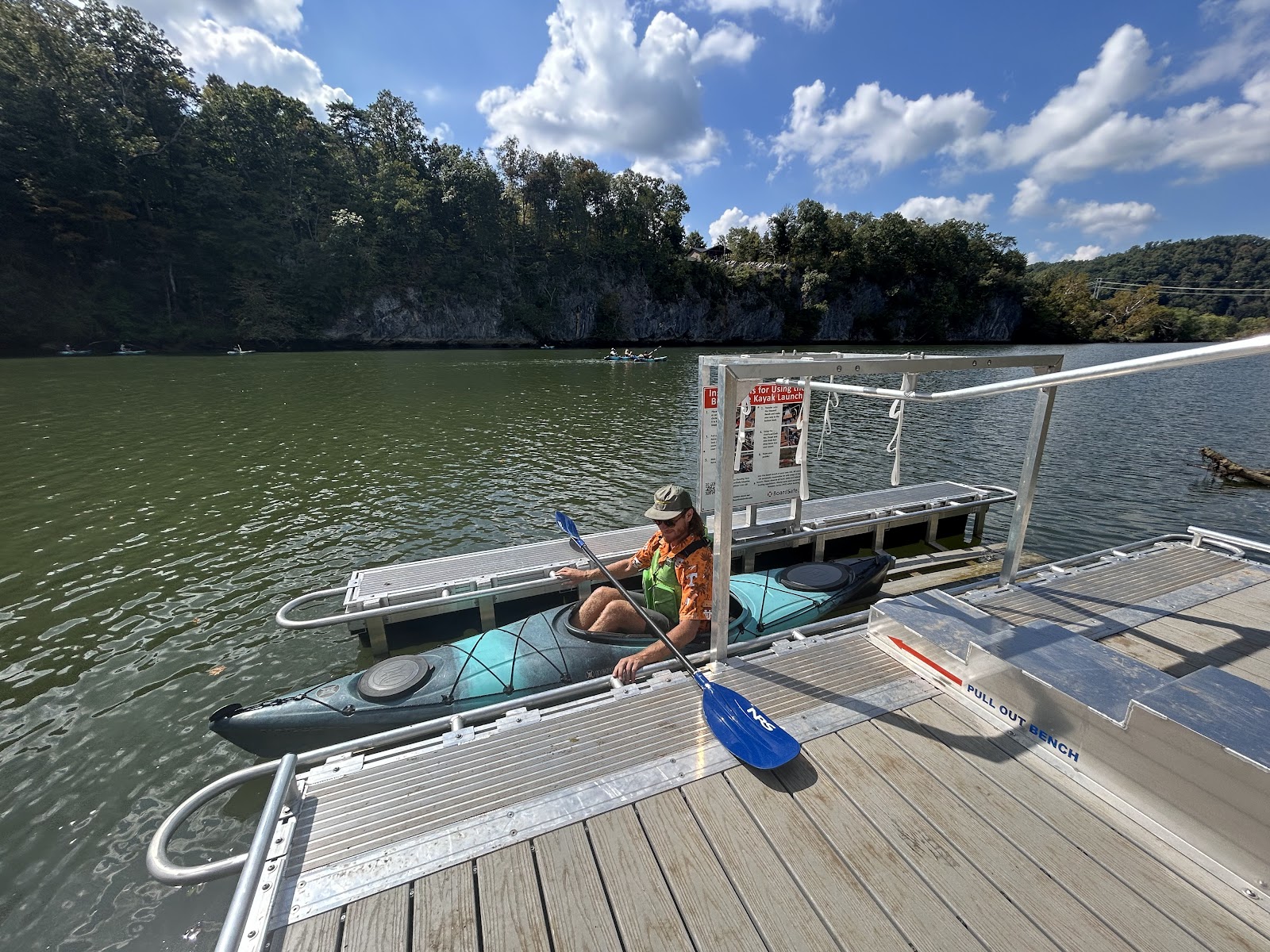
A new project slated for East Tennessee was announced at the annual Legacy Parks Luncheon on Friday, September 29, 2023. A 20-mile river trail will be created on the French Broad River starting at Seven Islands State Birding Park and ending in Downtown Knoxville. Three accessible BoardSafe Docks kayak launches are already designed and approved and will be installed along the water trail beginning at Seven Islands, heading downriver to Cruze Landing and Asbury Landing, which will create access and exit points with 5- to 7-mile intervals. Future launches will be designed and developed until the 20-mile stretch is fully accessible and reaches downtown Knoxville. These access points will create a truly adaptive and complete paddling experience for all. The accessible water trail will be the first of its kind in the state, and stakeholders are hoping it will be the first of many.
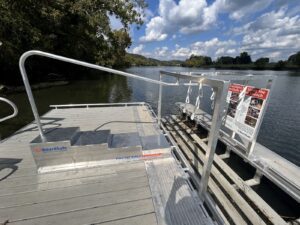
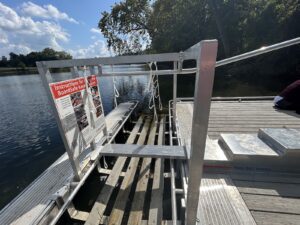
“This project is really a partnership of TVA, Tennessee Wildlife Resources Agency, Legacy Parks, Tennessee State Parks, City of Knoxville, and Knox County. There are a lot of stakeholders involved and the planning takes a little bit of time. Everybody sort of shares the value of getting people on the river. So, it’s a great project,” said Carol Evans, Executive Director of the Legacy Parks Foundation.
Hospitality and heritage bring hundreds of thousands of tourists to the Tennessee River and its tributaries each summer. People are attracted to the region for its different activities: biking, paddling, camping, hiking, sightseeing, and enjoying its history. As a result of this foundation’s efforts, visitors hindered by age, experience, mobility, or disability will be able to paddle down the river. The Legacy Parks Foundation ensures all people, including those with physical disabilities, are welcome to participate and have access to East Tennessee’s river and recreational sites. Legacy Park's creative plan will offer accessibility to all who visit the water trails and their surrounding parks. Accessible water trails will improve the quality of life for residents and those who visit the great state of Tennessee.
Paddling events build inclusive communities and improve quality of life
As the corridor strives to better accommodate all visitors, many local leaders have recognized the popularity of paddling and the need to provide safe and convenient access into and out of the water. BoardSafe Docks manufactures a well-known inclusive adaptive kayak launch that allows people in wheelchairs to safely transition into their kayak and out on the water. The launch system has been designed and engineered with specific adaptive features to improve the paddling experience for all users and ensure that family and friends can paddle together.
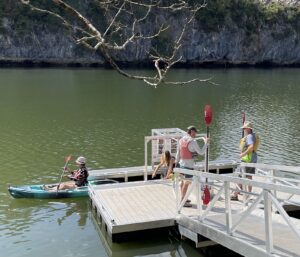
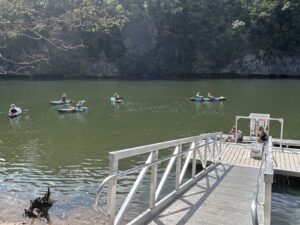
According to a report published by Statista Research Department, from 2010–2021, kayaking participation in the United States grew by 87.3 percent. Nearly 18.6 million Americans went kayaking at least once in 2021.
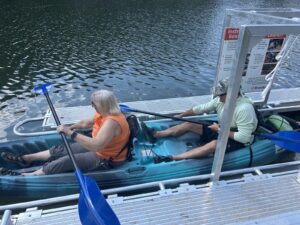
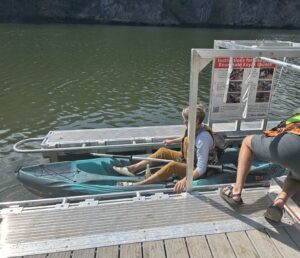
Until recently, no one fully understood the economic benefits of investing in and improving water access sites. However, we are now learning more about the economic, recreational, and environmental impacts.
The Outdoor Recreation Economy Report identifies outdoor recreation as one of our nation's largest economic sectors. According to this report, outdoor recreation generates $887 billion in consumer spending annually, 7.6 million American jobs, $65.3 billion in federal tax revenue, and $59.2 billion in state and local tax revenue.
Benefits of creating more access points to our rivers
The planning and creation of water access points accessible to all provide a wide range of benefits to local communities. Why? Because people of all abilities are hooked on paddle sports. When you step into a kayak and take those first few paddle strokes, nature surrounds you. It’s easy to understand how nature’s draw pulls people to the water.
Paddling and kayak fishing have become everyone’s favorite hobbies and sought-after forms of outdoor recreation. Kayaking is an inclusive activity that offers adaptive paddlers the opportunity to be out on the water like everyone else.
The economic impact of parks and rivers
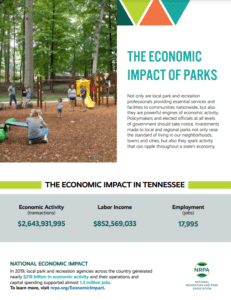
Parks and rivers have become powerful economic drivers for communities. Policymakers, elected officials, and parks and recreation professionals have noticed and understand how investments made in local and regional parks are improving the standard of living for their communities. The positive impact of parks on Tennessee’s economy is shown in a research study completed by the National Recreation and Parks Association.
Inclusive waterways encourage economic renewal
Three out of every four Americans participate in outdoor recreation each year, and paddlesports are among the fastest-growing segments of the industry. Legacy Parks’ planning for accessible recreation is positively impacting visitation along East Tennessee’s waterways, bringing along opportunities for economic renewal and growth.
Tourism and paddling on the Tennessee River
Tennessee is one of the top travel destinations in the U.S. because of its tremendous assets; scenic beauty, diverse cities and small towns, world-class attractions, music, culture, and history. A report prepared by the Tennessee Department of Tourist Development indicates that in 2021, Tennessee experienced record levels of tourism growth.
Tennessee Tourism Outperforms the Nation With Record $24 Billion in Domestic Travel Spending in 2021 Key information for the Department of Tourism can be broken down by county and viewed here: Interactive Data | Tennessee Vacation Industry.
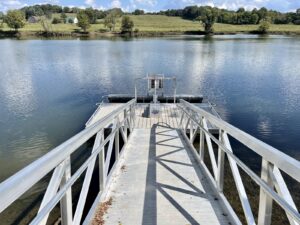
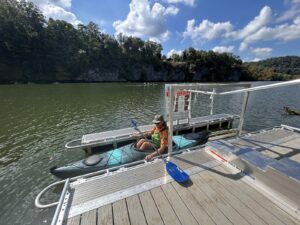
Accessible to all BoardSafe Adaptive Kayak Launches on the French Broad River
There is a host of benefits that come from launching more paddling options in our communities. Increases in property values, tourism, and recreation-related spending are just a few ways that inclusive water trails positively affect communities and the local economy. Paddling also encourages good stewardship of parks, natural resources, and riverside land. Enjoyment and protection of our waterways are valuable investments for our communities and their future, making East Tennessee a great place to live, work, and visit.
Whether paddling, tubing, casting a line, or sitting along the riverbanks watching the birds, a day on the river is good for everyone and is welcoming and life-changing when the trails offer accessibility. Supporting Legacy Parks’ efforts helps preserve the past, enrich the present, and provide a precious gift for future generations to enjoy. It allows the Legacy Parks Foundation to continue to make an impact by providing accessibility to all. To learn more about The Legacy Parks Foundation, their projects, and what they’ve contributed to Knox County and surrounding communities, visit their website: About Us - Legacy Parks Foundation.
There are many ways to support Legacy Parks in their efforts to preserve natural resources and connect communities in East Tennessee. To become a friend and talk about planned giving or providing gifts of land or trail easements, click here: How to Help - Legacy Parks Foundation.
BoardSafe Docks understands the impact accessible water trails offer to their users and their communities. To discuss your project’s vision and learn more about BoardSafe Docks, our Adaptive Kayak Launch and Fishing Pier, its durable construction, and the long-term value it will bring to your community, please call us at 610-899-0286 or contact us through our website at BoardSafeDocks.com.
Floating Docks with Launch Rollers: What You Should Know
BoardSafe Docks is often asked if rollers will damage a kayak hull. First and foremost, it’s important to understand not all kayak launches are the same, and the BoardSafe Adaptive Kayak Launch does not use rollers on its launch system. BoardSafe uses a supportive saddle and cradle launch for a safe and smooth entry into the water.
History of BoardSafe’s Kayak Launch and its features
BoardSafeDocks developed its Adaptive Kayak Launch after being approached by the Leaser Lake Heritage Foundation, the Kempton Area Lions Club, and an adaptive paddling group, who were using their lake for adaptive paddling events. They were looking to make the lake more accessible to paddlers in wheelchairs who presented themselves with varied needs and paddling abilities. The adaptive athletes and the volunteer group that supported them reported that, more often than not, they struggled to get their paddlers in and out of their kayaks and safely out onto the water.
Working together with them, BoardSafe Docks identified the barriers paddlers were facing and created solutions to gain access to the water using adaptive features that would support their safety and independence.
Rollers on the kayak launch were not part of the solution, and here’s why.
BoardSafe’s Adaptive Kayak Launch was designed with adaptive paddlers in mind for safer and easier access to kayaking vessels. From the perspective of differently-abled paddlers, rollers were not recommended for the following reasons.
- Rollers lack stability for kayakers Roller launches do not hold the vessel steady and lack stability when placing an adaptive paddler in their kayak. Rollers do not provide the same type of support as a cradle launch system. This lack of stability makes it difficult for all paddlers to load and unload, particularly those with mobility limitations, especially in windy or rough water conditions.
- Fulcrum effect When the kayak's weight is not evenly distributed on the rollers, or if the kayak's weight is concentrated on a small area of the hull, it can create a pivot point (fulcrum) that places excessive stress on that part of the kayak, potentially causing damage to the kayak. When too much force is applied during the launching or loading process, it can cause the kayak to bend or bow. This force can lead to hull deformation over time. Due to the angle and drop found on roller launches, this launch type can create a point load on kayaks that leads to unintended stress and damage to kayak hulls.
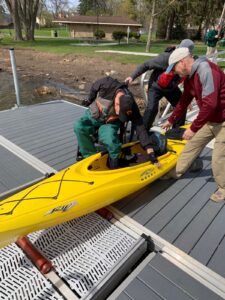
As seen in the picture below, the front of the kayak is elevated, causing stress to the hull. There is no stability offered to the kayaker nor support to prohibit the kayak from tipping over. The width of this particular launch system is 6 feet, too wide to serve any paddlers. Functionality is limited for those who wish to keep their kayak steady, keep their feet dry, and not cause point load stress to their kayak hulls.
One paddler with personal experience with roller launches said, “Without constant maintenance, they soon start to fall apart.” Another kayaker commented, “My kayak became unstable when launching into the water, and the drop put stress on my kayak.”
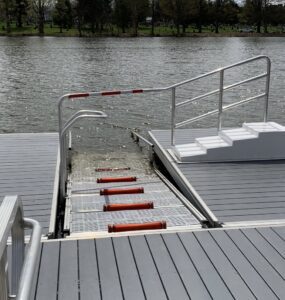
*Not a BoardSafe Adaptive Kayak Launch*
Kayak launches designed with roller systems should be avoided by users with higher-end kayaks made from fiberglass, kevlar, carbon fiber, and other hard-shelled composite boats. With so many different kayaks and kayak launches on the market, engineers designing launch systems need to become more aware of the unintended consequences that result when advertising these ramps for all kayaks. Most recently, people with higher-end kayaks have reported damage to their kayaks when using roller launches. One paddler with a nearly-new Kevlar boat reported his kayak sustained $700 in damage due to multiple cracks in the gel coat from the rollers and the stress caused by the point load on the roller ramp.
Anyone operating expensive vessels on a roller launch system should use caution—The material of the kayak's hull plays a significant role, and owners should understand their kayak's limitations. Kayaks made from materials like fiberglass, kevlar, carbon fiber, and other composites, are more susceptible to damage. Rollers can potentially create pressure points that damage the hulls of more fragile materials. If the rollers are not aligned, padded, or maintained, they can cause scratches, dents, and other damage to the kayak’s hull.
Kayaks that are less expensive and used for recreation, like high-density polyethylene (HDPE) and other durable plastics, are more suitable for launches with rollers. Roller launches typically work fine for plastic-hulled boats; however, keep in mind that roller launches lack the adaptive features necessary to provide access for paddlers in wheelchairs and those with physician limitations.
Problems reported with roller launches
- Misalignment If the kayak is not loaded onto the rollers properly, it can cause the kayak to scrape against the rollers or become misaligned, potentially leading to dents, scratches, or uneven pressure on the kayak's hull, potentially causing bending or deformation.
- Sharp edges or rough surfaces If the rollers have sharp edges or rough surfaces, they can scratch or gouge the kayak's hull as it is loaded and unloaded.
- Insufficient padding Some kayak launches have rollers with inadequate padding or cushioning. Without proper padding, the kayak's hull can suffer from excessive pressure points, leading to damage over time.
- Incorrect positioning Placing the kayak too far forward or backyard on the rollers can cause undue stress on specific areas of the kayak, potentially leading to damage.
- Debris or contaminants stuck to rollers If there are debris, dirt, or contaminants on the rollers, they can scratch or damage the kayak’s hull during the loading and unloading process.
- Low-quality rollers If rollers are made with inferior material or poorly constructed, they may not provide the necessary support and protection, increasing the risk of damage.
Tips to minimize the risk of damage to kayaks when using a roller launch
- Ensure proper alignment Position the kayak evenly on the rollers to distribute the weight evenly and avoid unnecessary stress on any area of the hull.
- Keep rollers clean Regularly inspect, clean, and maintain the rollers to remove debris or contaminants that could scratch the kayak. Regularly inspect the rollers for damage and rough spots and replace them if needed.
- Use additional padding or cushioning material to protect the kayak's hull.
- Use care and caution when applying force during the launch and loading process.
- Choose an appropriate launch method based on the kayak's hull material and design.
The most accessible kayak launch
A properly designed kayak launch will have a cradle launch or kayak chute long enough and narrow enough to hold on to both sides until the vessel is fully on the water to alleviate any stress to the vessel. It's crucial for kayakers to be mindful of potential sources of damage and take precautions to protect their kayak.
BoardSafe Docks takes pride in creating a positive user experience. The comfort and safety offered to our clients, as well as the quality, durability, and sustainability of our products, is a priority to ensure our customers are satisfied with our accessible products.
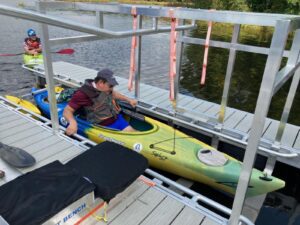
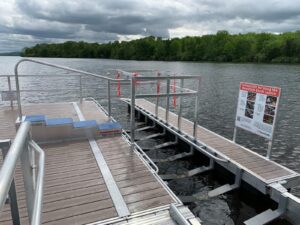
In summary, rollers on kayak launches can be useful for certain situations, but they are not without their drawbacks. The choice of launch method should include factors such as the kayak's hull material, the kayaker's skill level, environmental concerns, and the specific conditions at the launch site. Depending on these factors, alternative launch methods, such as cradle-style launches, may be preferred to minimize the risk of damage to the kayak and ensure a safe and stable launching experience. That is why the BoardSafe Kayak Launch is made with smooth low-friction slides and does not include rollers.
This video demonstrates the necessary adaptive features of a BoardSafe Kayak Launch and its cradle chute with an easy glide entry into the water.
The Most Accessible Adaptive Kayak Launch
For more information about BoardSafe’s Adaptive Kayak Launch, click the link below or contact us at 610-899-0286 or through our website at BoardSafeDocks.com.
https://20491040.fs1.hubspotusercontent-na1.net/hubfs/20491040/E-Brochure-BoardSafe-Kayak-Launch.pdf
BoardSafe Docks Provides Paddle Access for Legacy Parks Luncheon
BoardSafe Docks is pleased to provide two accessible kayak launches in advance of the Legacy Parks Luncheon for the Parks on September 29th at Seven Islands State Birding Park. Legacy Parks Foundation is an East Tennessee nonprofit organization working to ensure that their community enjoys exceptional recreational opportunities, natural beauty, and open spaces. They work collaboratively with local stakeholders to promote healthy living, connect friends and families with nature, and provide access to Knox County’s parks and rivers. Value is added to communities when providing close-to-home recreation that is accessible to all.
Below is a rendering of the BoardSafe Adaptive Kayak, Canoe, and Boat Launch planned for Seven Islands State Birding Park where the fundraiser will be hosted.
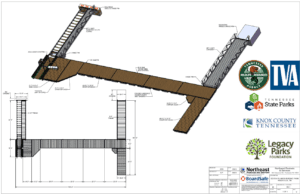
While accessibility projects can be eligible for grant funding and support from local government agencies, community support and financial gifts from donors also play a significant role and are necessary to bring these worthy projects to fruition. The Legacy Parks Luncheon for the Park is their biggest fundraising effort of the year.
An additional BoardSafe Kayak Launch and takeout to be recognized at the luncheon will be installed about 5 miles downriver at Cruze Landing.
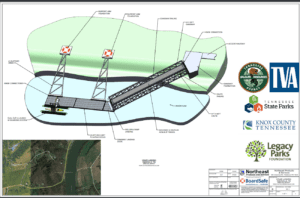
The popularity of kayaking is on the rise
According to a report published by the Statista Research Department, nearly 18.6 million Americans went kayaking at least once in 2021, demonstrating an increase in the popularity of paddlesports. In the period 2010–2021, kayaking participation in the United States grew by 87.3 percent. Paddling is an activity that almost everyone can participate in—young and old, novice and experienced, and people with mobility limitations. It’s easy to understand why people are getting hooked on paddle sports.
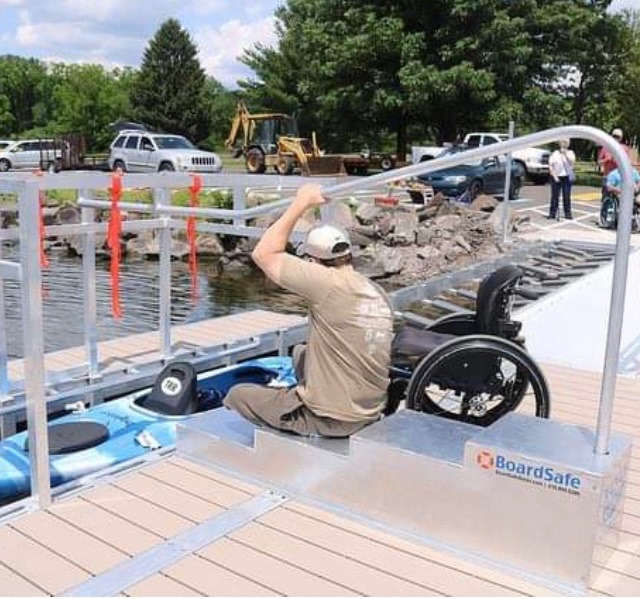
Kayaking, canoeing, and all paddlesports are truly inclusive recreational activities when launch sites include adaptive features like an ADA gangway, kayak chute, boarding bench, hand straps, and grab bars.
The most significant difficulty reported by almost all paddlers is getting in and out of their vessels. Upon entry, kayaks and canoes can tip, shift, or roll over. Adaptive features can ensure safe access in and out of the water. It’s encouraging to see leaders and planners striving to create a more inclusive society. They understand the importance of inclusive outdoor recreation. As recreation stakeholders, we all share responsibility for shaping the future of our country’s outdoor spaces and inclusive lifestyle and improving the quality of life for all. According to the World Health Organization (WHO) fact sheet on Disability, an estimated 1.3 billion people experience significant disabilities. This represents 16% of the world’s population or 1 in 6 people.
According to the CDC Disability Impacts All of Us Infographic, 11.1 percent of U.S. adults have a mobility disability with serious difficulty walking or climbing stairs.
The value of an accessible and adaptive kayak launch
An accessible kayak launch with adaptive features can benefit everyone and offer accessibility to all, including older adults, people with mobility impairments, and people with temporary injuries or permanent conditions.
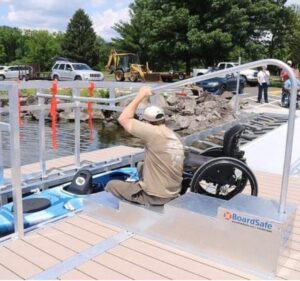
Ask any adaptive kayaker about their enjoyment, liberation, and empowerment after completing a paddle. Many will tell you they cannot wait to return to the water!
There are many ways to support the Legacy Parks Foundation through the Head of the Tennessee Initiative. Readers are encouraged to become a friend, learn more about their initiatives, or talk about planned giving by providing gifts of land or trail easements, or donations to support their cause. For more information, visit here: How to Help - Legacy Parks Foundation.
BoardSafe is a leading national manufacturer of high-quality aluminum-welded water access products: adaptive kayak launches, fishing piers, marinas, rowing centers, gangways, and pedestrian bridges. Whatever type of access your project needs, BoardSafe Docks will provide turn-key service, from product design and inception through delivery.
BoardSafe’s sales team is available for questions and consultation and will assist you with improving your water access site. You can learn more about BoardSafe Docks’ projects at our website, BoardSafeDocks.com, or by calling 610-899-0286.
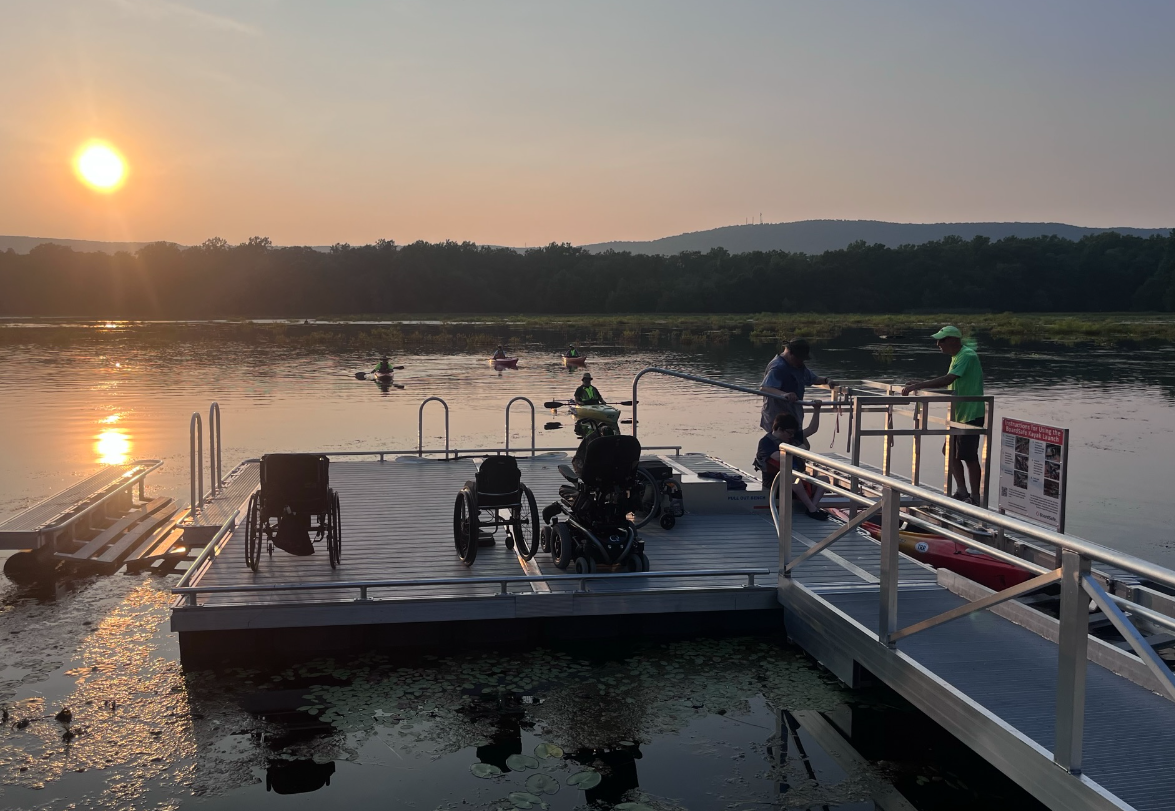
BoardSafe Docks Assists Legacy Parks for Annual Luncheon for the Parks
Legacy Parks Foundation is making final preparations for its annual Luncheon for the Parks on September 29, 2023, from 11:30 a.m.–1:00 p.m. at Seven Islands State Birding Park. The luncheon raises funds to conserve natural resources, create public places for recreation, and connect Tennessee communities. Through the generous support of donors, incredible open spaces are shaping into attractive recreational sites throughout the Knox County region. BoardSafe Docks provides water access products for Legacy Parks throughout East Tennessee by designing and manufacturing Adaptive Kayak Launches, Fishing Piers, Floating Docks, Gangways, and Pedestrian Bridges.
The guest speaker at this year’s sold-out luncheon is Chuck Leavell, who has been pleasing the ears of music fans for more than 40 years. His piano and keyboard skills have been part of The Allman Brothers Band, Eric Clapton, The Rolling Stones, The Black Crowes, Blues Traveler, Train, George Harrison, The Indigo Girls, Montgomery-Gentry, and many more. Watch his impressive documentary here: Chuck Leavell: The Tree Man (1080p) FULL MOVIE …

In addition to his brilliance in the music arena, Leavell is also a respected authority on conservation and forestry. He is a published author, co-founder of The Mother Nature Network, and host of the PBS series, “America's Forests.” In 2019, he and his wife, Rose Lane, were recognized as National Outstanding Tree Farmers of the Year.
His mission shares an important message about caring for and saving our forests.
Head of the Tennessee Initiative creates accessibility for all
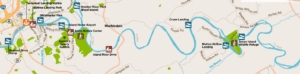
Starting at the Seven Islands State Birding Park location, Legacy Parks, in collaboration with Knox County, TVA, Tennessee Wildlife Resources Agency, Tennessee State Parks, UT Research Park, and BoardSafe Docks, is working to create inclusive access to East Tennessee’s waterways. Together, they share the vision to expand access points along the 25-mile water trail between Seven Islands State Park and UT Research Park, and create recreational sites that are accessible to all.
Features of the Tennessee Rivers
The French Broad and Holston Rivers confluence at Knoxville to form the beginning of the Tennessee River. They are tremendous natural assets with exceptional recreational potential for Knox County and surrounding communities.
The French Broad River
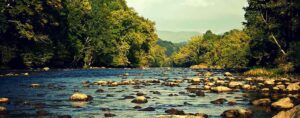
The French Broad River is believed to be one of the oldest rivers in the world based on the dating of rocks examined along its riverbanks. Locally, it offers a variety of recreation opportunities, including tubing, paddleboarding, kayaking, and fishing. Its tributaries are ideal habitats for several trout species, bass, bluegill, crappie, and the eastern spiny softshell turtle.
The Holston River
The picturesque Holston River begins in the foothills of the Blue Ridge Mountains and runs for 274 miles through Virginia into Tennessee. The part of the river below Cherokee Dam is possibly the most scenic water trail in the Tennessee Valley. Paddlers enjoy this panoramic paddle as it winds its way into the Tennessee River at Knoxville.
Between 1940 and 1950, the Tennessee Valley Authority built four dams on the Holston to provide electricity and control flooding. Today, the river is the most critical source of drinking water for communities south of the river and a place for fishing and recreation.
The Importance of paddle access for all
Paddling and exploring the water bring people and nature together for a blend of relaxation and good physical fun. They bring families and friends together, connect people with nature, and most importantly, promote exercise and wellness. There are so many reasons propelling around the water is attractive. When you step into a kayak, push off into a canal or river, and take those first few paddle strokes, nature surrounds you at every level. People are getting hooked on paddle sports. Paddling is an activity that almost everyone can participate in—young and old, novice and experienced, and people with mobility limitations.
Kayaking has become increasingly popular for paddlers with physical disabilities, amputees, and those with paralysis. It offers rehabilitation, exercise, and socialization. Most importantly, kayaking allows adaptive paddlers to be out on the water like everyone else. They describe the freedom of leaving their wheelchairs and transitioning into a kayak as “liberating.”
According to the Disability & Health U.S. State Profile Data from the CDC, 15% of adults in Tennessee experience a mobility disability. Nationally, one out of four people lives with a disability, limiting their options for recreation and play.
Ensuring that water access points are inclusive and accessible to all encourages more people to participate in outdoor activities on the water. Disability transcends all ages, political persuasions, races, incomes, titles, and degrees. It impacts everyone, and yet, there is still work to be done to ensure that everyone feels welcome and included. The Legacy Parks Foundation invites everyone to be part of the solution to change things that have kept people with disabilities and physical limitations from participating and enjoying the water. Our Work—Legacy Parks Foundation shows the results of and improvements from the combined efforts of many stakeholders, yet there is so much more they can accomplish.
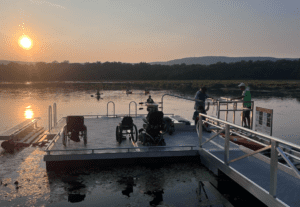
Financial gifts play an important role in supporting programs that offer accessibility to all, improve parks, and allow people with disabilities and mobility limitations to be active in their communities and feel welcome to participate with families and friends.
There are many ways to support the Legacy Parks Foundation and the Head of the Tennessee Initiative. To become a friend, read more about their initiatives, or talk about planned giving or providing gifts of land or trail easements, head over to How to Help—Legacy Parks Foundation.
BoardSafe Docks is honored to partner with the Legacy Parks Foundation and be a Platinum Sponsor for their upcoming Luncheon for the Parks. BoardSafe’s Accessible and Adaptive Kayak Launch provides paddlers the ability to enjoy the outdoor lifestyle they’re looking for—safely, easily, and responsibly. They understand the value their accessibility products bring to communities and to the people using them. BoardSafe’s aluminum floating docks, fishing piers, and boat launches are easy to install and will look amazing for many years to come.
Contact BoardSafe Docks at 610-899-0286 to learn more about the most durable and accessible aluminum floating launch options for any location. Our team will help you find the ideal solution to meet your water access needs.